International Criminal Court Deputy Prosecutor Nazhat Shameem Khan has returned from refugee camps in eastern Chad claiming that the prosecution now has the evidentiary breakthrough it has lacked for years.
According to her, the evidence no longer links only the immediate perpetrators to the crimes in Darfur, but also reaches the command levels of the Rapid Support Force, a paramilitary formation that, during the war in Sudan, captured El-Geneina and El-Fasher and left behind a trail of mass murder, ethnic persecution and sexual violence.
It should be an important moment for the International Criminal Court. Darfur has been before The Hague for 21 years, ever since the UN Security Council’s March 2005 decision to refer crimes in that Sudanese region to a court that Sudan has never recognised as its own.
If the prosecution can now link the crimes to the highest levels of the RSF command, it will be a legally significant step.
In international proceedings, the most difficult task is to prove the connection between the crime on the ground and the people who did not hold the gun themselves, but managed the operation, knew what was happening, or created the conditions for the crime through their orders.
The Court’s problem begins where evidentiary optimism ends. Nazhat Khan did not name any individuals, did not set a deadline and could not say whether arrest warrants had been sought or would be sought. She only promised results within a reasonable time.
For an institution that has been dealing with Darfur since 2005, such a formulation sounds less like a promise and more like a description of its own limitations.
Darfur as a measure of weakness
The International Criminal Court is not a new actor in Darfur. That case has existed almost since the Court’s establishment. On 31 March 2005, through Resolution 1593, the Security Council referred the situation in Darfur to the ICC Prosecutor, even though Sudan is not a party to the Rome Statute.
This exposed The Hague to one of the most difficult cases in its history: crimes against humanity, war crimes and genocide in a country that does not recognise the Court, where the perpetrators survived thanks to military force, local protection and a weak international will to enforce arrest warrants.
Two decades later, the balance is stark. It was not until 2025 that the Court issued its first verdict on Darfur. Ali Muhammad Ali Abd-al-Rahman, known as Ali Kushayb, a commander linked to the Janjaweed militia, was sentenced to 20 years in prison on 27 counts for crimes committed in 2003 and 2004.
That judgement is legally important, but politically it shows how slowly international justice reaches people who have survived crimes. While The Hague was closing the case from the first phase of the war, Darfur was already experiencing new devastation.
If the evidence really points to the top of the RSF, the Court could open a case that is no longer just a belated legal reaction to past crimes
El-Geneina in 2023 and El-Fasher in 2025 are not isolated excesses of a new war, but the continuation of a pattern that the international community has already documented and named.
The RSF is not formally the same actor as the Janjaweed from the first phase of the Darfur war, but the political and social connection between the two formations is undisputed.
Networks of violence, local hierarchies, ethnic targets and methods remained recognisable. The weapons have changed, the degree of international exposure has changed, and the amount of video evidence and satellite imagery has changed. The logic of persecution has remained the same.
This is precisely why the prosecution’s latest claim carries double weight. If the evidence really points to the top of the RSF, the Court could open a case that is no longer just a belated legal reaction to past crimes. It would be an attempt to hold the command of an active paramilitary force accountable while the war is still ongoing.
But if it all ends in yet another announcement of future warrants, with no names, no dates and no realistic path to arrest, then Darfur will once again become proof that The Hague can often establish the truth only after it has lost practical value for the victims.
The Hague between accusations and responsibility
This weakness is more dangerous today because it coincides with the Court’s most serious internal crisis since its establishment. Karim Khan, a British lawyer elected in 2021 as the ICC’s third Chief Prosecutor, was suspended on 8 June by decision of the Bureau of the Assembly of States Parties.
The Bureau concluded that Khan had committed serious misconduct and abused his position by having non-consensual sexual contact with a junior employee in his office. Khan denies all the allegations. His lawyers argue that the decision is unlawful, procedurally unfair, and unsupported by sufficient evidence.
The case is even more dangerous for the Court because it cannot be reduced to the question of Khan’s personal fate. A three-judge panel that reviewed the investigation’s findings determined that the evidence was insufficient to issue warrants under the “beyond reasonable doubt” standard.
The Bureau, a political body composed of state representatives, took a different view and referred the matter to the Assembly of States Parties. Khan’s removal is now to be voted on by 125 member states. Removing the Chief Prosecutor requires an absolute majority of signatory states, meaning at least 63 votes.
Therein lies the institutional discomfort: a court that demands states respect its independence now determines the fate of its chief prosecutor through a diplomatic vote.
Karim Khan’s case cannot be regarded as a routine disciplinary dispute
Legally, this procedure is provided for by the Rome Statute. Politically, it seems to confirm that the Court has not drawn a clear internal line between the rights, oversight and interests of the states that fund, protect or challenge it.
Khan’s tenure was already politically explosive. His office sought an arrest warrant for Vladimir Putin over the deportation of Ukrainian children, and the judges issued that warrant in March 2023.
Then came the case against Benjamin Netanyahu and Yoav Gallant over the war in Gaza, in which judges issued warrants in November 2024.
Those warrants remain in force regardless of Khan’s fate, because they were issued not on the basis of his press conferences but by a judicial panel. However, the political damage has already been done.
US sanctions against Khan and parts of the Court’s apparatus, Russia’s arrest warrant, and Israel’s rejection of ICC jurisdiction have created a climate in which any internal weakness in The Hague immediately becomes a foreign policy weapon.
That is why Karim Khan’s case cannot be regarded as a routine disciplinary dispute. If he remains, the Court will retain a Chief Prosecutor who is permanently overshadowed by the findings of its own supervisory body.
If he is removed, his opponents will argue that the prosecution’s most sensitive cases, particularly those against Israeli officials, were run from an office that was itself compromised. In both scenarios, the biggest loser is the institution for which credibility is the only true currency.
Authority without executive power
The International Criminal Court has never had its own police force. Its authority depends on states’ willingness to arrest defendants, hand over evidence, protect witnesses and withstand political pressure when a case involves a powerful actor.
That dependence has been evident in all the Court’s major cases, but in Darfur it has become a chronic weakness.
Sudan is not a member of the Court. The RSF controls the territories where the crimes were committed. The commanders of that group have no reason to surrender, and the states that could influence them generally have their own interests, alliances, or business connections.
That is why the evidentiary breakthrough is not enough on its own. Evidence without an arrest warrant remains investigative material. A warrant without an arrest remains a political document with a judicial seal. For the families who buried their children in El-Fasher, the difference between the two situations is almost non-existent.
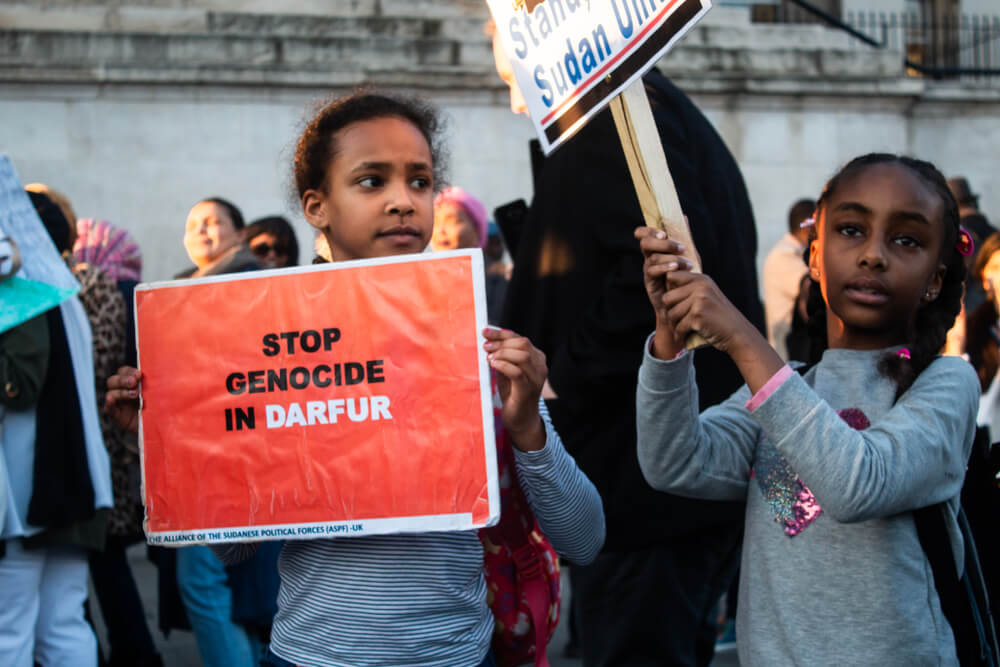 The Court cannot secure the world’s confidence merely by invoking the magnitude of its mandate; it must earn it through speed, discipline and procedural integrity
The broader framework further weakens the Court. Niger, Mali and Burkina Faso have begun withdrawing from the Rome Statute. That procedure has been under way for a year, but the political message is already clear: the circle of states that wish to be part of the international criminal justice system is not expanding, but shrinking.
When you add US sanctions, Russian non-recognition, Israeli resistance and increasingly vocal accusations that the Court is selectively applying justice, the ICC is entering one of the most sensitive periods since its establishment.
This does not mean that the Court should be rejected. On the contrary, the weakness of the ICC is dangerous precisely because, for many victims, there is no other international recourse.
National courts often cannot or will not prosecute their own commanders. Regional forums lack the necessary strength. The Security Council is blocked by the interests of the permanent members. Without The Hague, crimes in Darfur remain in the hands of the same authorities, militias and patrons who enabled or tolerated them.
But the Court cannot secure the world’s confidence merely by invoking the magnitude of its mandate; it must earn it through speed, discipline and procedural integrity.
If it claims to have evidence against the RSF leadership, then it must show that this evidence identifies individuals, orders and a clear strategy of execution. If it removes or retains the chief prosecutor, it must show that it is doing so on the basis of a legal standard that does not appear to be diplomatically overriding its own judges.
The vote on 24 July will not resolve the International Criminal Court’s crisis. It can only remove or save the man who has become its most visible symbol. The real test will come after that, in Darfur.
If RSF commanders remain beyond the reach of justice, and the Court continues to claim it has evidence without anyone in the dock, Darfur will again find itself where it was after the first war: caught between grand promises and delayed justice.
Twenty years later, the only verdict addressed the crimes of the last war, while a new one had already taken place. The latest evidence will only make sense if it is followed by names, arrest warrants and actual defendants appearing before judges in The Hague.
