On 17 July, Xi Jinping opened the World AI Conference in Shanghai with a carefully targeted offer to countries that do not yet have their own models, data centres, experts, or sufficient funding to pay for expensive American systems.
Over the next five years, China will provide 5,000 training places for experts from developing countries and will establish centres for the practical application of artificial intelligence with regional organisations.
One of the first areas of cooperation will be early warning systems for storms, floods and other extreme weather events, which Beijing plans to introduce in 30 countries.
The programme also received an institutional framework, when representatives of 29 countries signed an agreement establishing the World Artificial Intelligence Cooperation Organization, WAICO, a new intergovernmental organisation based in Shanghai.
With this initiative, Beijing has combined technological support with the expansion of political influence. It is offering training, models and implementation centres to countries in the Global South, together with an institutional framework through which Chinese standards can be incorporated into their regulations and public systems.
For countries that do not yet have their own AI capabilities, such an offer may seem accessible and practical, but at the same time it binds them to Chinese infrastructure, suppliers and technical rules.
China is trying to secure a foothold in these systems before their governments build their own institutions, standards and reliable alternatives.
The organisation was founded before the rules were written
The agreement establishing WAICO was signed by countries from Asia, Africa, Latin America and Europe, including China, Russia, Brazil, Indonesia, South Africa, Pakistan, Kazakhstan, Malaysia, Serbia, Kenya, Ethiopia, Cuba and Venezuela.
The founders do not include the United States, any members of the European Union, Japan, South Korea or India, so the initial composition of the organisation clearly shows its political orientation.
Beijing has mainly brought together countries seeking access to artificial intelligence without complete dependence on American companies or Western restrictions.
Through WAICO, China is trying to bind them permanently to its models, companies and technological infrastructure, thereby strengthening its influence over their future decisions on the development and application of artificial intelligence.
The Chinese authorities describe WAICO as the first interstate international organisation dedicated to artificial intelligence. The agreement defines it as an independent body that will promote international cooperation and the governance of AI development, with reference to the United Nations Charter, state sovereignty, equality and cultural diversity. The organisation is formally open to all countries.
All that is certain is that WAICO has been established and that its headquarters will be in Shanghai
For now, all that is certain is that WAICO has been established and that its headquarters will be in Shanghai. The budget, voting procedures, powers of its bodies, procedures for admitting new members and the deadline by which the organisation should start operating at full capacity have not been announced.
Its real reach therefore cannot yet be assessed in terms of formal powers, but only in terms of Beijing's political intention to build around itself a permanent platform for cooperation in the field of artificial intelligence.
That intention was indicated as early as 2025, when China stated that the organisation should align the development plans, governance rules and technical requirements of member states.
In practice, this means having potential influence over how models are validated, what data is used, how risks are assessed, and under what conditions foreign systems can be introduced into public administration, healthcare, education, banking, and critical infrastructure.
If WAICO begins to shape such decisions, it will not remain merely a forum for consultation but will become a vehicle through which China advances its own approach to the development and control of artificial intelligence.
Advantage is no longer measured by model strength alone
American companies continue to hold leading positions in developing the most advanced systems, and in access to capital and infrastructure for training large models.
The United States has the largest concentration of data centres, and its control of advanced chips remains an important instrument of technology policy.
In 2026, Washington eased some conditions for the sale of certain processors to China but maintained a system of permits, customer checks, and restrictions on advanced computer equipment.
At the same time, the technological gap between the leading American and Chinese models has narrowed significantly. Stanford’s AI Index for 2026 estimates that the performance gap has almost closed and that, in March, the leading American model had an advantage of only 2.7 per cent over the leading Chinese model.
China still produces fewer globally significant models than the United States, but it is no longer a country that can only offer cheaper imitations of Western technology.
China's offer emphasises availability, training, and the state's right to decide how to use the technology
DeepSeek, Alibaba's Qwen and other Chinese systems have changed how governments and companies evaluate the supply from Beijing. Their appeal often lies in the ability to run the model on a country's own infrastructure, adapt it to the local language and use it without full dependence on a closed cloud service from a US provider.
For a ministry in Africa, a state-owned company in Southeast Asia, or a university in Latin America, such traits may matter more than a small advantage in an international model aptitude test.
Therein lies China’s political advantage. Beijing can talk about technological sovereignty while offering a system that is robust enough, cheaper to deploy and easier to adapt locally. The American offer rests on superior products, safety standards, export licences and a network of reliable partners.
China's offer emphasises availability, training, and the state's right to decide how to use the technology. For much of the world, this represents a genuine political and economic difference.
Lack of capacity opens up space for Chinese influence
The need China is addressing is very specific. The United Nations Conference on Trade and Development (UNCTAD) has estimated that fewer than a third of developing countries have a national strategy for artificial intelligence, and that 118 countries do not participate adequately in international discussions on its governance.
Most poorer countries lack sufficient computing power, the data needed to train and verify AI systems, and the experts and institutions capable of assessing the risks of advanced models. Investment in AI infrastructure is increasingly concentrated in a small number of countries.
The offer of 5,000 training places is not only an educational programme. China is thereby creating a network of people who will return to the ministries, regulatory bodies, telecommunications companies, universities and civil services of their countries, where they will help write regulations, select suppliers and procure AI systems.
If these personnel are trained on Chinese models and connected to Chinese centres, companies and funding sources, Beijing will gain influence over those countries’ decisions for years to come. This is precisely why training is one of the most important instruments of this initiative.
Beijing does not need to secure a formal majority in the United Nations if enough countries already build domestic systems compatible with its technology
The announcement that China’s early warning system for extreme weather events will be rolled out to 30 countries shows how Beijing intends to expand this initiative.
It will begin in areas where the technology addresses a specific problem and faces little political resistance, such as flood protection, crop monitoring, transport or public service operations.
However, introducing such a system involves long-term contracts, maintenance, employee training, and reliance on Chinese equipment and software. A practical project can therefore become a gateway to a much broader presence of Chinese companies in state infrastructure.
When the Chinese model becomes part of the daily work of a state institution, maintenance contracts, employee training, access to the data collected by that institution, and expansion of the system to other areas follow. An initial technological decision can thus turn into long-term dependence on a Chinese supplier.
WAICO could therefore move forward with projects that offer technical feasibility and tangible development, while political ramifications accumulate in the background.
States do not have to accept every Chinese position on AI in order to adopt the Chinese model, use the Chinese cloud, or apply the Chinese standard for public procurement.
Beijing does not need to secure a formal majority in the United Nations if enough countries already build domestic systems compatible with its technology.
The limits of Chinese supply
However, the Chinese project faces serious obstacles. WAICO members have different interests, levels of development, and relationships with the major powers.
Brazil, Indonesia and South Africa will not automatically cede control of their digital rules to Beijing. Many of them want Chinese investment, American-made chips, access to the European market and regulatory freedom at the same time.
Trust will be an even bigger problem. Governments considering Chinese systems will need to know where the data is stored, who can access it, who can modify the system, and what happens if relations with China deteriorate.
Advanced chips, manufacturing equipment and large-scale computing infrastructure remain areas of strong American and allied influence
Even when the model is installed on servers in that country, the question remains of who controls its maintenance, updates and key pieces of software. A country can thus formally host a system on its territory while still depending on a Chinese supplier for any major change or security issue.
China also faces its own technological limitations. Flagship models may come close to American performance, but advanced chips, manufacturing equipment and large-scale computing infrastructure remain areas of strong American and allied influence.
Beijing can widely export models and applications, but its ability to provide computing power to all partners over the long term will depend on the development of domestic processors, energy capacity, and access to global supply chains.
Implementation will precede the establishment of rules
In its initial stage WAICO will not have the authority of a global regulator, nor will it be able to make binding rules for countries outside its membership. Beijing will build its influence through training programmes, application centres and concrete projects with member states.
It will spread fastest where Chinese companies already provide telecommunications infrastructure, cloud services, support state institutions or enjoy strong political backing.
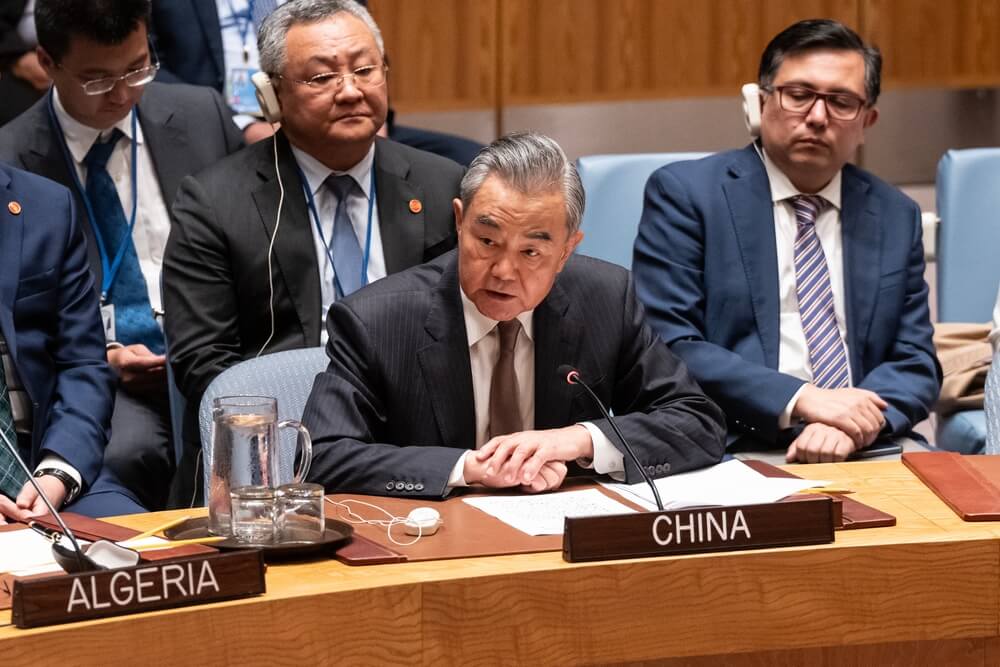 The real test for WAICO will begin when discussions about artificial intelligence return to the United Nations and other international organisations - FM Wang Yi
The United States and the European Union will have to respond with an offer that goes beyond warnings about Chinese influence.
Countries lacking expertise and computing power need access to models, infrastructure funding, regulatory support, and technology adapted to local languages.
Without this, Western rules will remain the standard in countries that already have the capacity to implement them, while China will build influence in countries that are only just developing that capacity.
WAICO's success will therefore not depend on whether it ultimately adopts a major international agreement. It will be enough for dozens of countries to train their officials through its programmes, introduce Chinese models into public systems and draft procurement rules based on the technology they already use.
When global standards negotiations begin later, many decisions will already be embedded in servers, contracts, curricula and government databases.
The real test for WAICO will begin when discussions about artificial intelligence return to the United Nations and other international organisations.
If Beijing succeeds in turning the 29 founders into a coherent bloc, the dispute over AI will no longer be just between states and tech companies, but between two different models of political control over technology. It will then become clear that the Shanghai meeting was the beginning of a much wider divide.
