The international order is not collapsing. It is being reorganised.
The United States still holds unmatched military, financial and technological advantages. Yet the strategic environment that sustained the first Pax Americana has fundamentally changed.
China's rise as America's principal systemic competitor, Russia's challenge to European security, the race for artificial intelligence, fragmented supply chains, critical minerals and the quest for technological sovereignty have reshaped the foundations of global power.
Washington's challenge is therefore no longer simply to preserve the post-1945 order, but to redesign American leadership for an era in which geopolitical influence depends as much on control of strategic networks as on the projection of military power.
The broad direction of the Trump administration's strategic thinking can be understood through an analytical framework that may be called Pax Americana 2.0. This is not an official doctrine but a conceptual model that links several strategic trends into a coherent whole.
Unlike the first Pax Americana, which organised American leadership around territories, alliances and international institutions, Pax Americana 2.0 seeks to organise power through three interconnected strategic networks:
NATO 3.0, the security network.
Pax Dollarica, the financial network.
Pax Silica, the technology network.
Together, these three pillars mark a shift from geographical dominance to network leadership. The central strategic question is no longer who controls the most territory, but who shapes the most influential security, financial and technological ecosystems.
NATO 3.0: reinventing collective security
NATO was created to deter the Soviet Union. In the post-Cold War era, it expanded its missions to crisis management, counterterrorism and expeditionary operations. The strategic environment now demands another transformation.
NATO 3.0 is evolving from a traditional military alliance into the security infrastructure of the democratic world.
Its future will depend not only on conventional deterrence, but also on artificial intelligence, cyber capabilities, autonomous systems, space assets, critical infrastructure protection and an integrated defence-industrial base.
NATO 3.0 is less about expanding the Alliance and more about modernising its strategic function
The war in Ukraine has shown that industrial capacity, ammunition production, software, drones and resilient logistics can be as decisive as tanks or fighter aircraft.
This transformation also reflects Donald Trump's insistence that America's allies should become security providers rather than permanent security consumers.
Washington's objective is increasingly clear: Europe must assume greater responsibility for deterring Russia while the United States reallocates strategic attention to the Indo-Pacific and long-term competition with China.
NATO 3.0 is therefore less about expanding the Alliance and more about modernising its strategic function.
Pax Dollarica: preserving financial leadership
Military power alone cannot sustain global leadership. The financial architecture remains one of America's greatest strategic advantages.
The US dollar continues to dominate international reserves, capital markets and global liquidity. However, the emergence of BRICS financial initiatives, alternative payment systems and digital settlement mechanisms shows that parts of the international system are actively seeking greater monetary autonomy.
These initiatives do not yet constitute a credible alternative to the dollar-based order. Nevertheless, they reveal a gradual trend towards financial fragmentation.
Pax Dollarica can be understood as a twenty-first-century evolution of Bretton Woods
Therefore, America's response should be transformational, not defensive.
Pax Dollarica can be understood as a twenty-first-century evolution of Bretton Woods. Rather than recreating the institutions established in 1944, it would modernise America's financial leadership through trusted payment systems, resilient capital markets, digital finance, reliable dollar liquidity and stronger economic partnerships with strategically important middle powers.
The objective is not simply to preserve the dollar's dominance, but to ensure that participation in the American financial ecosystem remains more attractive, more stable, and more innovative than competing alternatives.
Pax Silica: the new technology alliance
If Bretton Woods defined twentieth-century finance, technological ecosystems will define twenty-first-century power.
Artificial intelligence has transformed semiconductors, quantum technologies, computing capacity, critical minerals, energy infrastructure and data centres into strategic assets. Technological competition is no longer confined to commercial innovation; it has become a contest for geopolitical influence.
The US State Department's Pax Silica initiative reflects this emerging reality by promoting cooperation across the silicon supply chain, from critical minerals and advanced manufacturing to AI infrastructure and trusted technology partnerships.
Pax Silica must not be merely a coalition that restricts technology transfers, but an attractive international technology ecosystem
China is simultaneously building its own institutional architecture. Its efforts to establish international AI cooperation mechanisms and expand technological partnerships across the Global South show that the competition extends beyond innovation itself. It increasingly concerns who defines standards, finances infrastructure, trains talent, and shapes the governance of emerging technologies.
For this reason, Pax Silica must not be merely a coalition that restricts technology transfers, but an attractive international technology ecosystem.
The countries leading artificial intelligence tomorrow will not necessarily be those achieving every breakthrough themselves. They will be those capable of organising the largest, most trusted networks of research, investment, production, digital infrastructure and technological cooperation.
In the twenty-first century, technology is no longer simply an economic sector; it is becoming the operating system of geopolitical power.
The four strategic tests
Designing three strategic networks is only the beginning. Their long-term viability will depend on whether Washington can overcome four defining geopolitical tests.
The first is whether the United States can maintain its strategic focus on China.
For more than two decades, successive administrations have acknowledged that China is America's principal long-term competitor, yet every regional crisis, from the Middle East to Eastern Europe, has repeatedly diverted American attention and resources. Pax Americana 2.0 requires strategic discipline. Not every crisis should receive the same level of political, military or financial commitment.
The central question for every major policy decision becomes increasingly straightforward: does it strengthen America's long-term competitive position against China, or does it consume strategic capital without altering the global balance of power?
The second test concerns America's alliance system, particularly its relationship with Israel.
The strategic partnership between Washington and Jerusalem will almost certainly remain one of the pillars of American Middle East policy. However, a network-based global strategy inevitably raises a broader question: if every American ally is expected to contribute more to collective security and strategic resilience, can any alliance remain entirely insulated from this principle?
Pax Americana 2.0 is therefore less likely to abandon alliances than to redefine them around greater reciprocity, burden-sharing and alignment with America's global priorities. The real challenge is not preserving alliances but ensuring that regional crises do not repeatedly derail Washington's broader strategic agenda.
The third test lies within the Atlantic Alliance itself.
Washington increasingly defines China as the central geopolitical challenge of the twenty-first century whereas Europe continues to regard Russia as its most immediate security concern.
This divergence is likely to become one of the defining features of transatlantic relations in the coming decade.
While the United States seeks to concentrate resources in the Indo-Pacific region, European governments will continue to invest heavily in conventional deterrence against Russia.
Rather than forcing complete strategic convergence, Pax Americana 2.0 may require a new division of labour: Europe taking greater responsibility for continental security while cooperating with the United States on technological resilience, critical supply chains and economic security vis-à-vis China.
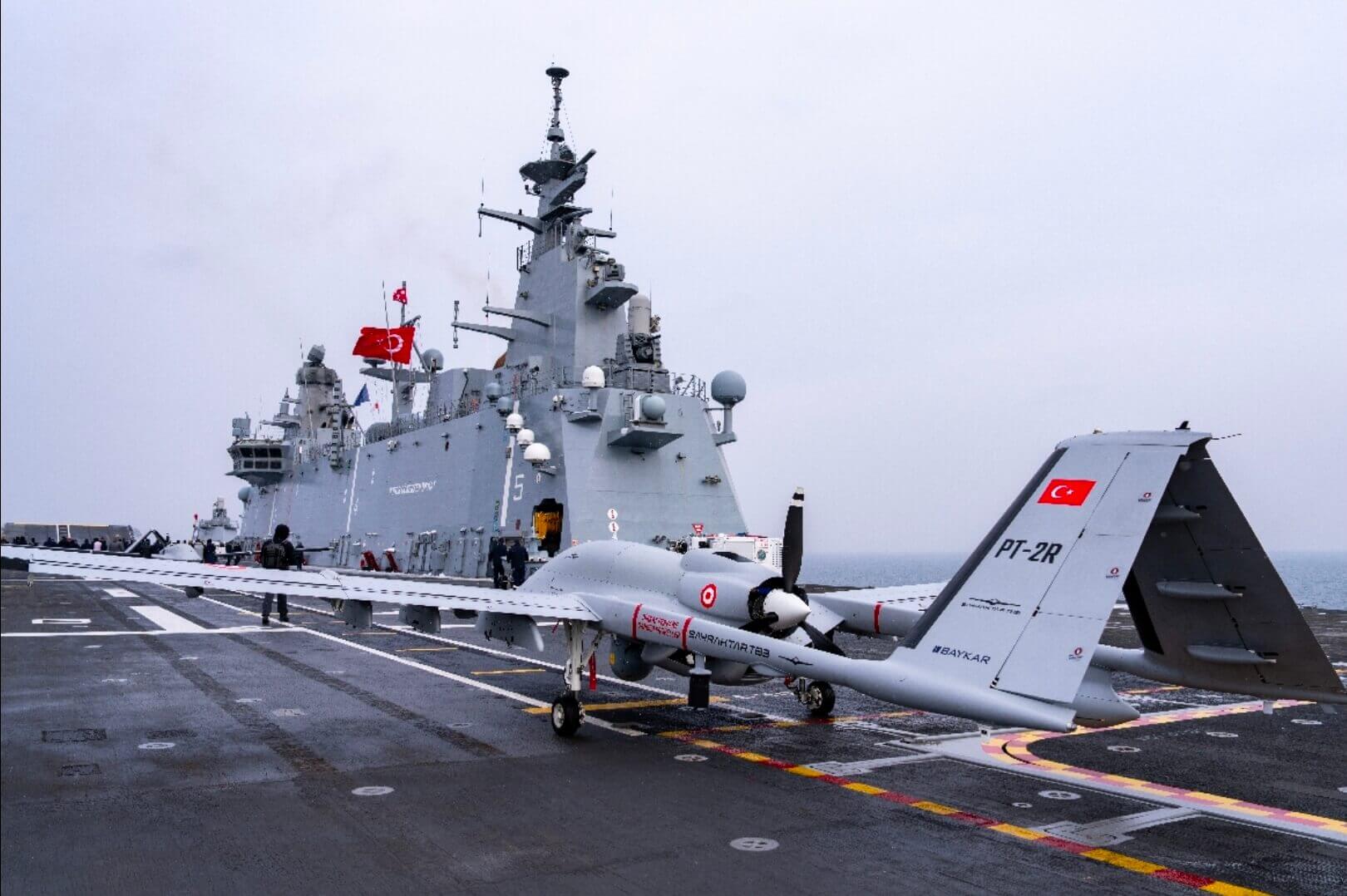 Within NATO 3.0, Türkiye is an increasingly important security provider, drawing on its military capabilities, defence industry and operational experience
The fourth and perhaps most consequential test concerns Türkiye.
Few countries occupy such a unique geopolitical position. As a NATO member situated at the intersection of Europe, the Black Sea, the Caucasus, the Middle East and Central Asia, Türkiye has strategic relevance that extends well beyond its regional environment.
Within NATO 3.0, Türkiye is an increasingly important security provider, drawing on its military capabilities, defence industry and operational experience.
Within Pax Dollarica, it has the potential to become a financial bridge connecting European, Gulf and Eurasian markets, provided macroeconomic stability and institutional confidence continue to improve.
Within Pax Silica, Türkiye offers advanced manufacturing capacity, a growing technology ecosystem, expanding digital infrastructure and a strategic location for trusted supply chains linking Europe and Asia.
Its greatest value, however, lies in its ability to connect all three networks simultaneously.
Türkiye is not simply a frontline ally.
It is one of the few middle powers capable of linking NATO’s security architecture, Eurasia’s financial connectivity and the emerging technology networks that will shape the next phase of global competition.
For Washington, this is an opportunity to build a more resilient networked order. For Ankara, it offers the prospect of becoming one of the indispensable junction states of the twenty-first century rather than merely a geopolitical crossroads.
The architecture of the next global order
The first Pax Americana emerged from the ruins of the Second World War. It organised international politics around American military power, the Bretton Woods financial system and a network of institutions that shaped global governance for nearly eight decades.
The world entering the middle of the twenty-first century needs a different architecture.
If the first Pax Americana organised territories, Pax Americana 2.0 seeks to organise networks
The defining competition of this century will not be decided by military superiority, economic scale or technological innovation alone. It will be shaped by the ability to integrate all three into a coherent strategic architecture.
If the first Pax Americana organised territories, Pax Americana 2.0 seeks to organise networks. Its success will depend not only on America's ability to project power, but also on its capacity to convince allies and partners that its security, financial and technological networks remain the most resilient, most innovative and most attractive to join.
By 2050, the global balance of power will belong not simply to the nation with the largest military, but to the one that succeeds in building the strongest, most trusted networks.
Dr Kerem Alkin is an economist, academic and former Ambassador and Permanent Representative of Türkiye to the OECD. He is Dean of the Faculty of Communication at Istanbul Topkapı University.
