Twelve years ago, Ukraine was sleepwalking toward catastrophe. Now Europe is.
Before 2014, Ukraine’s military had been hollowed out by decades of neglect and disarmament. That was a choice.
Why spend scarce resources on defense when the 1994 Budapest Memorandum offered security assurances in exchange for Ukraine surrendering its nuclear arsenal?
Why prepare for a conflict that the prevailing intellectual consensus said could never happen?
Liberal democracy had triumphed, great-power conflict was a relic, and the arc of progress bent toward peace, liberalization, and economic convergence.
Worse, Ukraine allowed Russia to penetrate its information space, promote pro-Kremlin narratives, cultivate political allies, and meddle in Ukraine’s elections.
Under President Viktor Yanukovych, a former Russian citizen served as minister of defense. The army was sabotaged from within.
The warning signs were there
Ukraine should have known better. The warning signs were there. Russia had invaded Georgia in 2008, demonstrating that it was prepared to use military force to prevent another former Soviet republic from escaping its orbit.
Putin was already questioning whether Ukraine was a real country, describing parts of its territory as a “gift” from Russia.
He publicly described Russians and Ukrainians as “one people,” and used energy and trade to gain political leverage. Yet the belief that Russia would go no further prevented decisive action.
Then, in February and March 2014, Russia annexed Crimea without firing a shot because there was barely anyone to fire back (and those who might have helped urged Ukraine to stand down). Shortly afterwards, Russia occupied parts of the Donbas.
This time, Ukraine fought back, but from a position of profound weakness against a stronger and better-prepared adversary.
Many Ukrainians wanted to believe that the problem could be talked away
Ukraine struggled to reach a consensus about what had happened and what must be done.
While some called for mobilization, many believed that the war was local and confined to a strip of territory in the east and a distant peninsula. The worst was over, they claimed: Putin had taken what he wanted.
It followed that compromises, even if painful, could buy peace. Surely, the right leader could sit across the table from Putin and negotiate an end to the bloodshed. The election of Volodymyr Zelensky in 2019 partly reflected this yearning.
Zelensky spoke of ending the war in Donbas, of talking directly to Russia, and of finding common ground.
Many Ukrainians wanted to believe that the problem could be talked away.
Instead, on February 24, 2022, Russia launched a full-scale invasion, targeting Kyiv and seeking to decapitate the Ukrainian state. The war that was supposed to be local became existential.
Europe’s resemblance to Ukraine’s trajectory
Europe’s resemblance to Ukraine’s trajectory is striking. The comparison is not exact: Europe is richer, more institutionally resilient, and still largely sheltered by NATO, at least in principle.
But the similarity in habits of thought and action is close enough to be deeply troubling, as Germany’s pathetic reaction to a failed Russian drone attack at Leipzig airport amply demonstrates.
After decades of peace, Europe has systematically dismantled its defense capabilities. NATO’s guideline of spending 2% of GDP on defense had, until recently, been treated as a ceiling rather than a floor.
For decades, Italy and Spain hovered around 1.5%. Belgium and others trailed even further behind.
Germany allowed the Bundeswehr to deteriorate to the point where soldiers trained with broomsticks instead of rifles and major weapons systems had readiness rates below 50%.
Europeans’ willingness to strengthen their defenses via public-spending cuts or peacekeeping deployments in Ukraine is shockingly low
Europeans’ willingness to strengthen their defenses via public-spending cuts or peacekeeping deployments in Ukraine is shockingly low.
The mindset behind this neglect is familiar from Ukraine before 2014. Big wars cannot happen: we have the European Union, NATO, and nuclear deterrence.
The United States will handle security. Defense spending is wasteful. Diplomacy and economic interdependence will keep the peace. Russia would never attack a major trading partner.
Those assumptions have collapsed. The US has signaled with increasing bluntness that the era of American security guarantees without European burden-sharing is over.
President Donald Trump’s administration openly questions the value of NATO.
Nuclear weapons do not deter subthreshold aggression (like drone and cyberattacks) or the use of coercion and subversion to erode sovereignty.
What is striking in much of Europe is not just pacifism or poor readiness, but the lingering sense that even now the old rules will somehow reassert themselves.
Strength is the precondition for peace
Europe is now facing its own warning signs. Russia is already waging what NATO calls a campaign of sabotage, cyberattacks, electronic interference, disinformation, and political influence across the continent.
Russian drones and aircraft increasingly violate NATO airspace, while suspicious incidents around undersea cables and other infrastructure have forced NATO to strengthen their protection.
These provocations are deliberately below the threshold of war. That ambiguity enables Russia to probe European defenses, test political resolve, and learn how much provocation the West will tolerate before responding.
And, like Ukraine before 2014, Europe keeps finding reasons not to act.
Across Europe, support for rearmament and for Ukraine remains politically contested.
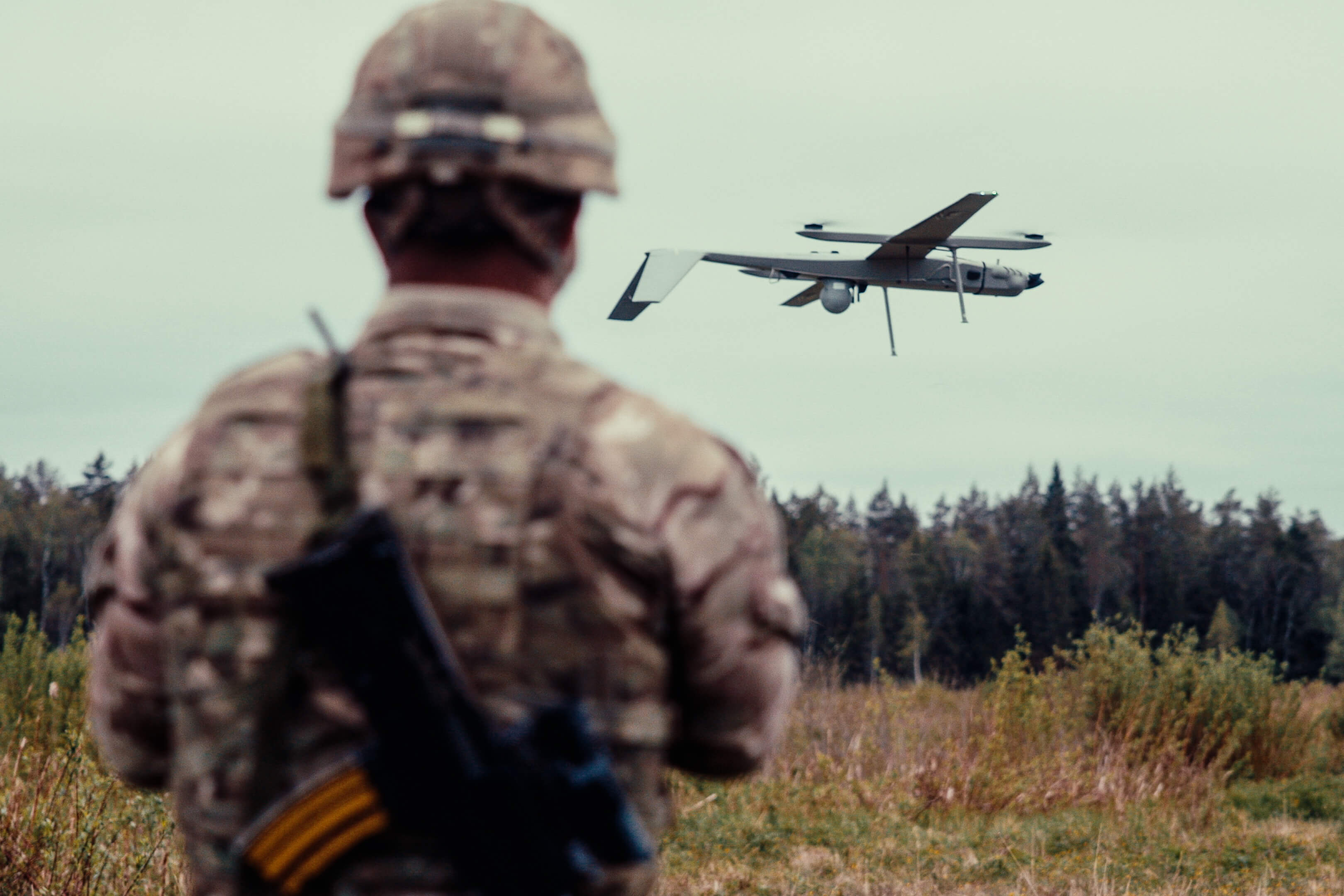 Europe in 2026 can invest seriously in its own defense, accept the costs and trade-offs involved, and build credible deterrence
In Italy and Spain, voters resist higher defense spending. In France and Germany, influential voices frame urgency as overreaction (the far-right Alternative for Germany, which is likely to take power in Saxony-Anhalt, calls for a deal with Russia). In Slovakia, leaders have openly favored accommodation with the Kremlin.
Russia finances political parties, penetrates cultural institutions, and promotes disinformation throughout Europe.
Across the continent, many argue that the war in Ukraine can be ended through negotiation if only Ukraine’s leaders would be more “realistic” about territorial concessions.
Winston Churchill’s verdict on the catastrophic 1938 Munich Agreement is as relevant as ever: “You were given the choice between war and dishonor. You chose dishonor, and you will have war.”
Europe in 2026 can invest seriously in its own defense, accept the costs and trade-offs involved, and build credible deterrence.
Or it can continue to underspend, hope that diplomacy alone will suffice, assume that US protection will always be available, and tell itself that the war in Ukraine is a local affair.
But the price of appeasement is never paid by the politicians who choose expedience over vigilance. It is soldiers and civilians who bear the consequences.
Europe still has time—provided by Ukraine, at extraordinary cost. The challenge is not merely to spend more, but to think differently: to accept that deterrence is not alarmism, preparedness is not provocation, and strength is often the precondition for peace.
Tatyana Deryugina is Associate Professor of Finance at the University of Illinois Urbana-Champaign.
Yuriy Gorodnichenko is Professor of Economics at the University of California, Berkeley.
Ilona Sologoub is Editor of VoxUkraine.
