Brazilian President Luiz Inácio Lula da Silva once had a credible claim to be the savior of the country’s left. After the October 4 general election, he looks more like the left’s gravedigger.
The defeat of Lula and his allies was enormous. Contrary to what pre-election polls predicted, he lost the first round of the presidential contest to Flávio Bolsonaro, a nepo baby whose only credential is his father’s surname.
Because the other three candidates who received significant numbers of votes all hail from the right or center-right, the presidency is now Flávio’s to lose in the second round on October 25.
But that is only the start of the story. Bolsonaro’s Liberal Party, which is anything but liberal, will now have the largest bloc in Congress (with twice as many senators as before) and the largest number of state governors.
The Bolsonaro clan was the big winner: the third wife of putschist patriarch Jair, plus two other sons and his brother, will now be parliamentarians.
Any account of what went wrong for the left must begin with Lula himself.
Yesterday’s man
Even if his life story, rising from humble metal worker to the pinnacle of power, remains admirable, today he is yesterday’s man.
This is the Biden story on steroids: an octogenarian prone to rambling who should never have been allowed to run (it was Lula’s seventh presidential race) and who became a candidate only because plausible alternatives were lacking.
Under Lula’s tree, successors found it hard to bloom
Under Lula’s tree, successors found it hard to bloom. And the only person often mentioned as an heir, former minister and mayor Fernando Haddad, just lost the governorship of São Paulo (Brazil’s most populous state) by a whopping margin to a Bolsonaro ally.
It was Haddad’s fourth consecutive election defeat, so his political career is over as well. Lula’s long shadow will continue to darken the Brazilian left’s future.
Fiscal mess
The economy has been growing, thanks more to high global commodity prices than to anything Lula’s government has accomplished, but affordability remains a big issue for the electorate.
Lula has dithered on the structural reforms needed to make Brazil more productive and capable of long-term growth.
This year the fiscal deficit will exceed 8% of GDP
Moreover, the fiscal situation is dire: this year the fiscal deficit will exceed 8% of GDP, and the public debt, never easy to measure because of Brazil’s devilishly complex federal fiscal arrangements, is by most accounts nearing 95% of GDP.
With world interest rates on the rise, that is a toxic combination. If Flávio does become president, his first priority should not be springing his old man, a convicted felon, from house arrest (as he has vowed to do), but fixing the fiscal mess Lula will leave behind.
Fondness for dictators
Lula also failed to capitalize on a potential Trump bump. The US president has been shameless in using tariffs and other threats to try to get Brazil to do his bidding.
A few months ago, it seemed like Lula could imitate Mark Carney in Canada and Anthony Albanese in Australia and ride all the way to continued power on resentment of Trumpian abuse.
As the campaign wore on, Lula’s other liabilities weighed more heavily on pivotal voters
But as the campaign wore on, Lula’s other liabilities weighed more heavily on pivotal voters.
Among those liabilities were his timid response to organized crime, which is taking on terrifying proportions in Brazil and elsewhere in Latin America. Another was his fondness for dictators.
The pictures of Lula cozying up to Russian President Vladimir Putin on Moscow’s Red Square, or hobnobbing with Iran’s ruling mullahs (most recently at the 2023 BRICS summit) cannot have helped his campaign, even if Brazilian voters do not give foreign affairs top priority.
Centrists have made many mistakes
What can we learn from this tragic election, whose unappetizing choice between Lula and Flávio caused a record 33 million eligible voters to stay home?
For starters, peak right-wing authoritarian populism is not yet with us. Trump came back after a disastrous first term, and the Bolsonaros most likely will, too.
This is a bad omen for the upcoming elections in France, Poland, and Italy, and for what might happen in the US if a midterm victory in November makes the Democrats overconfident.
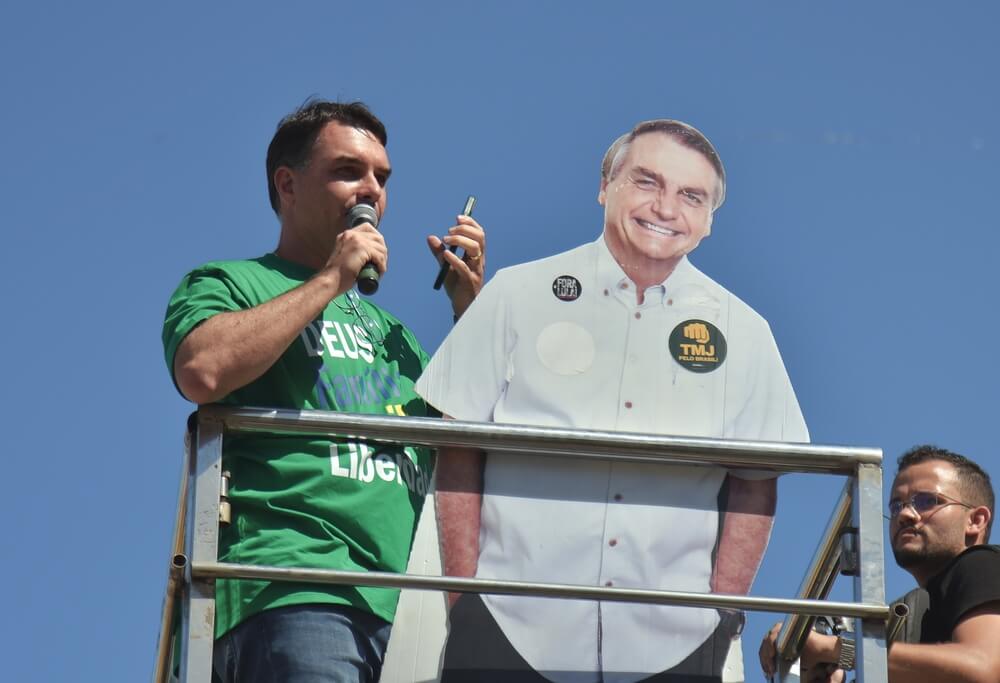 Peak right-wing authoritarian populism is not yet with us. Trump came back after a disastrous first term, and the Bolsonaros most likely will, too
A second lesson is that traditional leftist recipes, seasoned with claims of moral superiority (“only we can defend people’s rights”) leave many voters cold.
The counter-argument is that the problem is the messenger and not the message, and that New York City Mayor Zohran Mamdani and even US Representative Alexandria Ocasio-Cortez can succeed where Biden and Lula seemed to fail. I am skeptical.
That may work in New York City. But not in Texas or Mato Grosso do Sul (the Brazilian Texas), and not in São Paulo (the Brazilian New York).
The third lesson is for center-left and center-right parties: keep this up, and you will go the way of the dinosaurs.
That is already the fate of Brazil’s once-successful centrist party, the Social Democrats of former President Fernando Henrique Cardoso.
The Plan B of clinging to power as junior partner of more extreme parties is more poison than tonic.
The United Kingdom’s Liberal Democrats learned this lesson long ago, and Chile’s Social Democrats should have by now (but haven’t). Republicans in France and Christian Democrats in Germany: take note!
Centrists have made many mistakes. One of them is to have become synonymous with the Establishment.
Every election is a contest between change and stasis, and proponents of the status quo seldom come out ahead.
Of course, there is nothing in liberal and reformist ideas that leads ineluctably to pompous speech-making and dodgy back-room deals, but that is what many voters have come to expect.
An insurgent liberalism? It may sound unlikely, but it is the only thing that can prevent rerun after rerun of the dispiriting Lula-versus-Flávio reel.
Andrés Velasco, a former finance minister of Chile, is Professor of Public Policy at the London School of Economics and Political Science.
