Russia's heavy bombing of Ukraine on 24 May, the most extensive since the beginning of the war, shows that Moscow is not genuinely interested in the peace process.
The missile attack on civilian targets confirms that Moscow's official position, which claims commitment to a peaceful outcome, is merely a way of buying time and thus attempting to achieve its war aims.
Approximately 600 drones, 54 cruise missiles, two Kh-47 Kinzhal air-launched ballistic missiles, three Tsirkon hypersonic missiles, 30 Iskander-M ballistic missiles, and one Oreshnik intermediate-range ballistic missile were used in the attack.
The main strike targeted Kyiv, as well as civilian, residential and educational infrastructure in the Odesa, Sumy, Poltava, and Kyiv regions of Ukraine.
Vladimir Putin stated that the attack was allegedly a “response” to a supposed Ukrainian strike on a college dormitory in Bilsk, located in the temporarily occupied territory of the Luhansk region.
It later emerged that the dormitory in question had housed drone operators from the Russian elite unmanned systems unit, “Rubikon”.
Notably, even Russia’s Permanent Representative to the UN, Vasily Nebenzya, failed to provide convincing evidence to support the Russian version of events.
Nevertheless, the Kremlin used the incident as a pretext to launch the largest missile strike against Ukraine since the beginning of the war, targeting not a specific military target but the Ukrainian capital and other cities.
As a result of the attack, more than 90 civilians were injured and at least five people were killed. Approximately 300 sites were damaged, including 150 residential buildings and several cultural and historical institutions.
No evidence confirming the destruction of military targets, as claimed by the Russian side, has been recorded.
Attack immediately after Putin's visit to China
Russia’s unprecedented attack on Ukrainian civilian infrastructure, including the use of the Oreshnik intermediate-range missile, provoked a strong reaction from European leaders.
Across EU member states, the Kremlin’s actions were described as reckless escalation, terrorist intimidation tactics, and a blatant disregard for international law.
The systematic destruction of civilian infrastructure demonstrates Russia’s intention to continue a war of attrition and impose capitulation terms on Ukraine, rather than achieve a just and lasting peace based on international law.
The use of this type of weapon against civilian cities may be regarded as a war crime
It is noteworthy that Vladimir Putin decided to launch a new large-scale attack on Kyiv almost immediately after his visit to Beijing.
The primary aim of the attack was to intimidate the population, spread panic, and undermine the psychological resilience of Ukrainian society.
During the attack, Russia used the Oreshnik intermediate-range ballistic missile for the third time, marking a deliberate step towards further escalation and an attempt at psychological pressure not only on Ukraine, but also on its Western partners.
The use of this type of weapon against civilian cities may be regarded as a war crime, as Russia is effectively testing its newest missile technologies under real wartime conditions, using the Ukrainian population as a testing ground for its weapons.
Change of strategy
The inability of the Russian army to achieve strategic breakthroughs on the battlefield or penetrate Ukrainian defences is increasingly pushing the Kremlin towards a strategy of terror against the civilian population.
According to preliminary information, another Oreshnik missile may have fallen in the temporarily occupied territory of the Donetsk region, north of Donetsk, likely indicating a technical malfunction during flight.
Strikes against Ukrainian residential areas are also an attempt by the Kremlin to create an informational backdrop to conceal significant Russian military losses in personnel and equipment.
Russia is deliberately destroying Ukraine’s economic and industrial potential
Russia is increasingly waging war not against the Ukrainian armed forces, but against the civilian population and critical infrastructure.
In practice, the Russian command has shifted to a strategy aimed at turning Ukrainian cities into uninhabitable territories, directly demonstrating its inability to achieve its objectives through military means.
Russia is deliberately destroying Ukraine’s economic and industrial potential by systematically targeting key enterprises, logistics hubs, port infrastructure and transport arteries.
The purpose of this strategy is to undermine Ukraine’s economic resilience, limit its ability to finance defence efforts, and destabilise global food markets by obstructing Ukrainian exports.
Escalation directed towards Europe
Moscow is deliberately escalating the situation precisely when the international community attempts to intensify diplomatic efforts to end the war.
The Kremlin views further escalation on the European continent as a possible means of imposing a new system of security arrangements on the West under Russian terms.
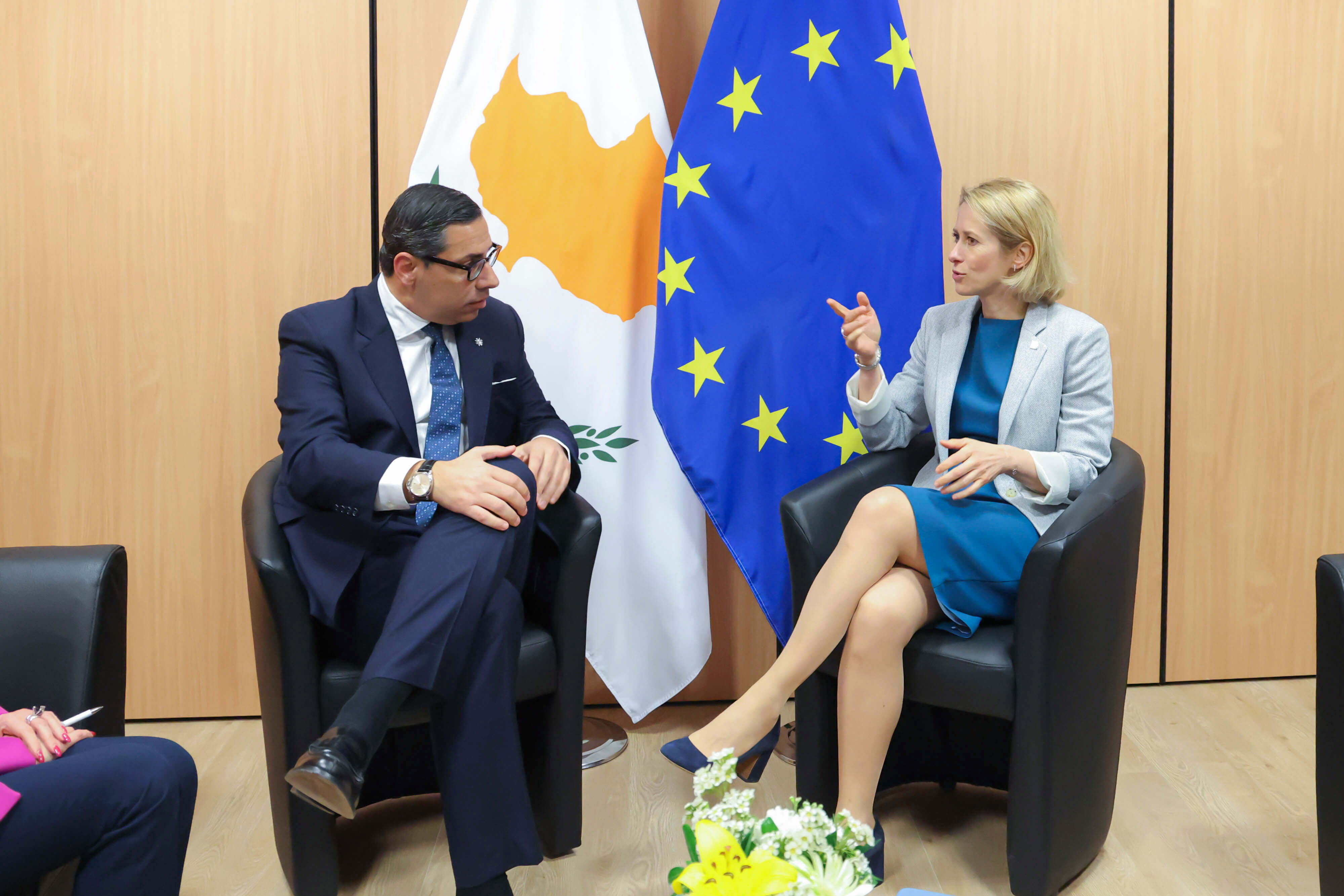 The informal meeting of the foreign ministers of the EU, scheduled for 27–28 May 2026 in Cyprus, is expected to serve as an important platform for shaping a common European response to Russian escalation
Preventing this will require deep military-political integration between the West and Ukraine, sustained support for Ukrainian defence efforts, and stronger sanctions pressure on the Russian defence-industrial complex.
Official Moscow has already declared its intention to continue missile strikes against Kyiv and has advised foreign diplomatic missions to leave the Ukrainian capital.
The informal meeting of the foreign ministers of the European Union member states in the “Gymnich” format, scheduled for 27–28 May 2026 in Cyprus, is expected to serve as an important platform for shaping a common European response to Russian escalation.
During the meeting, participants are expected to discuss the war in Ukraine, prospects for the negotiation process, demands towards Russia, mechanisms for security guarantees for Ukraine, and possible Russian provocations against Armenia ahead of the parliamentary elections on 7 June.
Through its actions, Moscow has effectively challenged all of Europe. The future of not only Ukraine, but also of the entire European security architecture, now depends on the determination and unity of Western states.
Oleksandr Levchenko, a former Ukrainian diplomat, is a professor at the State University (Kyiv) and a member of the Academy of Geopolitics and Geostrategy (Kyiv).
