In Washington, nearly every serious proposal that could constrain American AI companies runs into the same objection: restrictions would endanger national security and future prosperity by giving China the advantage.
As OpenAI CEO Sam Altman put it at a 2025 Senate hearing, the United States needs “sensible regulation” that “does not slow us down.”
This formulation has intuitive appeal. No one advocates poorly designed rules that would needlessly weaken US innovation.
Yet “don’t slow us down” too often becomes a demand for democratic institutions to step aside while a handful of private companies decide how one of the most powerful technologies in history will be built, deployed, and governed.
To be sure, much is at stake in the competition with China. A world in which Beijing dominates AI would be more censored, more surveilled, and inherently hostile to human rights and democracy.
But America can prevail by leaning into the strengths of an open society: democratic accountability, the rule of law, robust competition, and free public debate.
This is precisely where American AI companies can outcompete their Chinese rivals—not despite democratic oversight, but because of it.
After all, if an AI system is used in a hospital, school, police station, or on the battlefield, people want to know that it is subject to rules, that decisions affecting their lives can be challenged, and that there are meaningful mechanisms for redress when something goes wrong.
Making AI systems more trustworthy
These features require clear liability rules, transparency, due process for high-stakes automated decisions, and effective enforcement.
While democratic controls may in some cases slow deployment, they can also accelerate adoption by making AI systems more trustworthy.
Liability rules can encourage companies to address foreseeable risks before they cause harm; transparency can help researchers identify failures that companies miss or prefer not to disclose; and standards for testing, incident reporting, data protection, and human review can give customers greater certainty while reducing risks to society.
If America tries to compete by giving its own companies more secrecy, more impunity, or more power over citizens’ lives, it has already lost
The US won’t beat China in a race to the bottom, because China’s political system is better equipped for it.
It can compel companies and public agencies to pool data across finance, travel, health, policing, and everyday communications, then use that information to control and exploit citizens on a scale no democracy should seek to emulate.
It can direct companies to pursue national industrial goals because courts, legislators, and civil society do not constrain the party-state.
If America tries to compete by giving its own companies more secrecy, more impunity, or more power over citizens’ lives, it has already lost.
Why democratic accountability matters
Chinese technology companies’ own global track record shows further why democratic accountability matters.
Huawei has promoted its “safe city” systems as tools for public security, but in some countries, they have raised concerns about political espionage and weak human-rights safeguards.
Chinese-backed infrastructure and surveillance projects have also faced concerns about opaque contracts, corruption, and political influence.
That difference matters beyond US borders. People affected by American companies anywhere in the world can draw attention to their cases, seek coverage from the press, and enlist US civil-society organizations to advocate on their behalf.
Similarly, foreign businesses can seek redress through US courts, regulators, and independent mediation channels.
American AI companies should learn from the recent history of social media
None of these independent avenues exist in China to challenge companies acting with the party-state’s support.
American AI companies should learn from the recent history of social media.
Major platforms spent years resisting regulation as their business models degraded democratic discourse, spread disinformation, undermined privacy, addicted children, and concentrated enormous power.
Yet despite growing public frustration, these companies avoided a decisive political reckoning because much of the harm was diffuse and cumulative, making it hard to say why one company bore more responsibility than another.
Clear line of responsibility
AI companies will have much less room to hide. When an AI system screens someone out of a job, denies a benefit or a loan, gives harmful advice, or produces a false facial-recognition match, the consequences are immediate, measurable, and often traceable to a specific product and company.
That clear line of responsibility makes a backlash more likely and harder to deflect.
Americans are already wary of AI, with a recent Pew Research Center survey finding that 52% are more concerned than excited about the technology’s growing role in daily life, up from 37% in 2021; only 9% are more excited than concerned.
Nonetheless, AI companies appear to be following in social media’s footsteps.
AI companies are seeking privileged access to a small circle of officials and negotiating policies behind closed doors
Rather than become more transparent, they are seeking privileged access to a small circle of officials and negotiating policies behind closed doors.
Rather than defend open competition, they are racing to control computing power, data, and distribution channels before rivals can catch up, blurring the line between first-mover advantage and monopolistic or oligopolistic behavior.
And rather than trust democratic processes, their executives and investors are now spending heavily to defeat politicians who might regulate them.
Despite proclaiming that they stand for democratic AI against China’s autocratic model, they seem increasingly willing to bargain directly with political leaders rather than submit to rules established through open institutions.
The industry is making itself both unpopular and politically dependent
By seeking privileged access, suppressing competition, and purchasing influence to avoid accepting democratic constraints, the industry is making itself both unpopular and politically dependent.
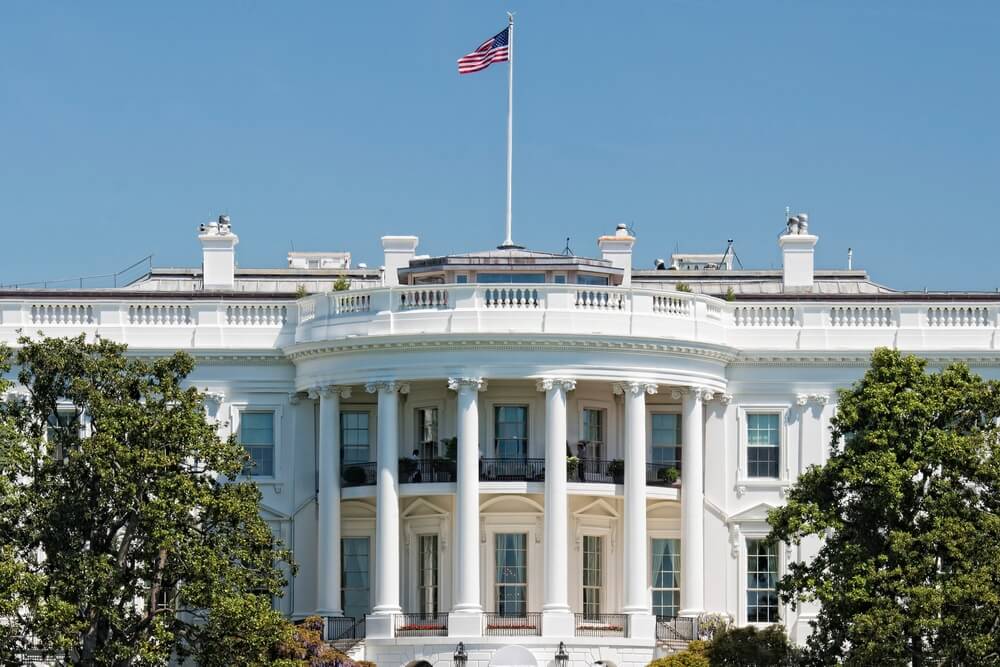 An administration that can decide which companies receive benefits can also punish those that fall out of favor
That means it could win deregulation today only to discover that it has surrendered its autonomy to whichever administration controls access to energy, chips, government contracts, export licenses, and antitrust enforcement tomorrow.
An administration that can decide which companies receive those benefits can also punish those that fall out of favor.
Companies that resist ordinary democratic oversight risk inviting unpredictability: direct political control by the government of the day.
Democratic accountability, the rule of law, and open competition are not costs to be avoided in the name of “winning.”
They are what will make American AI more trusted, more resilient, and ultimately stronger than China’s offerings. American AI companies’ time to choose wisely is running out.
Yaqiu Wang is a fellow at the Penn Project on the Future of US-China Relations at the University of Pennsylvania.
Nicholas Bequelin is a senior fellow at Yale Law School’s Paul Tsai China Center and a fellow at the Asia Society Center on US-China Relations.
