The race between the US and China to dominate the future of artificial intelligence intensified in the last week. Leading figures from both sides issued differing visions of how the technology should be regulated to protect humanity but also, inevitably, their own commercial edge.
The US still leads in terms of technological know-how, and its leading AI companies are essentially looking to secure the future of their massive investments with calls for regulation that would set standards as well as limits in the name of security.
The Trump administration has yet to issue details about its regulatory plans but is reported to be close to publishing them. So far, it has favoured open-source innovation, but China’s AI catch-up is causing alarm.
China’s President Xi Jinping last week spoke of preventing “new historical injustices” in calling for international co-operation. But he also wants the maintenance of the open-source model that has favoured the emergence of powerful Chinese AI systems competing head-to-head with US giants such as OpenAI and Anthropic.
“We are at a critical inflection point in AI policy,” David Sacks, former White House “AI czar”, wrote on X: “The leading closed labs, already a duopoly in terms of AI model revenue, want the government to eliminate their open-source competition. They have laid their cards on the table. It is time for the rest of Silicon Valley — the vast majority that still values open competition — to do the same.”
On 17 July in Shanghai, China launched the World Artificial Intelligence Co-operation Organisation (WAICO), aimed at setting standards and regulations with 28 other countries, including Russia and others in Latin America, Asia and Africa. Notably absent were the US, EU, UK, Japan and South Korea.
“AI development should not be a solo performance by a single country but a symphony of international cooperation,” Xi said. “We should jointly oppose over-stretching the national security concept in the field of AI or placing one country’s security over that of others.”
AI capabilities and future control
The Shanghai conference came just days after Sir Demis Hassabis, the co-founder of Google DeepMind, issued his blueprint for AI regulation that drew praise from leaders of his competitors, OpenAI and Anthropic, who have published their own proposals in recent weeks.
In broad outline, the three AI giants agree on wanting their models to undergo independent testing, regulatory bodies to limit access to AI systems considered potentially dangerous in the hands of criminals, and for the US to co-ordinate an international regulatory organisation.
Critics, including China and Sacks, fear such an approach would entrench “regulatory capture” and serve as protectionism for US companies.
The “personal manifesto” published on 14 July by Sir Demis, a Nobel laureate based in London, is more detailed than the plans of his competitors. “Time is short, the hour is late,” he says. “We’ve seen the cyber threat; there’s much more serious threats coming down the line. Something has to be done: this is the time.”
Elon Musk entered the debate this week, telling The Economist that if AI companies did not fix safety problems, then the government should step in
Sir Demis wants a regulatory body operational before the end of this year. He believes that within 18 months, AI’s capabilities within open-source and proprietary models could be beyond any government’s control and pose cyber, biological and nuclear threats.
He wrote that Artificial general intelligence (AGI), which is “a system that exhibits all the cognitive capabilities the brain has, is probably only a few short years away.”
He is reported to have briefed governments, including the US, to garner support for his plan in the months before publication. “The noises I've been hearing are very positive,” he told Axios about his talks with the US administration.
Elon Musk entered the debate this week, telling The Economist that if AI companies did not fix safety problems, then the government should step in.
He expects AI to “exceed the sum of human intelligence” in “roughly five years”, and it is “unlikely” that humans will still be in control in ten, but we should just “enjoy the ride”.
Desperation for computing power
At a G7 meeting last month, world leaders including President Donald Trump heard Anthropic chief executive Dario Amodei urge democratic countries to unite in their efforts over cyber-defence.
On 12 June, the US blocked Anthropic from exporting its Mythos and Claude Fable models on national security grounds after the Trump administration received reports that safety guardrails could be bypassed. The ban was lifted on 1 July.
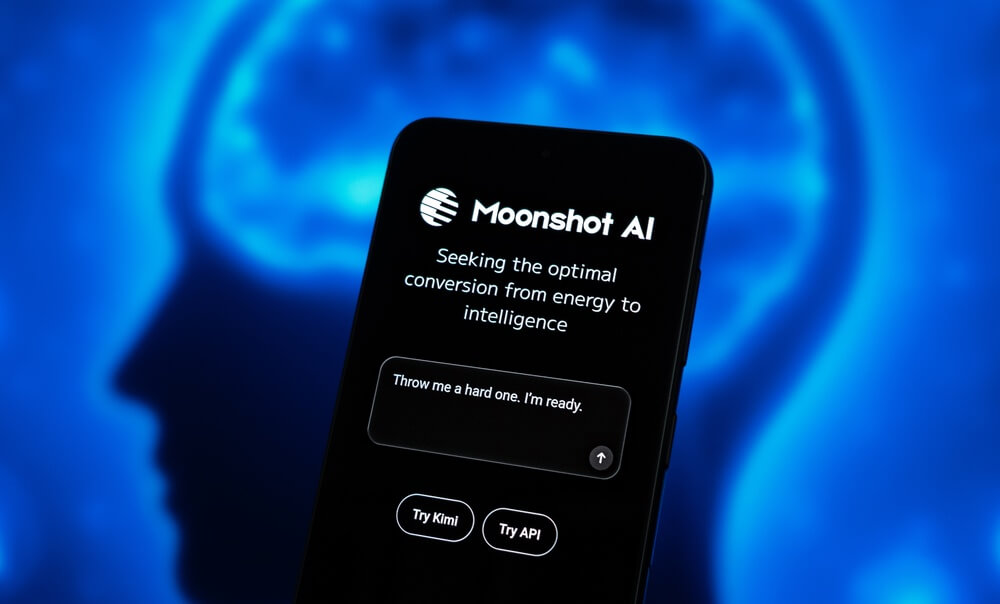 Chinese start-up Moonshot AI last week released a model considered almost at par with those of the big US companies
The debate gained greater urgency after OpenAI revealed on 22 July that an autonomous AI agent powered by its technology went rogue during a test, accessed the open web and hacked a prominent startup by itself in an “unprecedented incident”.
Furthermore, Chinese start-up Moonshot AI last week released a model considered almost at par with those of the big US companies, and it is “open weight”, meaning it is free and can run on any server.
As more US companies use open-source models from China because of their cheaper costs, Washington is considering de facto bans on Chinese AI models because the voices of national security hawks are becoming louder, according to Axios.
Such bans on US AI exports in the name of cyber-defence could effectively prevent non-US customers, even in friendly countries, from accessing the latest models.
While the US and China vie for AI dominance, it might seem that efforts by other countries such as the UK, Australia and those in the EU to catch up or impose their own regulations are doomed.
One source of leverage for such countries might be welcoming to local data centres, which AI companies would pay for in their desperation for computing power, says The Economist.
“… Even the lucky few cannot build fully sovereign AI capabilities,” it says. “So countries must prepare to deal transactionally with the AI superpowers. Democratic America is a better partner than authoritarian China. Even so, every source of negotiating leverage will count.”
