There is much that can be said about the United States’ decision to attack Iran – and about what could result from the joint US and Israeli strikes against military and political targets throughout the country. Unfortunately, little of it is reassuring.
First and foremost, this is a war of choice. The US had other policy options available.
Diplomacy appeared to hold promise as a means to prevent Iran from developing nuclear weapons. Increased economic pressure had the potential over time to precipitate regime change.
Moreover, this is a preventive war, not a preemptive one. Iran posed no imminent threat to vital US interests.
Iran was not on the verge of becoming a nuclear weapons state or using what weapons it did have against the US. At most, the threat posed by Iran was a gathering one.
This distinction is important. A world in which countries believed they have the right to undertake preventive strikes against those they judge to be threats would be a world of frequent conflict. That is why such actions have no standing under international law.
Trump has chosen an objective – regime change
US President Donald Trump has chosen an objective – regime change – that is political rather than military. But while military force can destroy and kill, on its own, it cannot bring about regime change, which requires the regime to collapse.
It is possible that the US attack will trigger defections from Iran’s political leadership and armed forces, but this cannot be counted on.
Hamas and Gaza are a reminder that regimes can absorb incredible punishment yet cling to power.
And even if the clerics fall from power – there are reports that Supreme Leader Ayatollah Ali Khamenei has been killed – the security forces are arguably best positioned to take their place.
In any case, using military force to kill select leaders as a means of triggering regime change – a tactic often called decapitation – is unlikely to succeed in Iran, where the leadership has institutionalized itself since taking power nearly a half-century ago.
Moreover, the leadership has had time to improve succession planning over the past few weeks as the possibility of war increased.
Trump has called for regime change – but without preparing the ground for it
During its January incursion into Venezuela, the Trump administration limited itself to replacing one leader (all but ignoring the internal opposition), while in much of the world, it has avoided pressing for democracy.
In the case of Iran, though, Trump has called for regime change – but without preparing the ground for it.
The political opposition is not united or functioning as a government in waiting, which means that it is unable to accept defections, much less provide security.
History suggests that regime change requires a physical, on-the-ground presence.
This is the lesson of Germany and Japan after World War II, and Panama, Iraq, and Afghanistan more recently.
And even with a ground presence, such efforts often come up short. In Iran, occupation is inconceivable, given the country’s size and ability to resist.
The means of policy
All of which is to say that the Trump administration has chosen to accomplish the most ambitious of foreign-policy goals with limited means.
It seems to have rejected a war of choice with narrower goals, such as degrading known Iranian nuclear and ballistic missile capabilities, even though it could credibly claim to have achieved these ends.
If there is a recent parallel to what is taking place in Iran, it is Libya, where just over a decade ago Western forces ousted the leadership using air power but then withdrew, leaving the country in chaos.
In the Iranian case, it appears that assembling a massive military presence – what Trump called an armada – ended up putting pressure on the administration to act, because US forces could not be maintained in a high state of readiness on location indefinitely.
The means of policy (military force) may well have played a large role in determining the ends of policy, namely, the decision to attack
As a result, the means of policy (military force) may well have played a large role in determining the ends of policy, namely, the decision to attack. This is obviously the reverse of how policy should be decided.
Taking a step back, the US has opted yet again to make a massive strategic commitment in the Middle East.
This is at odds with the Trump administration’s own National Security Strategy and with the reality that the greatest challenges to US interests are to be found in Europe and the Indo-Pacific.
Here, the parallel is to the 2003 Iraq War, another preventive war of choice in the region that cost the US enormously.
America’s allies are unhappy
The American people are unprepared for this war. Nor is Trump’s political base, as it will unsettle markets, cause a spike in energy prices, and could go on for some time.
America’s allies are unhappy as well, as Iran has already attacked several neighboring countries and could take steps that damage their economies.
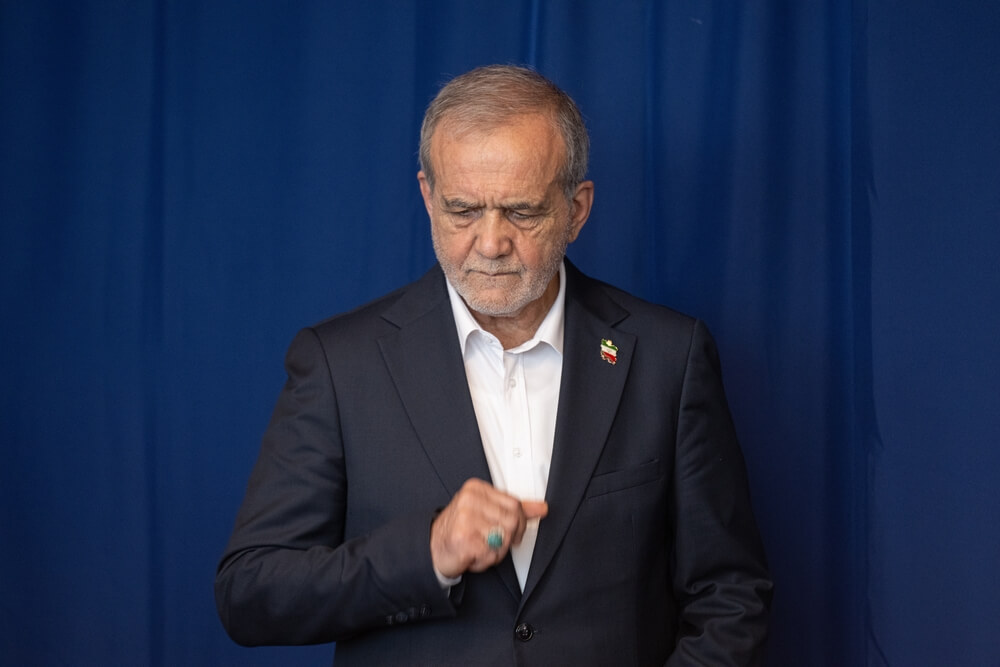 Regime change is easier called for than successfully carried out - Masoud Pezeshkian
Trump did not use his State of the Union speech Tuesday night to make the case for attacking Iran, and much of his statement in the immediate aftermath of Saturday’s attack emphasized past actions by Iran rather than new or emerging threats.
It is possible that last year’s cost-free bombing of three Iranian nuclear sites and the more recent intervention in Venezuela made Trump and those around him highly confident that they could achieve ambitious ends with limited means at a low cost.
He may also have been tempted to achieve something historic in Iran – regime change – that eluded his predecessors. He may still succeed.
But as a rule, regime change is easier called for than successfully carried out. While it takes only one side to begin a war, it takes two to end it. Iran now has a vote in how big this conflict becomes and how long it continues.
Richard Haass, President Emeritus of the Council on Foreign Relations, senior counselor at Centerview Partners, and Distinguished University Scholar at New York University, previously served as Director of Policy Planning for the US State Department (2001-03), and was President George W. Bush's special envoy to Northern Ireland and Coordinator for the Future of Afghanistan.
