Next week, I will walk into Mobile World Congress Barcelona in the heart of Barcelona. I already know the dominant word. AI, AI, and more AI.
Every keynote, every panel, every private meeting, and every conversation will feature the word ‘AI’ as a highlight. So I find myself thinking, are we building a future that empowers us, or are we slowly exhausting ourselves in the process?
Because while AI is accelerating progress at unprecedented speed, I see something else emerging in parallel. People are starting to crave distance from technology. Yes, you can read that twice. They want silence, and they want their minds back.
It is a natural response to overload, and I needed to highlight the concern.
We asked for AI everywhere. Now we have it everywhere
For decades, we chased efficiency; we wanted faster answers, smarter systems, and automation that would remove friction from our daily lives. Enter AI, and AI delivered on that promise.
Today, AI writes emails. It summarises meetings. It generates presentations. It recommends what you watch, buy, read, and even who you date (remember my previous article on this topic?).
At first, it was revolutionary, fun, a novelty, and don't get me wrong, it still is.
Constant exposure comes at a cognitive cost
But the big but is that constant exposure comes at a cognitive cost. Research shows employees are experiencing increasing digital fatigue as AI tools compress work cycles and remove mental breathing space. The brain was never, and will never be, designed to operate at peak cognitive output without pauses.
Yet AI encourages exactly that. Continuous productivity. Continuous responsiveness. Continuous stimulation. I see this in my own routine sometimes, and I need to remind myself to slow down.
The expectation to respond faster has intensified.
The expectation to produce more has intensified.
And the expectation of constant connectivity has intensified.
We have removed friction, but we have also removed recovery time. And this is exactly where AI overload begins. Not as a failure of technology. As a consequence of its success.
Why more people are choosing to disconnect
People are starting to disconnect intentionally. They are turning off notifications. They are stepping away from social platforms. They are choosing voice calls instead of video. They are seeking moments when they do not have to perform, respond, or optimise.
It is a fundamental behavioural correction.
For years, being constantly connected was seen as a competitive advantage. I raise my hand on that one. Now, it is becoming a liability for mental clarity.
I notice this during executive conversations. Leaders are becoming more selective with their digital presence. They are protecting their thinking time. They are recognising that strategic insight requires space.
If we outsource too much cognitive effort, we weaken our ability to reason independently
AI can accelerate execution, but it cannot replace human reflection. And I hope it never does.
The danger will never be AI itself. The danger is passive consumption.
Mindless scrolling, automatic responses, delegating thinking without awareness, and forgetting how to open a physical book.
The human brain strengthens through use. Right? If we outsource too much cognitive effort, we weaken our ability to reason independently. It is pure neuroscience. We should always remain active participants in our own thinking.
The next generation should learn balance, not dependence
My concern is more forward-looking. The next generation is already growing up with AI as a default layer of reality. They will never know a world without it. That is a fact, plain and simple.
It does create extraordinary opportunities. But it also creates responsibility.
Young professionals entering the workforce today have access to tools that dramatically compress learning curves. They can build, research, and solve problems faster.
But foundational thinking will always matter.
Knowing how to ask the right question matters more than generating a fast answer. Or at least it should.
AI should always enhance human capability, not replace human effort
Knowing how to evaluate information matters more than receiving information.
Knowing how to think should matter more than knowing how to prompt.
AI amplifies intelligence, but it cannot create intellectual discipline on its own, which is why we should actively protect human curiosity.
Reading books, engaging in deep conversations, sitting with complex ideas, and allowing the brain to struggle through problem-solving are a few examples.
These experiences build cognitive resilience. AI should always enhance human capability, not replace human effort.
The real opportunity is human-centred AI
I will always be optimistic and pro AI. I see its transformative potential every day. Never a doubt about it.
AI will accelerate medical research and transportation safety, unlock new forms of creativity, and expand global access to education.
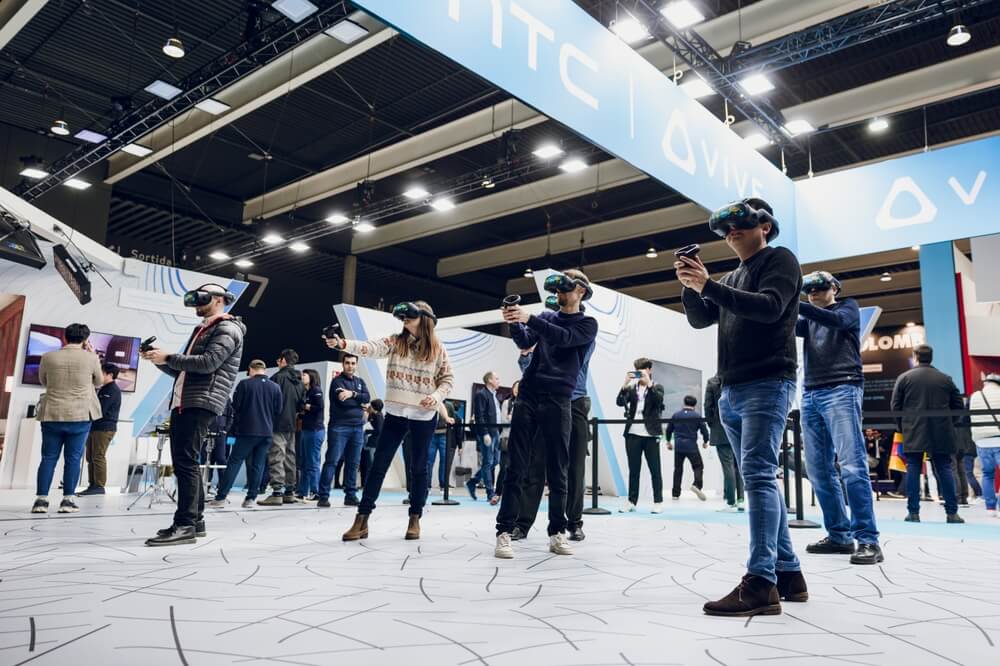 Will we remain thinkers in an automated world? Or will we forget how?
We are still in the early stages. But the most important evolution, in my eyes, is not about technology or innovation. It is cultural evolution.
We need to learn how to integrate AI into our lives without surrendering our humanity.
The toughest thing is following through with intentional boundaries.
Time to disconnect. Time to think. Time to create without assistance. Time to remain fully present.
The goal is not to reject AI. The goal is to maintain agency.
As I prepare to enter another week surrounded by the world’s most advanced AI technologies, I remind myself that technology should serve human potential. Human potential should never serve technology. Get it?
We are not losing our humanity. We are learning how to protect it. Will we remain thinkers in an automated world? Or will we forget how?
The answer depends on the choices we make today.
If this perspective resonates with you, I invite you to reflect on your own relationship with AI.
Are you using it to expand your thinking and learn? Or allowing it to replace it.
