Wars in the Middle East are usually discussed in terms of missiles, air strikes, militias and territorial control.
But this war will ultimately be decided somewhere else: at sea, in two narrow maritime corridors without which the global economy cannot function.
The Strait of Hormuz and the Bab al-Mandab are not simply waterways. They are the central pressure points of the international economic system.
Whoever can disrupt them can impose costs not only on the states fighting this war but on Africa, Asia, Europe and the Americas simultaneously.
That is why the idea of a purely military solution to the current conflict is increasingly detached from reality.
There is no military solution if the result is the sustained destabilisation of Hormuz and Bab al-Mandab.
If those chokepoints remain unstable, then even a battlefield victory becomes economically unsustainable.
The maritime hinge of the global economy
The Strait of Hormuz is the single most important energy chokepoint in the world. More than one-quarter of total global seaborne oil trade and roughly 20 per cent of global liquefied natural gas trade transit the Strait.
In practical terms, nearly 20 million barrels per day of crude oil, condensates and refined petroleum products move through Hormuz, alongside roughly 81 million metric tonnes of LNG annually, much of it from Qatar.
Around 85 per cent of the crude oil and LNG passing through Hormuz ultimately go to Asia.
China, India, Japan and South Korea are therefore structurally more exposed to Hormuz than any other economies on earth.
Bab al-Mandab is smaller in volume but equally important in strategic terms. It is the southern gateway to the Red Sea, the Suez Canal and Saudi Aramco’s East-West pipeline system.
Before the current crisis, roughly 4.2 million barrels per day of crude oil and petroleum products transited the strait
Around 10 to 12 percent of global maritime trade passes through Bab al-Mandab every year.
Before the current crisis, roughly 4.2 million barrels per day of crude oil and petroleum products transited the strait, connecting Saudi and Gulf energy exports to Europe and Mediterranean markets.
Any sustained disruption there immediately affects container shipping, freight rates, insurance costs and delivery times between Asia and Europe.
Taken together, these two chokepoints form the maritime hinge of the global economy. Hormuz governs the exit from the Gulf. Bab al-Mandab governs the onwards route towards Europe and the Atlantic basin.
Disrupt one, and energy prices rise sharply. Destabilise both simultaneously, and the global trading system begins to fracture.
That process is already underway.
Neither chokepoint needs to be closed to produce disruption
The lesson of the last few years is that neither chokepoint needs to be formally closed to produce severe economic effects. Bab al-Mandab demonstrated this first.
The Houthis never had to stop every vessel crossing the Red Sea. They only had to make the route sufficiently dangerous that insurers, shipping companies and naval operators behaved as though it were unsafe.
That alone was enough to divert traffic around the Cape of Good Hope, add 10 to 20 days to voyages, tighten tanker availability, increase freight rates and raise war-risk premiums across global shipping markets.
Major carriers including Maersk, Hapag-Lloyd and CMA CGM have already rerouted vessels away from Bab al-Mandab and the Suez Canal because of the security environment.
Iran does not need to close the Strait of Hormuz to disrupt it
Hormuz now faces the same danger, but on a much larger scale.
Iran does not need to close the Strait of Hormuz to disrupt it. It only needs to make the approaches unsafe. The geometry of Hormuz favours Iran.
Commercial traffic moves through a narrow Traffic Separation Scheme in which inbound and outbound shipping is confined to tightly regulated lanes.
Large crude carriers and very large crude carriers cannot easily deviate because of draft limitations, navigational rules and separation protocols. Their routes, speeds and timing are highly predictable.
Iran can choose where and when to disrupt shipping
The key point is that Iran does not need to mine the Strait itself. It can mine the approaches to the Strait, especially the entrance zones where shipping converges before entering the narrow corridor.
Surface circulation from the Gulf of Oman into the Gulf means floating, semi-moored or near-surface devices can drift towards commercial traffic patterns without being laid directly inside the transit lanes.
A limited number of influence mines, command-detonated mines or floating devices placed in the right areas can contaminate a much wider maritime battlespace.
That strategy is reinforced by surveillance. Iran’s coastal radar network, UAV coverage, patrol craft, signals intelligence and civilian maritime reporting already provide extensive visibility across the Strait and its approaches.
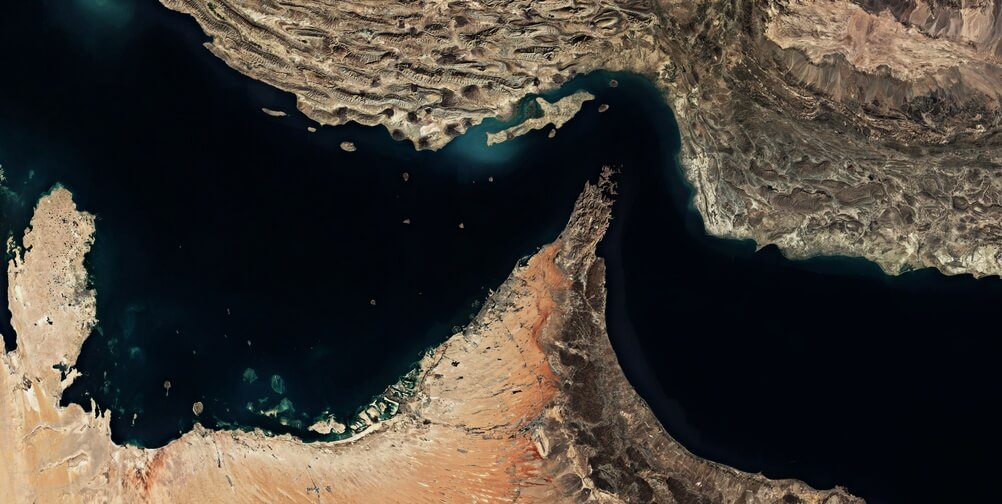 Iran can choose where and when to disrupt shipping with far greater precision than in previous crises - The Strait of Hormuz
The Khayyam satellite, together with broader Russian ISR support including optical, electronic and maritime reconnaissance systems, gives Tehran a persistent picture of shipping movements, naval escorts and traffic concentrations.
This means Iran can choose where and when to disrupt shipping with far greater precision than in previous crises.
The result is that Hormuz is now effectively mined in all but name.
Once shipping companies believe that the approaches may contain influence mines, drifting mines or command-detonated devices, the economic effect begins immediately.
Tanker traffic slows. War-risk premiums surge. Naval escorts become necessary. Clearance operations take time. The Strait may remain technically open, but operationally it becomes unusable.
The largest oil shock in modern history
If Bab al-Mandab remains under intermittent Houthi pressure while Hormuz is interdicted by Iranian mining, missile threats or maritime disruption, then the world faces a supply shock and shipping dislocation not seen since the Second World War.
Under a prolonged dual-chokepoint crisis, crude could move towards $200 a barrel
Oil would not stop at $120 or even $150 a barrel. Under a prolonged dual-chokepoint crisis, crude could move towards $200 a barrel and potentially beyond that level if the crisis lasts several months.
In such a scenario, the world would face the removal, delay or disruption of between 12 and 16 million barrels per day of supply, the largest oil shock in modern history.
That would affect not only crude prices but also refining margins, petrochemical feedstocks, plastics, fertilisers, aviation fuel, shipping costs and inflation simultaneously.
The war will be decided in Hormuz and Bab al-Mandab
Saudi Aramco is better positioned than any other producer to mitigate part of the damage.
The East-West pipeline from Abqaiq to Yanbu, Red Sea export terminals and alternative loading points allow Saudi Aramco to bypass Hormuz for part of its exports.
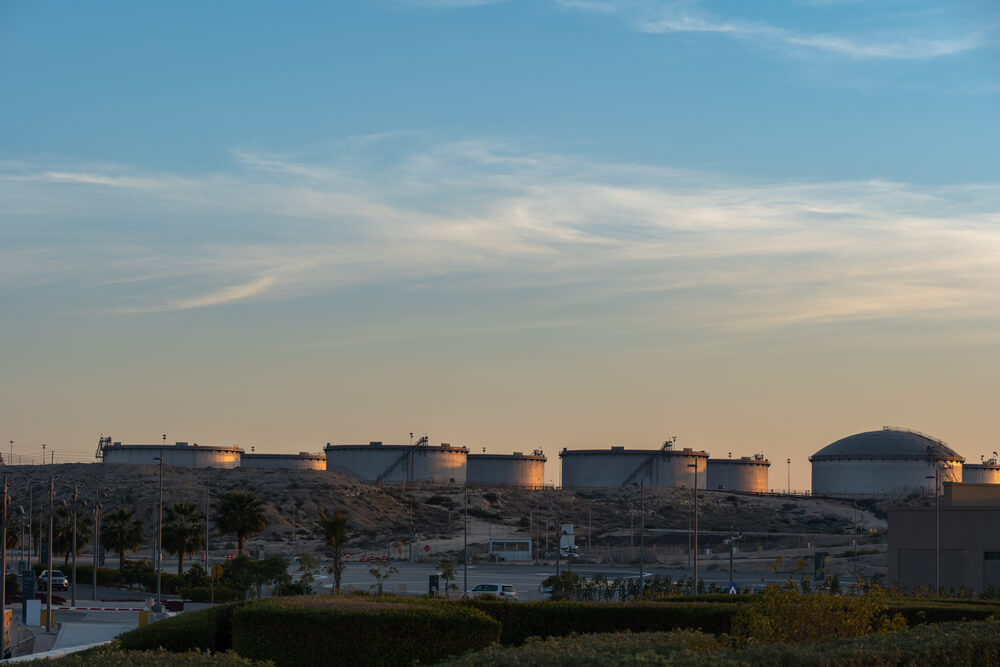 Even Saudi Arabia cannot solve this chokepoint problem on its own - Saudi Aramco’s oil storage tanks
Earlier this week, the Petroline system managed to transfer roughly 7 million barrels per day, although actual export capacity remains lower because of domestic demand and the constraints at Saudi Red Sea terminals.
Saudi Aramco’s immediate objective in the days ahead is to sustain exports above 5.5 million barrels per day of crude and refined products.
But even Saudi Arabia cannot solve this chokepoint problem on its own. Bab al-Mandab remains vulnerable at any moment to Houthi escalation that could interdict the passage.
Red Sea rerouting cannot absorb all Saudi and Gulf exports. Longer voyages reduce tanker availability, increase freight costs and stretch global shipping capacity. Alternative routes are partial mitigations, not solutions.
That is why the ultimate outcome of this war will not be decided only in Tehran, Jerusalem or Washington. It will be decided by political geography.
It will be decided in Hormuz and Bab al-Mandab, because those two chokepoints now sit at the intersection of energy, trade, insurance, shipping, inflation and state power.
If they remain unstable, there is no military victory that the world economy can afford.
Dr Nawaf Obaid is a Senior Research Fellow at the Department of War Studies, King’s College London.
