Saudi Aramco restored the East-West Pipeline in a matter of days, not because the damage was insignificant, but because the system itself had been built over decades to withstand precisely this kind of attack.
The recent Iranian strikes damaged pumping stations, transformers, electrical substations and control systems above ground.
The pipeline itself remained intact. Saudi Aramco, therefore, did not face the task of rebuilding a strategic artery across the Kingdom but rather restoring the electrical and pumping infrastructure surrounding it.
That distinction matters. The East-West Pipeline was never designed as a typical commercial pipeline dependent on a single control centre, pumping station or electrical node.
It was designed with redundancy built into every stage of the system: multiple pumping stations, duplicate control systems, spare turbines, backup transformers, auxiliary generators and repair teams positioned along the route.
Even after the recent strikes, crude continued moving westward while damaged electrical systems were bypassed, spare components were activated, and pressure levels were rebalanced across the line.
Bypass route around the Strait of Hormuz
Under normal conditions, the East-West Pipeline carries 5 million barrels per day. Within days of the recent attacks, however, Saudi Aramco restored throughput to roughly 7 million barrels per day.
That is greater than the combined oil production of the UAE and Kuwait together and makes the line the single most important bypass route around the Strait of Hormuz.
Saudi Aramco was also able to move quickly because it did not require the pipeline to return immediately to full capacity to maintain exports.
Yanbu alone holds approximately 12.5 million barrels of storage directly at the export terminal. The wider Yanbu industrial complex holds more than 31 million barrels of crude oil and refined products.
During periods of disruption, Saudi crude can be held in the Red Sea, the Mediterranean, and Asian waters while exports continue uninterrupted
Nationwide, Saudi Aramco maintains approximately 82 million barrels of onshore crude storage.
When overseas facilities, refinery inventories and floating storage are included, Aramco controls well over 300 million barrels of crude oil and refined product storage capacity.
Saudi Aramco also has the ability to move storage offshore. Through Bahri, it operates the world’s largest VLCC fleet, with approximately 40 vessels capable of carrying between 80 million and 88 million barrels of floating storage capacity.
During periods of disruption, Saudi crude can be held in the Red Sea, the Mediterranean, and Asian waters while exports continue uninterrupted.
The Gulf was inherently unstable
None of this happened by accident. It was the result of strategic planning that began more than half a century ago.
The late King Fahd repeatedly argued that the geography of the Gulf was inherently unstable and that peaceful coexistence with the revolutionary Iranian regime could never be assumed.
The outbreak of the Iran-Iraq War in 1980, followed by the Tanker War and repeated Iranian attacks on commercial shipping, only reinforced that view.
King Fahd understood long before most others that Saudi Arabia could not leave the majority of its exports dependent on the Strait of Hormuz and the narrow maritime geography of the Gulf.
East-West Pipeline was commissioned in 1982 at a cost equivalent to roughly $4 billion to $5 billion in today’s money
He also predicted that Iran would eventually seek to block, mine or interdict the Strait directly.
That is why he pushed for the construction of the East-West Pipeline, commissioned in 1982 at a cost equivalent to roughly $4 billion to $5 billion in today’s money.
At the time, many viewed the project as excessive. In reality, it became one of the most important infrastructure investments in Saudi history.
King Fahd also believed that, because of its fragility and revolutionary nature, the Iranian regime would eventually seek to strike Saudi oil infrastructure directly.
That is why the East-West Pipeline was buried underground along its entire route rather than exposed on the surface.
The world’s largest integrated energy system
King Fahd did not view Aramco merely as an oil producer. He regarded it as the manager of the world’s largest integrated energy system, spanning upstream production, midstream transportation, downstream refining, petrochemicals, export terminals, industrial cities and global storage.
This vision led to the establishment of the Royal Commission for Jubail and Yanbu in 1975 and the development of the twin industrial cities on opposite coasts of the Kingdom.
Jubail became the Gulf-facing anchor for refining, petrochemicals and industrial exports, while Yanbu became the Red Sea counterpart, directly connected to the East-West Pipeline and able to sustain exports even if the Gulf was disrupted.
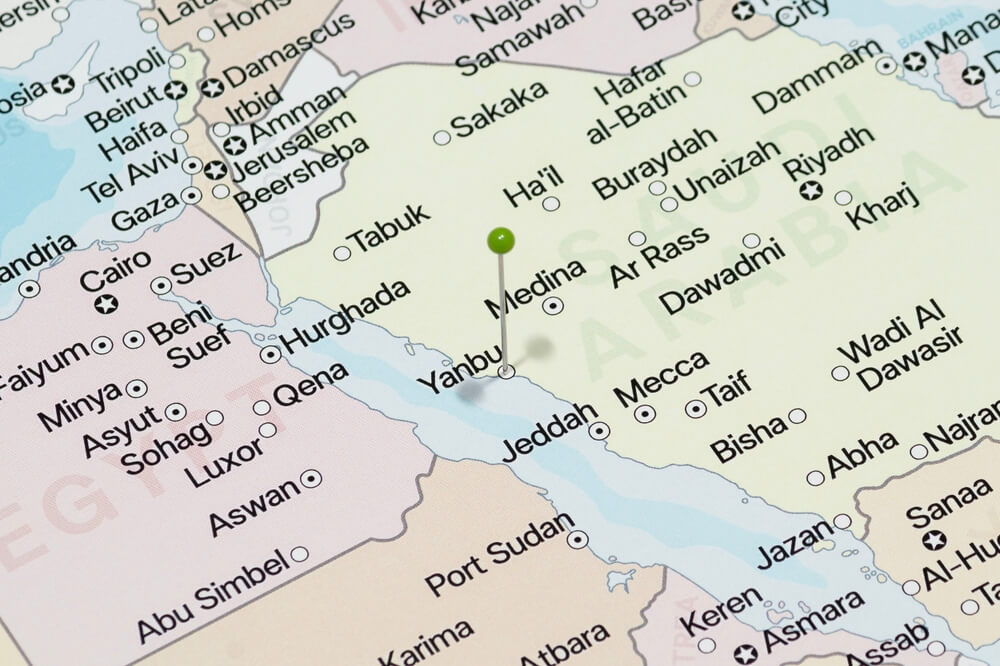 Jubail became the Gulf-facing anchor for refining, petrochemicals and industrial exports, while Yanbu became the Red Sea counterpart
Together, the two cities became the foundation of Saudi Arabia’s industrialisation and the platform upon which SABIC emerged as the world’s fourth-largest petrochemical producer.
With that came another principle that guided Saudi energy policy for decades: Saudi Aramco had to remain the world’s largest oil producer, the largest holder of immediately available spare production capacity and the manager of the world’s largest base of conventionally proven oil reserves.
Saudi Aramco’s sustained production capacity today is approximately 12 million barrels per day, with surge potential between 12 million and 12.5 million barrels per day.
That is larger than the combined production capacity of Iraq, Kuwait, the UAE and Iran.
Stabilising the global market
The same logic explains why Saudi Arabia recovered so quickly after the 2019 strike on the Abqaiq oil processing facility.
Abqaiq is the world’s largest oil processing and crude stabilisation facility. Approximately 7 million barrels per day pass through it, equivalent to roughly 5 percent of global oil supply.
Its role is to remove hydrogen sulphide, separate gas from crude, stabilise the oil and prepare it for transport to export terminals and downstream facilities.
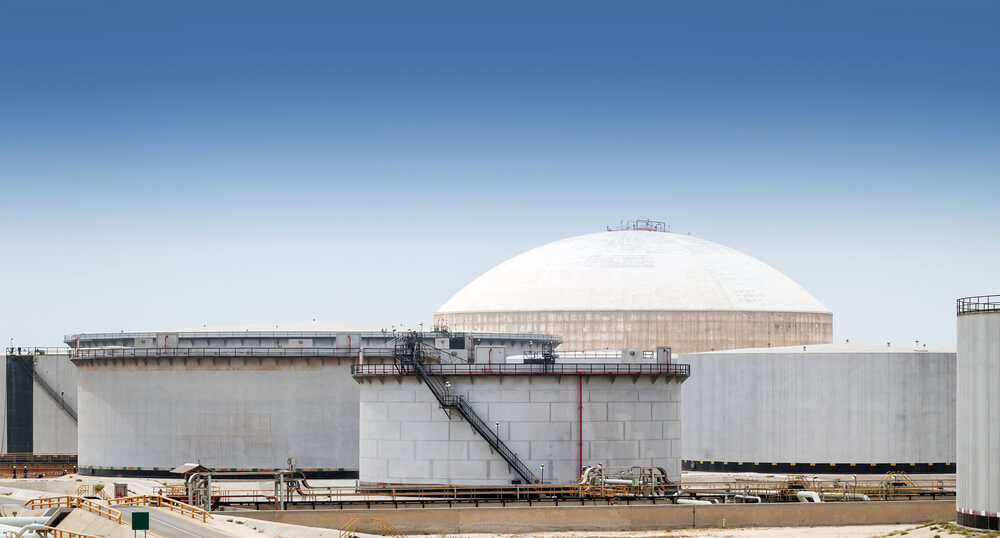 Ras Tanura, capable of exporting approximately 6.5 million barrels per day, remains the world’s largest offshore oil export terminal
The attack on Abqaiq temporarily disrupted approximately 5.7 million barrels per day of production, yet Aramco restored roughly half of the lost output within days and returned to full operational capacity within weeks.
Spare compressors, valves, pipes, instrumentation, separators and control systems were already available.
Damaged processing trains were isolated while unaffected trains continued operating. Stored oil from Yanbu, Ras Tanura and other facilities was released into the export system.
Ras Tanura, capable of exporting approximately 6.5 million barrels per day, remains the world’s largest offshore oil export terminal.
Together, Abqaiq and Ras Tanura form the centre of gravity of the Saudi oil system: one processes crude, the other exports it.
That is what separates Saudi Aramco from every other oil producer in the world. Most producers maximise output during normal times and leave themselves with little room to respond when something goes wrong.
Aramco deliberately maintains spare capacity, duplicate systems, alternative routing, extensive storage and one of the largest engineering and maintenance workforces in the world.
That is why attacks on Saudi oil infrastructure create immediate headlines and price spikes but rarely result in lasting strategic consequences.
Saudi Arabia’s greatest advantage is not simply that it produces so much oil. Even under attack, it can continue producing, exporting, and stabilising the global market better than any other conglomerate or country in the world.
Dr Nawaf Obaid is a Senior Research Fellow at the Department of War Studies, King’s College London.
