While the world anxiously watches the escalating US-Israeli war with Iran, many people in the United States and across Latin America are more preoccupied with an issue closer to home: the possible end of communism in Cuba.
Although pundits have predicted the regime’s demise dozens of times since the 1959 revolution led by Fidel Castro, they may finally be right. The problem lies in defining what that will look like.
There are currently two ideas among the Cuban diaspora and leading experts about what the regime’s downfall should entail.
While not mutually exclusive, they imply substantively different approaches to negotiating with Cuban leaders.
The first approach can be called Obama 2.0, given its similarities to former US President Barack Obama’s policy of engagement with Cuba in 2015-16.
In a notable break with the past, Obama re-established diplomatic relations with the island, obtained the release of American prisoners, and convinced Raúl Castro (who had succeeded his brother Fidel as president in 2008) to allow greater private-sector participation in the economy.
In return, Obama lifted many of the restrictions on US trade and investment in Cuba. But the Republican-led Congress refused to lift the decades-old US trade embargo against the island.
Obama’s thinking, according to several of his aides, was that a thaw in relations would eventually lead to political change: elections and the end of one-party rule, as well as increased freedom of expression.
But that theory was never tested. After Donald Trump succeeded Obama in 2017, US engagement ended.
Muscular interventionism
In his second term, Trump has pursued transactional diplomacy and returned to muscular interventionism, as demonstrated by the capture of Venezuelan President Nicolás Maduro and the decision to allow remnants of his regime to retain authority so long as they comply with US demands. In effect, Trump chose oil over democracy.
Trump’s stance toward Cuba seems equally harsh and cynical. In mid-March, Trump said: “I do believe I will be having the honor of taking Cuba. … I think I can do anything I want with it.”
Cuba needs to change, but it doesn’t have to change all at once - Marco Rubio
Many expect his administration to focus on jettisoning one of the regime’s leaders – most likely President Miguel Díaz-Canel – and implementing economic reforms, leaving political change for later.
As US Secretary of State Marco Rubio, a Cuban-American, put it in February, “Cuba needs to change” but it “doesn’t have to change all at once.”
Democracy and individual freedoms
Some in the diaspora, such as the Cuba Study Group, agree that negotiations should initially focus on opening the market.
But many more believe that a major political transformation must accompany any changes to the economy.
In their view, the current Cuban leadership is incapable of accomplishing real economic reform.
The Cuban people – both on the island and in exile – want democracy and individual freedoms above all else
More importantly, the Cuban people – both on the island and in exile – want democracy and individual freedoms above all else.
Leaving the regime in place would be a betrayal of Cubans everywhere, including the nearly three million spread across Florida, Spain, and Mexico.
The main advocates of this approach live in southern Florida; the three Cuban-American members of Congress from this area support simultaneous political and economic reform.
Many Cubans on the island, too, want to elect their leaders and enjoy the individual liberties they have lacked for decades, in addition to an end to blackouts and shortages of basic goods.
Humanitarian crisis
Of course, the Cuban government opposes political liberalization. Cuban Foreign Minister Bruno Eduardo Rodríguez Parrilla has expressed a willingness to negotiate with the US, but only if it excludes the country’s “internal affairs.” In short, regime change is off the table.
The two views are different, but not incompatible. Rubio stated as much when declaring that Díaz-Canel’s initial reforms allowing foreigners – mainly Cuban-Americans – to invest freely in all areas of the economy are “not dramatic enough.”
The Trump administration has also reportedly made the removal of Díaz-Canel from power (though not the 94-year-old Raúl Castro, who is still believed to wield significant influence) as a necessary condition for a deal.
Perhaps the deciding factor will be the magnitude of the humanitarian crisis in the country
There are ways to compromise on both issues, and the ongoing negotiations are probably centered on how much regime change the Cuban government can accept and how much political continuity Cuban society can tolerate.
Perhaps the deciding factor will be the magnitude of the humanitarian crisis in the country.
Cuba has run out of oil and diesel reserves, resulting in multiple total blackouts, and a Russian fuel tanker allegedly headed for the island was recently rerouted.
The dire conditions have not yet sparked major unrest. But both US and Cuban leaders could lose what leeway for negotiation they have if protests erupt in Havana.
The current stalemate cannot last indefinitely
The US would be forced to intervene if the Cuban regime resorted to violent repression, if only because Cuban-Americans are a key Republican constituency.
Moreover, Cuban-American investment is unlikely to flow into the island any time soon.
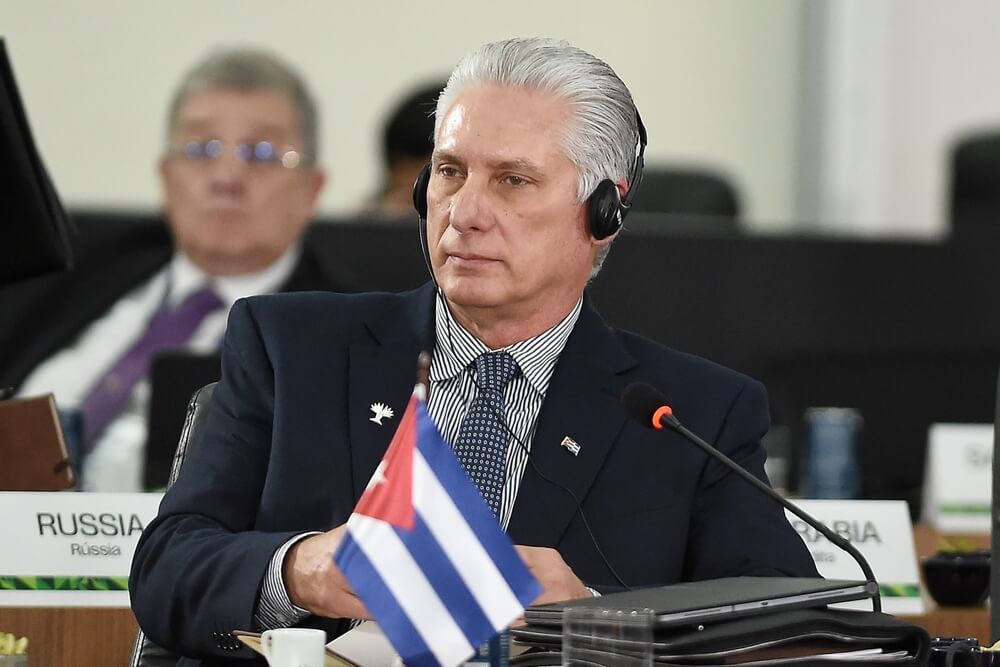 The Cuban regime, for its part, cannot expect to wait until November’s midterm elections in the US or for a quagmire in Iran to weaken Trump, allowing it to obtain a better deal - Miguel Díaz-Canel
One leading diaspora businessman recently told me that, despite supporting engagement, he is not interested in long-term projects in his native country.
Assuming this sentiment is widely shared, the Trump administration would probably end up footing the bill of any major humanitarian and reconstruction effort.
The Cuban regime, for its part, cannot expect to wait until November’s midterm elections in the US or for a quagmire in Iran to weaken Trump, allowing it to obtain a better deal. The pressure exerted by the US oil blockade is simply too great.
Only one thing seems certain: the current stalemate cannot last indefinitely. Ideally, other Latin American countries, such as Brazil, Colombia, and Mexico, would play a role in negotiations, possibly making major concessions more palatable to each party.
But the more likely outcome is that Cuban resistance – quixotic though it may be – is pitted against a divided US administration that has the upper hand but has not decided whether it wants regime change or regime compliance.
Jorge G. Castañeda, a former foreign minister of Mexico, is a professor at New York University.
