Cuba’s economy is not sinking because of a supposed “blockade,” but because of a communist regime that combines political terror, economic ruin, and systematic propaganda to hide its own failure.
The murderous dictatorship has imposed a parasitic model that uses poverty to play the victim while enriching the regime’s leaders.
Cuba did not run out of oil due to any blockade. Cuba produces 45,000 barrels of oil per day and receives more than 50,000 barrels daily free from Mexico and Venezuela. This is far more than domestic demand. So why has Cuba run out of fuel?
The dictatorship resells that crude oil and pockets the dollars, hoarding more than $18 billion stolen from Cubans in foreign accounts, as reported by the Miami Herald.
The only blockade Cuba faces is the one the dictatorship imposes on its own people.
Luxury for the elite, restrictions for the people
The dictatorship uses repression, torture and fear as instruments of control, including arbitrary detentions, economic ruin for political disagreement, persecution of dissidents, and the systematic restriction of basic rights.
The caviar left remains silent in the face of this repression and the systematic assault on human rights.
The regime leaders, who live in luxury and comfort, impose restrictions on the importation of food and medicine, limit internet access, and prohibit Cubans from travelling freely.
The privileged elite around the dictatorship lives off the mass impoverishment of citizens
The very fact that the dictatorship has “temporarily” lifted restrictions on the import of food and medicine from abroad proves that shortages are a political decision made internally, not the result of external strangulation.
The privileged elite around the dictatorship lives off the mass impoverishment of citizens, treating the country as a prison and its people as a source of extortion and theft.
If the dictatorship truly believed their people supported their policies, they would allow Cubans to leave and return freely instead of holding them as economic and political hostages.
A parallel system with no oversight
Leaked internal documents from GAESA—the military-controlled conglomerate—show that its companies (Gaviota, Almest, CIMEX, etc.) manage assets and liquidity worth billions of dollars in foreign accounts or hard currency.
The most conservative estimates place these funds higher than the international reserves of countries like Panama or Uruguay.
Part of this money flows through the Banco Financiero Internacional and entities like RAFIN S.A., which operate as a parallel system to the official budget with no oversight.
The Panama Papers leaks documented at least twenty Cuban state-linked entities and individuals using offshore companies for opaque commercial and financial operations.
The “most expensive free healthcare in the world,” as Cubans themselves call it, is paid for with rationing, endless queues, and the absence of alternatives
The regime has built an external narrative of a “model” public healthcare system, endlessly repeated by the media. Cuba does not “export doctors”; it exports spies and torture experts known as its “black wasps.”
The Cuban healthcare system is failing and dilapidated, providing quality care only to the party elite and foreigners paying in hard currency.
Cuba operates a true healthcare apartheid. Ordinary Cubans suffer material shortages, lack of medicines, and hospitals in deplorable condition, while Potemkin showpieces are displayed for political delegations and tourists.
The “most expensive free healthcare in the world,” as Cubans themselves call it, is paid for with rationing, endless queues, and the absence of alternatives.
The “blockade” narrative
The blockade narrative seeks to blame the United States for Cuban misery, even as the regime boasts of major trade agreements with most of the world.
Cuba’s foreign trade represents about 27% of GDP, barely below Brazil’s 32%, with exports around 14.5% of GDP compared to Brazil’s 16%. Far from “blockading” the island, the United States is Cuba’s ninth-largest trading partner and accounts for roughly 3% of its imports.
U.S. agricultural and food exports to Cuba have grown every year, including in 2025
Cuba maintains more than 27 bilateral trade agreements with over 90 countries and exports mainly to Canada (22%), China (21%), Venezuela (13%), Spain (11%), and the Netherlands (7%), plus Germany, Belgium, Switzerland, Cyprus, and France.
U.S. agricultural and food exports to Cuba have grown every year, including in 2025. Cuba trades with Venezuela (including subsidised crude), China, Spain, Russia, Mexico, Italy, Argentina, Brazil, the United States, and Germany, among others.
If this was a “blockade,” it would be the most inept one in history.
Billions in support, misery at home
Cuba produces 45,000 barrels of oil per day and still has no gasoline; it has more than 27 trade agreements and receives billions in financial support from China, Russia, and the EU, constant debt write-offs, and free oil from Mexico and Venezuela. However, the country remains in misery.
The left wants you to confuse an embargo with a blockade. What exists is a very limited embargo on items linked to military purposes and personal wealth accumulation of the dictatorship leaders.
The 1960 export embargo never included food or medicine, and since the year 2000 there has been no U.S. embargo on food or pharmaceutical products.
Remittances from the United States, estimated at about $3.5 billion, are the dictatorship’s largest source of hard currency
More than 90 U.S. multinationals export to Cuba, and around 60 American companies have operated directly on the island since 2014.
The United States is the leading supplier of food and agricultural products to Cuba (about $220.5 million), plus medicines and medical products worth around $275.9 million.
Furthermore, remittances from the United States, estimated at about $3.5 billion, are the dictatorship’s largest source of hard currency. The regime squeezes those remittances through state monopolies and confiscatory exchange rates, turning exile aid into fuel for the political machine.
Massive financial inflows, no prosperity
What has sunk Cuba is not a lack of resources but a communist system incapable of generating prosperity even when it receives massive financial inflows.
Between 1960 and 1990, the island received more than $65 billion from the Soviet Union, equivalent to six Marshall Plans, without translating into improved productivity or sustainable growth.
The Cuban dictatorship has repeated the pattern with aid from China, Russia, the EU, and Venezuela, turning every bailout into more waste, more corruption, and more social control.
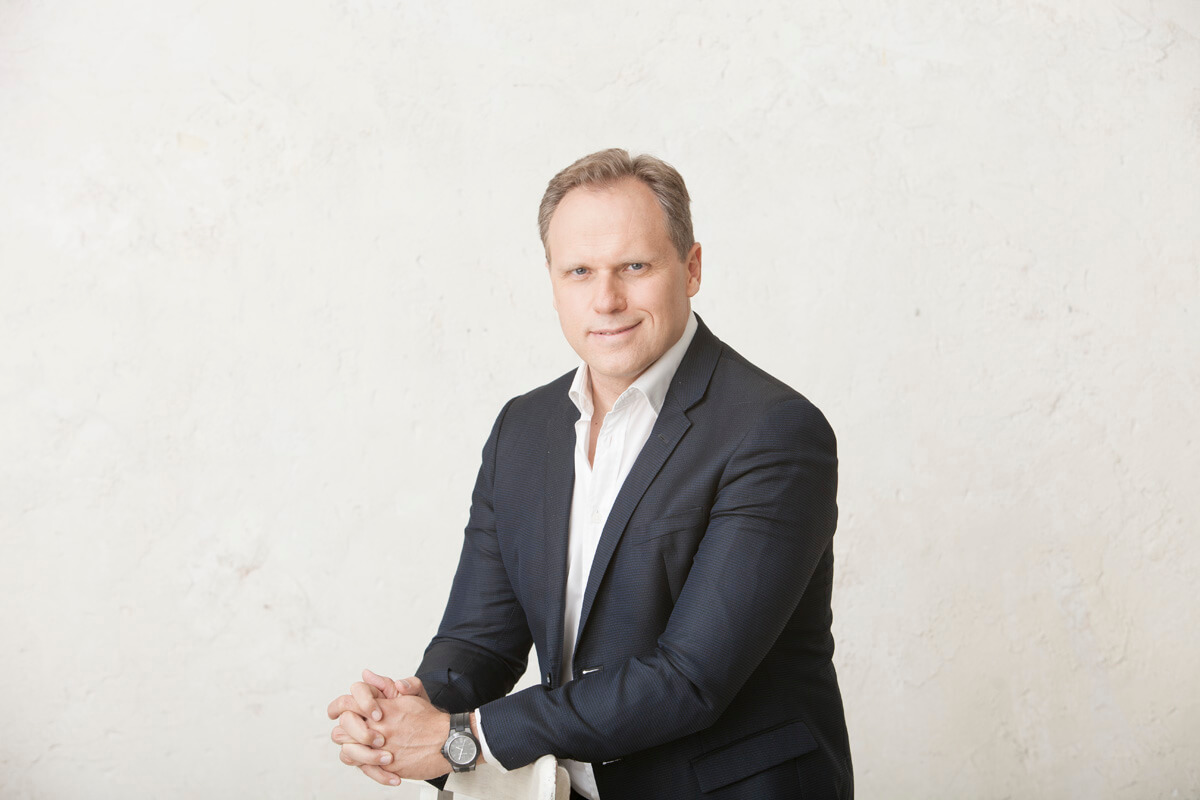 What has sunk Cuba is not a lack of resources but a communist system incapable of generating prosperity even when it receives massive financial inflows - Daniel Lacalle
Just from the Cuban medical programme in Venezuela (Misión Barrio Adentro), the regime received roughly $120 billion over 16 years, according to official figures acknowledged by Nicolás Maduro and confirmed by Cuban mission leaders.
This is in addition to income from other missions, triangulated food imports, sales of power plants, and even the commercialisation of millions of light bulbs.
China has forgiven Cuba nearly $5 billion in debt over the last 18 years—almost half of all debt relief it has granted its trading partners.
Russia forgave about 90% of Cuba’s debt (around $25.8 billion in 2014) and channelled additional donations close to $10 billion.
Between 2011 and 2014, Mexico, Japan, China, and Russia waived around $40 billion in Cuban debt, equivalent to half of the island’s current GDP, while the Paris Club forgave another $8.5 billion in 2015.
Altogether, Russia, China, Venezuela, and major trading partners have provided the Cuban dictatorship with more than $200 billion in financial support, investments, and donations in just the last 16 years, far more than any Latin American country has received from the IMF.
These vast resources have vanished into a sea of inefficiency, corruption, and repressive apparatus, without delivering well-being to the population.
The Cuban dictatorship is a parasitic system of corruption and theft that holds its people hostage and treats the country as a prison. However, freedom is advancing, and the end of the murderous dictatorship is near.
