Britain and Germany are working to develop long-range strike systems that would give Europe genuine operational independence in this area for the first time.
This is not just another technical project but an attempt to close a key gap in European defence: dependence on American systems for long-range precision strikes.
The agreement, confirmed on 16 March in Berlin after a meeting between British Minister for Defence Procurement Luke Pollard and German State Secretary for Armament Jens Plötner, concerns the joint development of a system with a range exceeding 2,000 kilometres.
The plan includes a combination of stealth cruise and hypersonic missiles, with expected entry into service in the 2030s. The programme is at an early stage, but the political decision has already been made.
Europe is embarking on the development of capabilities it has not previously possessed.
This is not a matter of prestige or a demonstration of technological progress. It is about adapting to a security environment in which American support is no longer automatic or unconditional.
Political decision with long-term consequences
Range itself is not the main issue, although it is operationally important. The essence lies in the type of capability being developed.
For decades, European states had complete armed forces but not full control over long-range precision strikes. In practice, that segment depended on American technology, infrastructure, and political decisions.
The difference between a system measuring several hundred and several thousand kilometres is not only quantitative.
With a shorter range, operations are conducted at the tactical and operational levels. With a range of more than 2,000 kilometres, you enter the strategic deterrence zone, where you can threaten key targets deep in the enemy's rear. This directly affects how the other side plans and deploys its forces.
Europe must be able to act without American support when it deems it in its interest
Therefore, this project should not be regarded as just another European development programme with uncertain outcomes. Many such programmes have existed, often completed slowly and at high cost.
The initial assumption is more important here: London and Berlin are investing in a capability that makes sense only if it is accepted that Europe must be able to act without American support when it deems it in its interest.
This is a political decision with long-term consequences. Technology follows later.
Europe is no longer the priority
The United States has been shifting its strategic focus to the Indo-Pacific for years. This is not linked to any single administration or president. The shift began earlier and has continued through various political cycles.
The reason is clear: China poses a long-term security and economic challenge, directing most of America's resources towards that region. In this context, Europe is no longer the primary priority.
The war in Ukraine made this evident in practice. American support was significant, but on several occasions, it depended on internal political processes in Washington.
States serious about security planning cannot base critical capabilities on the assumption that another country's political will is always available
Decisions were delayed, subject to negotiation, and sometimes blocked. For Europe, this means that key elements of security may become uncertain precisely when they are most needed.
If the support of an external actor is conditioned by an internal political cycle, it is not stable enough for long-term planning.
States serious about security planning cannot base critical capabilities on the assumption that another country's political will is always available.
Europe does not have full control over the use of its own systems
Most European precision strike systems depend on American components, including navigation, certain software layers, and parts of the management and authorisation system.
As long as political interests are aligned, this is not a problem. When they diverge, it becomes a limitation.
In practice, this means Europe does not have full control over the use of its own systems in certain situations.
This is exactly where London and Berlin are seeking a breakthrough. The new system should function without reliance on external elements that could affect its use.
Germany accepts that security cannot rest solely on territorial defence but also on the ability to operate in depth
This is not a matter of ambition but of control. Without full technical and operational control, there can be no full political autonomy.
Within this framework, Germany's role is crucial.
Britain has continuity in developing such systems and is ready to use them. For decades, Germany pursued a different policy, focusing on defence and relying on the alliance framework.
Participation in the development of a long-range offensive system shows that this approach is changing.
Berlin's decision to take part in developing a long-range offensive capability is not a budgetary issue; it is a change of doctrine.
Germany accepts that security cannot rest solely on territorial defence but also on the ability to operate in depth.
Striking at the core of the Russian military model
This is precisely where the project directly addresses the core of the Russian military model concerning Europe.
Russia has gained an advantage through a combination of long-range strikes, strong air defences, and the ability to hit targets from deep within its territory, while the European response remains limited.
That asymmetry has been one of the key elements of the Russian position.
A system with a range of over 2,000 kilometres and hypersonic speeds does not negate Russian capabilities, but it changes the calculation.
The lack of long-range strike capability is obvious, and there is an intention to address it
It introduces risk to targets that have been relatively safe until now. In strategic relations, this is enough to alter the opponent’s behaviour.
Russia will try to stop this project before it becomes operational – not through open conflict, but through pressure on European governments and attempts to undermine political unity. This is an approach it already uses in similar situations.
This is not just a British-German initiative; other European countries have reached the same conclusion. The lack of long-range strike capability is obvious, and there is an intention to address it. That is why several projects are being launched in parallel.
However, success is not certain.
The real test will be discipline in implementation
Europe has the technology but lacks speed. Joint projects are often slowed by political agreements and industrial interests. If this happens again, the programme will remain in development without any real effect.
Funding is another problem. The same budget must cover multiple urgent needs. If pressure arises, these types of projects are the first to be questioned.
A third factor is the United States. It expects Europe to invest more in its own security but does not encourage complete independence in all key areas. As European capabilities grow, that difference will become increasingly apparent.
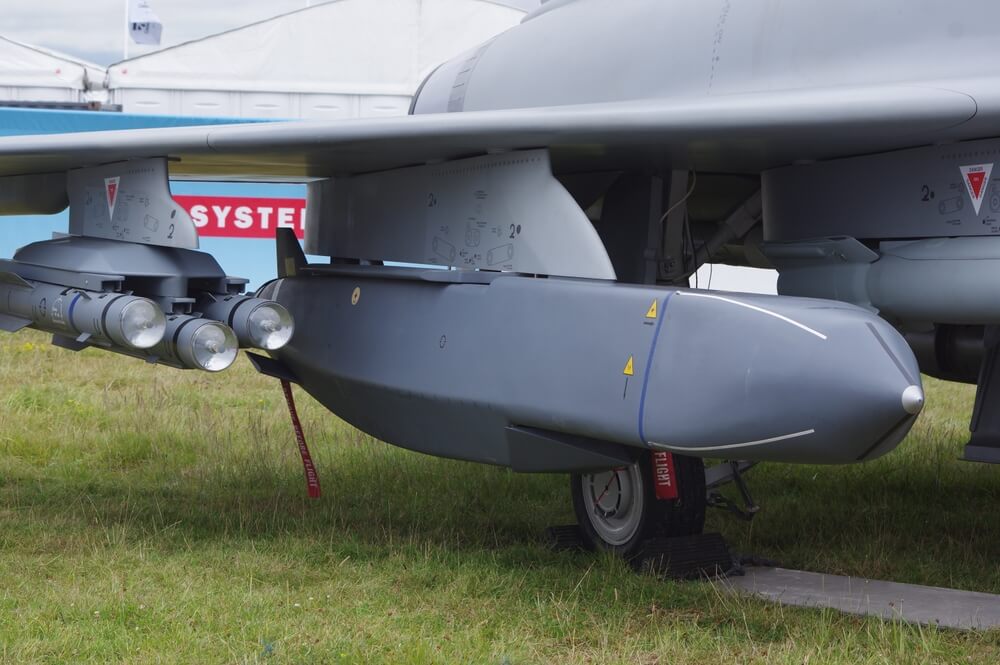 The missiles being planned today will not be operational before the next decade. However, this project will shape Europe's future capabilities when the next crisis arises
The key question is whether Europe can see such a project through to completion. So far, it has not achieved good results in similar programmes.
The problems are always the same: slow political coordination, overlapping national interests, and industrial compromises that dilute initial requirements.
If this happens again, the result will be a system that is delayed, costs more than planned, and does not deliver the intended effect.
There is another problem. European countries are only now rebuilding supplies and basic capacity after decades of investment cuts.
In such a situation, long-range strike systems are not the only priority. The pressure to allocate funds to immediate needs will be constant.
Therefore, the real test of this project will be discipline in its implementation – not the decision to start, but the ability to persevere without dilution or procrastination.
This project will not change the security landscape overnight. The missiles being planned today will not be operational before the next decade. However, this project will shape Europe's future capabilities when the next crisis arises.
The outcome of this project will not depend on technology. It will depend on how it is managed. European countries have the industry and expertise for such a system.
What has held them back so far has been slow political agreements and industrial compromises that have altered initial requirements. If that approach continues, the result will be limited.
If the project is pursued with clear requirements and stable funding, Europe will, for the first time, gain a long-range strike capability fully under its control.
