The fog of war is a well-known phenomenon of battle. But this time, the fog is coming from inside the house. The White House.
U.S. armed forces over the weekend struck three Iranian crude oil tankers in the Strait of Hormuz in retaliation for a missile attack aimed at its own ships. That in itself would not be remarkable for a conflict now stretching into its seventh month. Except that a few days earlier, the vice president of the United States, JD Vance, publicly mused whether his country was involved in a war at all.
“I wouldn’t call it a war,” he said during a White House briefing with the media.
Vance’s remark was greeted more with a collective shrug than national outrage, a reaction suitable for a conflict that to many Americans continues to be a faraway fight against a shadowy enemy with objectives that are opaque.
At the same time, his dissembling was indicative of the Trump administration’s approach to the war, one that has given it space to shape perceptions in ways that haven’t always been possible in previous incursions into places such as Iraq and Afghanistan – not to mention Vietnam.
But the question remains whether Americans who will vote in November’s midterms – when control of Congress will be at stake – are buying what the administration is attempting to package and sell.
This likely is the most underreported and unobservable sustained conflict involving the United States in modern memory. The administration has attempted to keep a stranglehold on information emanating from the battlefield. At the same time, the Iranian regime has suppressed its citizens from documenting the war's horrors online.
Put those things together and you have a vacuum of data about how the war is truly going. On top of that, the Trump administration's goals in the region have shifted so often that it remains unclear what victory even looks like, giving the White House the opportunity to try and define it as it sees fit.
Indeed, the Wall Street Journal reported last week that President Donald Trump is mulling whether to simply declare the war over, believing the military has done enough to degrade Iran’s nuclear capabilities. (Whether that is true is debatable.) Such a declaration would come even as Defense Secretary Pete Hegseth has quietly extended troop deployment in the region, suggesting the conflict could drag into next year, the Journal said.
Another “forever war”
Former Defense chief Leon Panetta told The Guardian in an interview published Sunday that the war could last at least six more months. He said the risk persists of the U.S. being locked in another “forever war” –the kind of open-ended commitment that candidate Trump campaigned against.
Americans have seen this movie before. In 2003, then-President George W. Bush famously donned a flight suit, landed on a U.S. aircraft carrier and declared that “major combat operations” in Iraq were over. Behind him hung a red-white-and-blue banner that read “MISSION ACCOMPLISHED.”
The U.S. wouldn’t formally leave Iraq for eight more years – and far more servicemembers died in the region after Bush’s speech than before.
In his remarks last week, Vance echoed Bush by saying “major combat operations” had ended in Iran and that basically it was time for the Iranian regime to give up the fight.
There’s a strong incentive for administration officials to talk this way. The worry in Republican circles is that the war, which has become deeply unpopular even among parts of Trump’s base, will linger on to the midterms. Should Democrats take one or both chambers, Trump’s agenda would be crippled, and the administration would almost certainly endure a wave of congressional probes.
Americans may not understand the goals of the war, but they clearly connect it to pain at the pump
A Reuters/Ipsos poll released late last month showed that public backing of the war had reached its lowest point since early in the fighting. The poll showed just 31% of Americans support U.S. military action against Iran, down from 37% in a March poll.
The decline, according to the poll, was driven by fewer Republicans backing the conflict. Some 69% of Republican respondents said they support the war, compared with 77% in March. The same poll showed Trump’s approval rating tumbling to a meager 33%, the kind of number that keeps GOP strategists reaching for antacids.
Surveys by Reuters and other outlets have also shown that months into the war, most Americans neither believed the administration had clearly explained why the country went to war nor understood what the president was trying to accomplish.
Much of the doom and gloom in the polling is likely related to gasoline prices. When the war began, gas sat below $3 a gallon. It spiked to about $4.50 in May and then reversed course in June when the parties agreed to a ceasefire. After that collapsed, the price started ticking up again and has stayed over $4 a gallon.
Simply put: Americans may not understand the goals of the war, but they clearly connect it to pain at the pump. (Trump also campaigned on low gas prices and energy abundance.) Reuters polling also showed that just one-quarter of the public believes the war has been worth it.
A war they have been unable to see
The widespread public disdain for the war has come despite attempts by the administration to limit information about its progress. Unlike in Iraq and Afghanistan, there are no reporters embedded with the military to provide first-hand accounts of the hostilities.
Given that much of the fighting has been done with missiles and drones, it’s arguable whether embeds would provide more clarity. Still, Americans have largely been told about a war they have been unable to see, with photos and video from the region largely capturing smoke and fire over Tehran but showing little of the devastation and the human cost on the ground – a markedly different situation than in Gaza or Ukraine, or in Iraq for that matter.
Along that line, Hegseth, who has been waging his own private war against the Pentagon press corps, has sharply limited briefings related to the conflict.
Hegseth has also limited reporters’ access to areas of the Pentagon, sought to identify and punish officials who leak information to the press
During major combat operations in the war’s early months, the Defense Department (or, if you prefer, the “War” Department) conducted just eight briefings – all by Hegseth, according to Northwestern University’s Medill News Service. The last was May 5.
That’s compared to 40 briefings that were held in the early stages of the Iraq War and conducted by top military officials who could provide operational details. (Compounding the issue, phony briefings purportedly conducted by Hegseth have popped up on YouTube.)
Hegseth has also limited reporters’ access to areas of the Pentagon, sought to identify and punish officials who leak information to the press and credentialed administration-friendly correspondents who can advance the government’s preferred narrative.
The Defense secretary (or, if you prefer, the “War” secretary) has vanished from Fox News, the conservative-leaning channel where he once was a mainstay. Media Matters for America reported last week that Hegseth hasn’t been on Fox in nearly a year.
Never a “war” in the first place
The Pentagon has been accused of underreporting the number of dead and injured service members since the war began, something Hegseth has strongly denied. Families of the wounded have also alleged the administration has downplayed the severity of their injuries, CBS News reported in June.
For its part, the Iranian regime has attempted to limit the ability of citizens to use the internet to report on strikes within the country, further clouding information coming from the region, and has sought to prosecute those who cooperate with outside media.
 Your administration just killed a 6-year-old boy and at least four other people at a family wedding in Iran. Sounds like war to me - Jim McGovern
But the truth has at times filtered out, most recently surrounding what was reportedly an erroneous U.S. strike last week on an Iranian wedding celebration that killed five and injured at least 68. Images obtained by Reuters showed bloody shoes laying amid the rubble and wedding decorations strewn about.
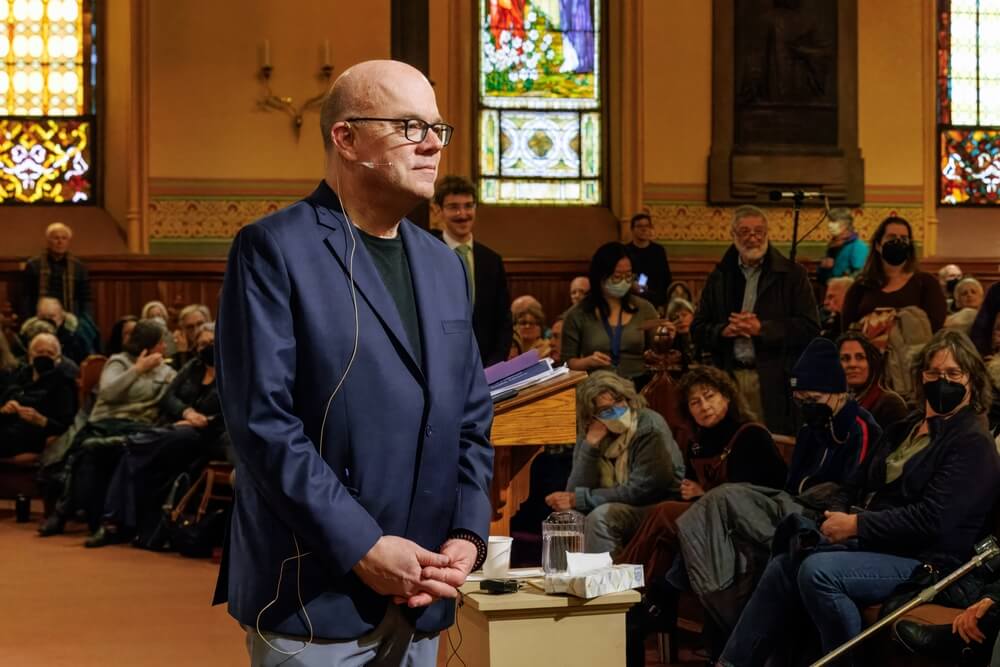
Following the attack, U.S. Representative Jim McGovern, a Democrat, was sharply critical of Vance’s refusal to call the conflict a war.
“Your administration just killed a 6-year-old boy and at least four other people at a family wedding in Iran. Sounds like war to me,” McGovern posted to X. He also accused Vance and other officials of “gaslighting” the public about the conflict.
The Trump administration has done itself no favors by providing morphing rationales for the war. At first, U.S. and Israeli attacks were justified as necessary to neutralize “imminent threats” from Iran’s missiles, its nuclear program and its regional proxies. Trump also called for regime change, urging the Iranian people to rise up and topple the government.
The administration quickly junked the goal of bringing down the regime when it became clear no revolution was in the cards. (Indeed, the attacks helped unify the Iranian public against the United States.)
By summer, the core objective had shifted to reopening the Strait of Hormuz to commercial shipping after fuel prices spiked -- never mind the inconvenient fact that it was the U.S-Israeli attacks that had pushed Iran to shutter the strait in the first place. Control over the strait to limit Iran’s fuel exports and strangle it economically became the primary means to ostensibly force the Iranian regime to return to the bargaining table.
As a result, it appears unclear now what exactly constitutes a win in the eyes of both the administration and the American public. But that ambiguity could be the very reason why Trump and his aides believe he can declare the war over. And perhaps the first step of that was telling the world that it was never a “war” in the first place.
Has anyone checked George Orwell’s grave lately? If you bend down and listen closely enough, you might hear some soft chortling.
