On 7 September in Nuuk, Ursula von der Leyen announced a new €200 million European Union package for Greenland covering 2026 and 2027.
It targets digital connectivity, sustainable mining, energy, tourism, education, fisheries and housing.
During the two-day visit, attended by the Greenlandic prime minister, Jens-Frederik Nielsen, and the Danish prime minister, Mette Frederiksen, the EU, Greenland and Denmark signed a new joint declaration.
Brussels has thereby shifted the European presence on the island from political support and long-term development aid to the infrastructure, raw materials and investment that will shape Greenland’s position in the coming decades.
This move comes two months after Donald Trump reiterated at a NATO summit in Ankara that Greenland should be under United States control, a demand rejected by Nuuk and Copenhagen.
The European response warrants examination beyond the immediate diplomatic dispute with Washington, as United States security in Greenland rests on a system established more than seven decades ago.
The US maintains a military presence on the island under a 1951 treaty with Denmark, amended in 2004 to include the legal principle of self-government, while Pituffik Space Base (formerly Thule Air Base) is situated in the island's north-west.
The US 12th Space Warning Squadron operates a radar with three official missions: ballistic missile early warning, missile defence support and space surveillance.
The US system in Greenland currently tracks intercontinental and submarine-launched ballistic missiles threatening the US or Canada and is integrated into the NORAD network.
Washington already maintains a key military support
The existing treaty framework allows extensive US–Danish security cooperation while simultaneously setting out the procedures through which it takes place.
A 2004 amendment to the agreement designates Pituffik as an existing defence area, mandates consultation on the US military presence and formally involves Greenlandic authorities in matters directly affecting the island.
This arrangement grants Washington the strategic access it requires for missile warning, space surveillance and operations in the northern approaches to North America, without altering the legal principle of Greenland's sovereignty.
This reality alters the nature of the US claim to control, as additional radar capabilities, further personnel or broader military infrastructure can be negotiated through existing security relations with Denmark and Greenland.
Washington and Copenhagen are already discussing a possible expansion of the current arrangement, while Danish authorities are simultaneously increasing their own military presence in the region.
Europe's interest is not to challenge the US military presence
When the US president raises the prospect of US control over the island, the discussion shifts from immediate military needs to the question of who will wield the greatest long-term influence over Greenland's infrastructure, investment, mineral projects, communications and political direction.
For Europe, this distinction has become crucial. If US security interests can be satisfied within existing agreements, Europe's interest is not to challenge the US military presence but to prevent security from becoming a pretext for political control over the territory of the Kingdom of Denmark and the marginalisation of Greenlandic institutions.
Brussels lacks the military leverage to match that of the US, but it possesses the market, capital, regulatory framework, infrastructure funds and long-term development programmes.
Thus, von der Leyen's visit demonstrates the EU's intent to strengthen Greenland's position through these means.
Who truly decides Greenland's future?
The island's political status further complicates attempts to treat its future as a bilateral matter between Washington and Copenhagen.
The Self-Government Act 2009 recognises the Greenlandic population as a people possessing the legal right of self-determination under international law.
Greenlandic authorities exercise broad legislative and executive powers and, since 2010, have held jurisdiction over the island’s mineral resources; revenue from these activities belongs to the Greenlandic self-government.
Denmark retains jurisdiction over constitutional matters, citizenship, monetary policy, foreign policy, defence and security.
The legislation also establishes a pathway to eventual independence. Should the Greenlandic population vote in favour of independence, negotiations between the Danish government and the Government of Greenland will commence.
Denmark does not treat Greenland’s deposits as its own economic assets
The ensuing agreement requires the consent of the Greenlandic parliament, approval via a local referendum and the consent of the Danish parliament.
The island’s future status is thus legally bound to the decision of the Greenlandic people, severely restricting any external power's ability to treat Greenland as a territory whose fate can be dictated by governments outside Nuuk.
This division of responsibilities is particularly crucial regarding mineral resources.
Denmark does not treat Greenland’s deposits as its own economic assets, while the Greenlandic government cannot independently conclude international agreements affecting the defence and security of the Kingdom.
US, European and Danish policy must therefore navigate institutions with distinct yet interrelated responsibilities; reducing Greenland to a mere bidding war ignores the architecture of its political power.
Europe invests to secure its long-term position
The €200 million package takes on greater significance when viewed alongside the existing European programme.
For the 2021–2027 period, the EU allocated €225 million to Greenland: 90 per cent for education and 10 per cent for green growth.
The European Commission has proposed €530 million for the next budget cycle (2028–2034), more than doubling the current framework.
A further €54.7 million has already been allocated to Tusass Connect, a submarine cable linking northern and central-western Greenland with the south, while the partnership also encompasses the European satellite systems Copernicus and Galileo.
Such investments deliver practical political effects that mere declarations of support cannot match. Cables determine communications connectivity, satellite services facilitate navigation and surveillance, energy infrastructure shapes the cost of future industrial projects, and education and housing determine a local community's capacity to absorb new capital.
An island with a population of approximately 56,000 may attract the interest of the world’s largest economies
An island with a population of approximately 56,000 may attract the interest of the world’s largest economies, but without labour, ports, energy, communications and local businesses, this interest can scarcely translate into sustainable economic strength.
Consequently, Brussels’ strategy is increasingly diverging from traditional development aid for a distant overseas territory.
Investing in digital infrastructure, energy, housing and education creates the conditions for future mining or industrial projects to retain greater value within Greenland itself, rather than the island functioning merely as a source of raw materials.
For Nuuk, this prospect carries significant political weight. Higher domestic revenues and a more diversified economy reduce long-term reliance on Danish fiscal transfers and broaden the scope for political autonomy.
Minerals have yet to become a power
Greenland has deposits of 25 of the 34 raw materials classified by the EU as critical for the green and digital transition, prompting the establishment of a partnership on sustainable value chains in 2023.
This figure has attracted considerable attention in Washington and European capitals, yet geological abundance does not automatically translate into commercially viable mines, competitive prices or supply chains capable of rapidly reducing European or US reliance on existing suppliers.
High construction costs, limited local infrastructure, a small population, harsh climatic conditions and environmental concerns restrict the pace of project development, while decisions regarding exploitation remain politically sensitive within Greenland itself.
Greenland's value to major powers lies in its potential to become a crucial node in new supply chains over the next 10 to 20 years
The island’s value to major powers therefore lies in its potential to become a crucial node in new supply chains over the next 10 to 20 years, rather than serving as an immediate replacement for current producers of rare minerals and other strategic materials.
US and European interests in this sphere can simultaneously overlap and clash. Washington seeks reliable supply chains outside Chinese control alongside a robust security position in the Arctic, while Brussels wants access to critical raw materials tied to European capital, regulatory standards and processing.
The Greenlandic government aims to channel both waves of foreign interest into local revenues, infrastructure and employment without forfeiting jurisdiction over the pace and conditions of development.
The dispute will play out through access, investment and regulatory frameworks
The most likely trajectory will not lead to formal US annexation or any simple ‘sale’ of Greenland. Political resistance in Nuuk and Copenhagen, the legal position of the Greenlandic people and the fact that the US already maintains an extensive security presence make such an outcome highly improbable.
A protracted period of negotiations remains far more realistic, during which Washington will attempt to expand its military capacity and secure preferential access to strategic projects, while the EU accelerates infrastructure investment and strengthens economic ties with Greenland.
Under these circumstances, Nuuk will have greater room for manoeuvre than its population size suggests.
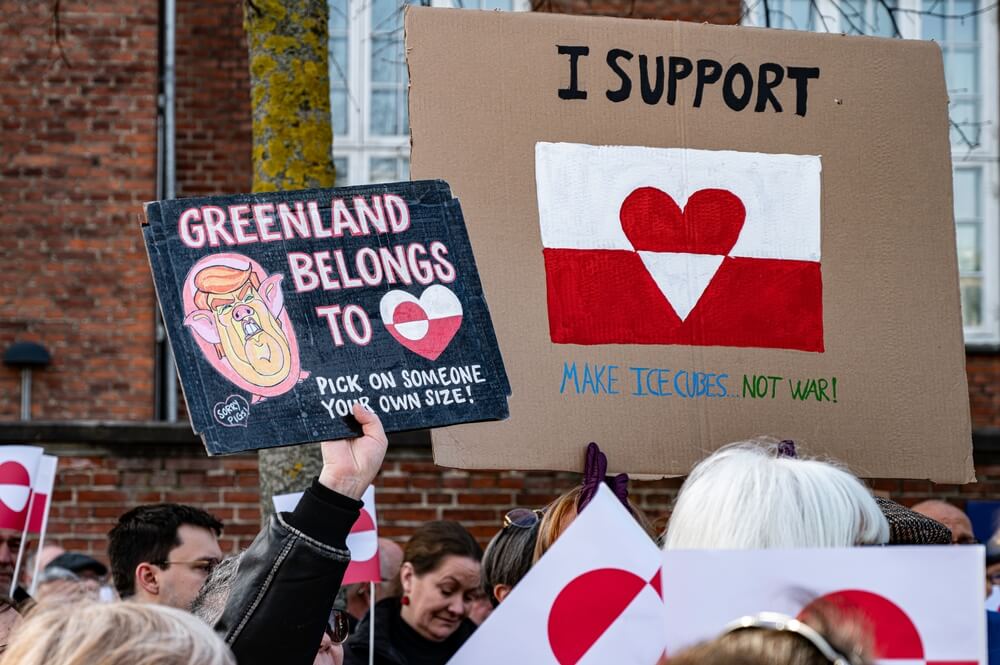 The dispute over Greenland will likely centre less on whose flag flies over the island and more on who will finance its infrastructure
Competition between the US and Europe increases the value of Greenlandic consent, and each new base, cable, mine, port or energy project creates opportunities for the local government to demand greater economic returns and increased political influence.
Denmark will likely accept an expanded US military presence provided it remains within the agreed alliance framework, while any notion of political control will continue to face united resistance from Copenhagen and Nuuk.
The European package announced in September will not, in itself, resolve any of these dilemmas, yet it alters the baseline.
Brussels no longer leaves Greenland caught between US military might and its own declarative support; instead, it is investing in the infrastructure and economic foundations through which long-term political influence is built.
In the coming years, the dispute over Greenland will likely centre less on whose flag flies over the island and more on who will finance its infrastructure, who will gain access to the extraction of critical raw materials, who will provide security capabilities and under what conditions foreign capital will enter the territory.
US military access to Greenland is already established, but this does not grant Washington the right to determine the island’s future unilaterally. It is precisely within the nexus of military access, economic influence and political control that the next phase of competition for Greenland will unfold.
