One of the more dangerous consequences of the war with Iran may not be found on the battlefield at all. It is emerging in the way the conflict is being analysed.
Much of the international analysis consumed around the world is produced or filtered through Western media institutions and think tanks.
Inevitably, it reflects the political debates taking place in Washington, London and other European capitals.
In the current war, this has created a particular distortion: because Donald Trump is such a polarising figure, the conflict has increasingly been assessed as a referendum on Trump and American power rather than through the strategic realities facing Iran, the Gulf states and the wider region.
The question has too often become: did Trump win? That is the wrong question to ask.
There are legitimate grounds for questioning American strategy. Washington has not achieved all its declared objectives, and the costs have been enormous. Iran retains some military capabilities and, most importantly, considerable leverage through its ability to disrupt navigation in the Strait of Hormuz.
However, American failure to achieve maximal objectives does not automatically translate into an Iranian strategic victory.
This distinction matters, because the same analytical lens has also distorted perceptions of how the Gulf states have performed during this conflict.
The Gulf was not unprepared
One recurring narrative portrays Gulf states largely as passive victims of a war triggered by decisions taken elsewhere: dependent on American protection, exposed to Iranian retaliation, and trapped by Washington's unpredictability. The actual record is more complicated.
The defence posture developed by Gulf states over many years suggests that their planning never assumed either permanent American predictability or permanent Iranian restraint.
They invested precisely because both could change. And when the test came, much of that architecture worked.
Iran fired hundreds of ballistic and cruise missiles and thousands of drones, the overwhelming majority of which were intercepted.
During the first week of the war, the Qatari Amiri Air Force engaged two Su-24s approaching from Iran and shot them down as soon as they violated Qatari airspace, after the QEAF pilots had applied the required rules of engagement and warned them of the consequences.
Gulf contingency planning did not begin when the first missile was launched
Spy and sabotage cells that the IRGC had planted inside Gulf states were immediately captured, showing that Gulf intelligence services had been monitoring these attempts since they began operating. The two cells captured in Qatar had been operating since 2024, well before the 12-day war.
When an armed group that Kuwaiti authorities identified as affiliated with the Islamic Revolutionary Guard Corps attempted to infiltrate Bubiyan Island, Kuwaiti forces confronted the group and arrested its members. Iran disputed the Kuwaiti account.
This incident demonstrated something frequently missing from external analysis: Gulf contingency planning did not begin when the first missile was launched.
This does not mean the Gulf escaped damage. It clearly did not. Energy infrastructure was struck. Businesses, aviation and private-sector activity were disrupted. There will be economic consequences long after the fighting stops.
But resilience should be measured by what happens after a state is struck, not by whether it can somehow avoid being struck at all, which is virtually impossible for any state.
Today, much of ordinary life across the Gulf continues. Airports are operating, businesses are functioning, and governments are providing normal public services even while the security threat persists. Recent reporting described Gulf airline operations as largely normal despite renewed escalation.
Comparing the two sides of the Gulf
The contrast with Iran should be part of any honest strategic assessment. Iran's economy is under extraordinary pressure. The IMF currently projects the Iranian economy to contract, with inflation approaching unprecedented levels.
Its population has endured war, economic deterioration, political repression, internet restrictions, and years of sanctions and mismanagement.
Even before the latest phase of the conflict, economic grievances had produced serious domestic unrest.
Earlier this year, Reuters reported that merchants who had historically formed an important constituency for the Islamic Republic were increasingly angered by corruption, economic mismanagement and the growing economic dominance of the Revolutionary Guards.
This leads to another analytical mistake: confusing regime survival with strategic victory.
Iran has demonstrated an extraordinary capacity to preserve its governing system while its people suffer
The survival of Iran's political system demonstrates the ability of its governing elite, security institutions and patronage networks to preserve themselves under extraordinary pressure.
It does not demonstrate that Iran, as a state or society, is stronger than it was before the conflict.
An authoritarian system can survive while its economy contracts, its population becomes poorer, its regional influence deteriorates and its diplomatic options narrow. Protecting a regime is not the same as protecting a country.
This is perhaps the starkest difference across the Gulf today. Gulf governments spent decades investing in air defence, infrastructure redundancy, sovereign financial buffers, international partnerships, and continuity of government and commerce.
Their objective was to maintain the functioning of the state and protect their populations when a crisis arose.
Iran has demonstrated an extraordinary capacity to preserve its governing system while its people suffer, and the IRGC and its supported non-state actors wreak havoc in the region. Preservation of the system itself should not be mistaken for successful statecraft.
Iran can disrupt. That does not mean it is winning
None of this means Iran is powerless. Tehran has discovered its most effective coercive instrument: threatening the functioning of the Strait of Hormuz.
This has undoubtedly worked in one important sense. Iran has shown that it can impose disproportionate costs on the international economy.
Disruption in Hormuz commands the attention of Europe, China, India, and every major energy importer.
But there is an important difference between the ability to inflict pain and the ability to translate that pain into a sustainable regional order.
Iran can compel attention through disruption, but it cannot compel acceptance indefinitely.
Indeed, weaponising Hormuz may prove to be a depreciating strategic asset. Every attack on commercial shipping and every threat against Gulf energy, electricity or water infrastructure gives regional governments and international economic powers another reason to reduce their vulnerability to Iranian coercion.
History shows that increasing isolation can make states both weaker and more willing to take risks
The comparison is therefore not between an Iran that has survived and Gulf states that have failed.
It is increasingly between an Iran that is becoming more isolated and Gulf states that are becoming more consolidated, integrated and connected. The Mecca agreement is an important data point that we should neither oversell nor undersell.
Despite disagreements on individual regional files, the Gulf position has consolidated substantially around sovereignty, territorial integrity, freedom of navigation and opposition to attacks on civilian infrastructure.
At the same time, Gulf countries remain deeply embedded in global networks of trade, finance, aviation, energy, diplomacy and security extending across the United States, Europe and Asia. Iran, on the other hand, is moving in the opposite direction.
That does not necessarily make Iran less dangerous. History shows that increasing isolation can make states both weaker and more willing to take risks. But isolation should certainly not be described as a victory.
Why the narrative matters
This would simply be an academic dispute if narratives did not affect negotiations. But they do.
Iranian decision-makers closely follow American politics. Hardline factions understand, and often overestimate, the political costs the conflict imposes on Trump and the economic pressure created by Hormuz.
If those factions repeatedly hear that America has lost, the Gulf has failed, Iran has survived and therefore Iran has won, the obvious conclusion is that additional pressure may extract additional concessions.
The problem arises when hostility towards Trump leads every American setback to be interpreted as an Iranian success
Why compromise today if tomorrow promises a better deal?
This is where analysis can unintentionally become pseudo-leverage.
The argument is not that Western journalists determine Iranian policy, nor that criticism of Trump should somehow be suppressed.
The problem arises when hostility towards Trump – or, among some commentators, a broader desire to demonstrate the decline of American power – leads every American setback to be interpreted as an Iranian success. Both can fail simultaneously.
If exaggerated perceptions of Iranian success strengthen factions already resistant to compromise, mediators will face an even narrower space in which to negotiate.
A regional settlement needs regional red lines
The Gulf states therefore need to be clear about what any settlement must achieve.
Freedom of navigation through Hormuz cannot be left at the mercy of Iran.
International shipping cannot be expected to operate permanently according to Tehran’s political preferences or domestic political needs.
Iranian regional policies cannot justify unlimited Israeli military action
Sovereignty must also return to the centre of Middle Eastern politics. Iranian support for armed non-state actors has significantly weakened state authority in Iraq, Syria, Lebanon and Yemen. Intellectual consistency requires applying the same principle to Israel.
Iranian regional policies cannot justify unlimited Israeli military action, violations of sovereignty, or a regional system based on unrestricted Israeli predominance.
The region needs rules that apply to everyone
A sustainable Middle East cannot be built by restraining one destabilising pole while allowing another to operate without meaningful constraints.
Iran must eventually have a place within that order. It is a major state, a historic civilisation and a permanent feature of Gulf geography. The objective cannot be its humiliation or collapse.
Tehran has survived a devastating war, endured arguably the biggest security and intelligence failure in modern history, and preserved its governing system while failing to protect its citizens. However, it should not be encouraged to believe that this track record – along with placing the global economy at risk – constitutes a strategic victory.
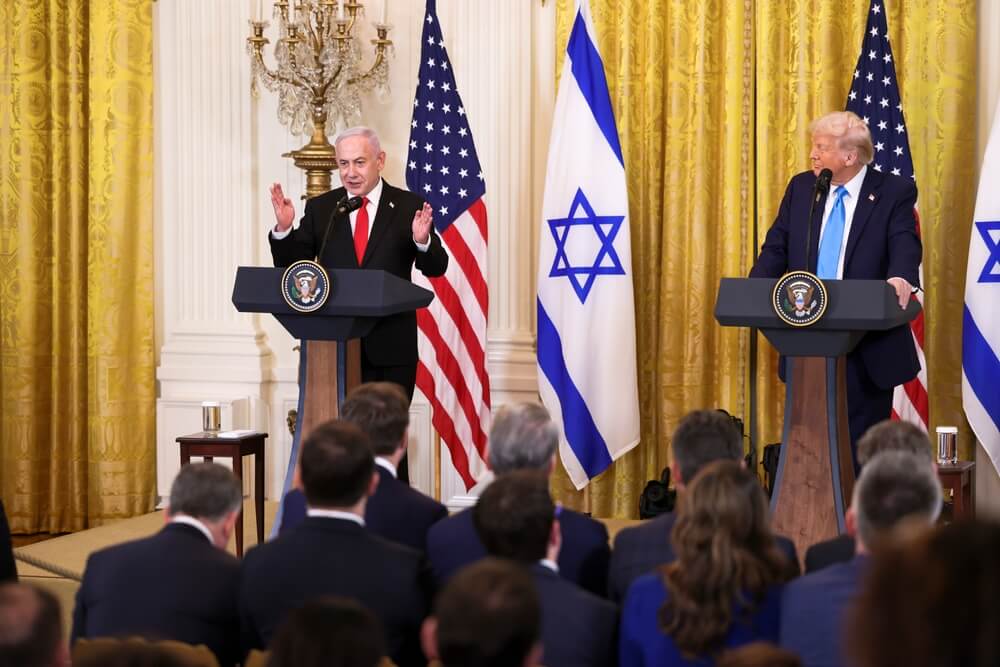 The United States has not achieved everything it wanted. Israel remains a destabilising actor in its own right. The Gulf has sustained serious damage
The United States has not achieved everything it wanted. Israel remains a destabilising actor in its own right. The Gulf has sustained serious damage.
But the Gulf states have also demonstrated that their contingency planning, defence investments and international connectivity work.
Their societies continue to function. Their partnerships remain extensive. Iran, meanwhile, faces profound economic pressure, domestic challenges and increasing isolation.
Good analysis should be capable of holding all of these truths simultaneously.
Because the danger is no longer simply misunderstanding who won the war.
It is that by convincing one side that survival equals victory, we encourage it to continue a conflict from which almost everyone – including Iran itself – would benefit by finding a way out.
Rashid Al-Mohanadi is Vice President of the Center for International Policy Research and a non-resident fellow at the Middle East Council on Global Affairs.
