As the conflict with Iran reshapes global security assumptions and energy markets, the debate in the United States has focused largely on why President Donald Trump chose war in the first place.
Was it domestic politics, a desire to project strength, a miscalculation, or something else?
Such explanations may have merit, but they risk obscuring root causes. The war was less a sudden decision than the culmination of geopolitical processes that steadily removed alternatives to confrontation.
By the time the bombs started falling, the decisive choices had already been made during years of strategic deliberation.
One of those choices was the first Trump administration’s 2018 withdrawal from the Joint Comprehensive Plan of Action, the agreement reached with Iran in 2015 to constrain its nuclear program.
At the time, Trump argued that scrapping the JCPOA was necessary to achieve a stronger agreement through economic leverage. America then sought to force Iran back to negotiations by crippling its economy.
Sanctions, of course, were not new. Even under the JCPOA, Iran faced significant restrictions for terrorist ties, ballistic missiles, and human-rights abuses.
Continued pressure kept the door open for further negotiated relief. But once the JCPOA was dead, sanctions operated without diplomacy, narrowing rather than expanding the potential for compromise.
Sanctions
Sanctions not only weakened Iran’s economy but also reshaped US perceptions of what could be achieved.
As economic pressure intensified without producing capitulation or regime change, policymakers faced a narrowing set of credible options.
Each failed attempt at coercion strengthened the perception that pressure alone could not resolve the problem, while simultaneously aligning American threat perceptions more closely with those of Israel, which views mere nuclear latency (possessing the means to create a weapon) as an unacceptable risk.
The result was not an immediate march toward war but a gradual redefinition of what Trump came to see as strategically inevitable.
Even as negotiations showed signs of life and mediators reported progress, the strategic logic driving confrontation continued to harden
Iranian policy also made restraint less likely. Even as negotiations showed signs of life and mediators reported progress, the strategic logic driving confrontation continued to harden.
Following the collapse of the JCPOA, Iran continued to develop its nuclear program and reduced access to inspectors.
This increased Iran’s negotiating leverage without openly crossing the threshold to building a nuclear weapon, but the strategic effect was the opposite of what Iran intended.
Regardless of Iran’s intentions, each advance reinforced Israeli perceptions of an approaching deadline and strengthened the argument in US circles that diplomacy was losing credibility.
Measures to preserve negotiating leverage instead accelerated the strategic convergence already underway.
Israeli policy
The road to war also ran through Israeli policy. For decades, Israel’s security doctrine has rested on preventing hostile states from reaching the nuclear-weapons threshold.
From the destruction of Iraq’s Osirak reactor in 1981 to periodic covert operations against Iranian facilities, Israel has consistently favored early action over long-term deterrence.
This logic is shaped by geography, history, and the pursuit of regional military dominance.
Even with overwhelming military power and US backing, Israeli security doctrine has tended to treat emerging risks as intolerable rather than negotiable.
As Israel moved to dismantle proxy threats, a confrontation with the state backing them became increasingly difficult to avoid
Israeli Prime Minister Benjamin Netanyahu has articulated this approach for decades, always presenting a nuclear-capable Iran as an existential threat rather than a manageable problem.
As Israel moved to dismantle proxy threats following Hamas’s attack on October 7, 2023, a confrontation with the state backing them became increasingly difficult to avoid.
Iran’s expanding nuclear infrastructure – which was increasingly dispersed and hardened underground – cemented Israel’s security doctrine by making prevention appear ever more difficult, regardless of Iran’s intentions.
Previously, buying time through military or covert action was security gained for Israel.
But as Iran advanced technologically, and as negotiations faltered, American policy met Israeli doctrine. What the US once viewed as a diplomatic problem came to resemble a security deadline.
The Gulf states
The road to war ran through the Gulf states as well. The rivalry between Iran and Saudi Arabia has long shaped regional security, but the 2019 attacks on Saudi oil facilities at Abqaiq and Khurais exposed the Gulf states’ vulnerability.
The subsequent Houthi missile and drone strikes targeting Saudi airports at Abha and Jeddah, Saudi Aramco facilities, and, in 2022, fuel storage sites in Abu Dhabi’s Musaffah industrial area reinforced this point.
United Nations reporting concluded that the Houthis had used weapons components consistent with Iranian manufacture or transfer, in violation of embargoes.
Though Iran denied involvement, the security of Gulf energy infrastructure had already been called into question.
Several Gulf states moved toward strategic alignment with Israel through the 2020 Abraham Accords
In response, several Gulf states moved toward strategic alignment with Israel through the 2020 Abraham Accords, reflecting shared concern over Iran’s regional influence.
Of course, a direct confrontation with Iran remained too risky for these trade-dependent economies, whose stability depends on uninterrupted energy flows and global commerce.
But closer alignment with Israel and reliance on US security guarantees allowed Gulf governments to support containment, while avoiding the direct costs and risks of confrontation.
By the time hostilities began, Gulf leaders faced a choice between a confrontation shaped by US power and a regional balance increasingly defined by Iranian capabilities.
The final decision
Over time, war began to look less like escalation than like the path of least resistance. American and Israeli strategic convergence, combined with Gulf risk management, made restraint increasingly difficult to sustain.
As US and Israeli strikes have expanded, Iran’s retaliation has targeted Israeli cities, Gulf energy hubs such as Ras Tanura and Jebel Ali, US bases, and commercial shipping across the Strait of Hormuz.
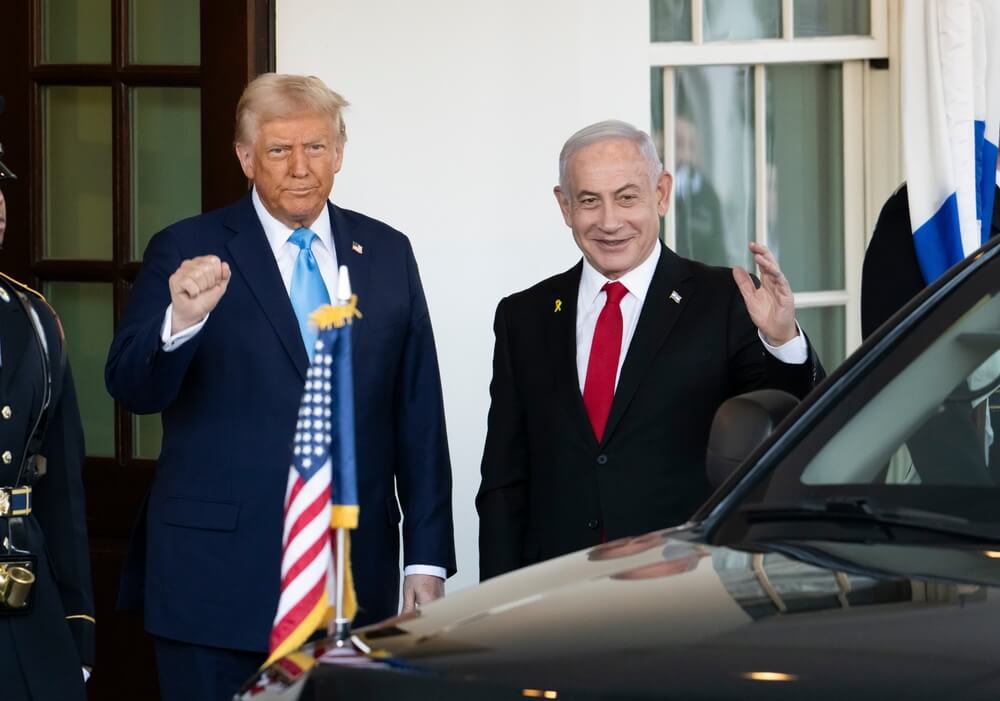 The final decision appeared sudden only because the trajectory toward confrontation had been accumulating for years - Donald Trump, Benjamin Netanyahu
The conflict has rapidly become a theater-wide struggle. The consequences of the war were never going to remain local, because Iran’s deterrence strategy operates through the Strait of Hormuz, the narrow passage linking regional conflict to the global economy.
The global repercussions reflect factors that were never purely regional. That is why explanations centered solely on US domestic politics fall short.
Presidential incentives may influence when leaders act, but they rarely create geopolitical conditions on their own.
The structural alignment of interests among allies and regional actors had already reduced the range of alternatives available to decision-makers.
The final decision appeared sudden only because the trajectory toward confrontation had been accumulating for years.
Carla Norrlöf is Professor of Political Science at the University of Toronto.
