On 13 November, the Inter-American Development Bank (IDB), the main source of long-term development loans for Latin America and the Caribbean, approved a plan to return to Venezuela. This is its first such move since it stopped granting new loans to the country in 2018.
IDB experts will prepare projects to restore the electricity grid, public services and areas affected by the earthquakes in June. Venezuela has not yet received any money. As of 30 September, it owed the bank $2.3 billion in unpaid obligations, and until that debt is settled, the IDB cannot grant it new government loans.
On the same day, it was reported that the US Department of the Treasury was considering a short-term loan that would allow Venezuela to repay its debt to the bank, in which the United States holds the largest share of votes, about 30 per cent. Washington already monitors the account to which the money from Venezuelan oil sales is sent.
Since January, the country has been governed by the interim administration of Delcy Rodríguez, the former vice-president, who assumed power after the US military operation that led to the arrest of President Nicolás Maduro. Her government is now opening the energy and infrastructure sectors to foreign investors.
Venezuela urgently needs functioning power plants, hospitals and water pipes. New loans and long-term contracts are already being agreed before the election, the date of which has not yet been set.
The order in which the old debts are repaid will determine how much money remains for reconstruction and which obligations will be inherited by the government that citizens have yet to elect.
A small debt opens a much larger account
The approved plan allows the IDB to resume data collection in Venezuela, assess the damage and prepare projects. IDB Invest, the part of the same group that works with the private sector, can advise private investors and, subject to special checks, finance some of their projects.
Project preparation and negotiations with investors will proceed ahead of government loans, which are approved by the bank’s board of directors on a case-by-case basis.
When IDB President Ilan Goldfajn was preparing a $2.5 billion loan to Venezuela in September, some board members objected. They doubted that the country would be able to repay the money until it had reached a broader agreement with international financial institutions.
In October, a short-term loan from Qatar for the same purpose was discussed, and now a US option has emerged. Neither of these two loans has yet been contracted.
The debt to the IDB is only a small part of Venezuela’s financial obligations. On 13 May, the government began restructuring the debt of the state and the state-owned oil company PDVSA, that is, negotiating with creditors on new deadlines and a reduction in the amount to be repaid.
The largest creditors are bondholders – investors who lent money to the state and PDVSA through securities that have not been repaid since 2017. Other creditors include China and Russia, which lent money to Venezuela, as well as suppliers and foreign companies that were awarded compensation by international arbitration courts for property nationalised during the Hugo Chávez era.
 The debt to the IDB is only a small part of Venezuela’s financial obligations
Analysts estimate the total debt at $150 billion to $170 billion, while the calculation the government is preparing for creditors, according to reports from June, shows obligations of about $240 billion.
The bonds alone are worth about $60 billion at their issue value, excluding the interest that has accrued over nearly nine years of default.
Some creditors are trying to collect through the US courts. A Delaware court has approved the sale of the parent company of Citgo, a US refining company owned by PDVSA, to pay creditors.
The sale is still pending the outcome of the Venezuelan appeal and permission from the US Department of the Treasury. Washington has the final say on which creditors will receive Venezuelan property abroad first. The government has not yet published the final list of obligations. Creditors will investigate each claim, and negotiations could take years.
Development banks such as the IDB are typically paid before other creditors and do not take part in write-offs when a state restructures debt, although this priority rests on established practice rather than law.
If Washington or Doha lends money to pay off the IDB first, Venezuela will replace its debt to the bank with debt to the new creditor, while the bondholders, China, Russia and the companies with arbitration rulings will still be waiting.
The terms of the new loan can determine in advance how much future income will go to repayment and how much will be left for reconstruction.
The deal makes sense if paying off the IDB paves the way for cheaper loans for power plants. Whether it does will depend on the interest rate, the repayment period, the guarantees that Venezuela must provide and whether the IDB will in fact approve the new loans.
Washington manages the oil revenue
A report prepared by the auditing firm KPMG for the State Department shows that, in the first nine months of 2026, $12.26 billion from the sale of Venezuelan raw materials, mostly oil, was paid into an account managed by the US Treasury Department.
By 30 September, $12.11 billion had been withdrawn from the account, mainly through the sale of dollars via Venezuelan banks, leaving $168.6 million.
Under an agreement reached after Maduro's arrest, the money remains the property of Venezuela but is paid out under rules overseen by US Secretary of State Marco Rubio.
If the Treasury approves the loan, Washington will be Venezuela’s creditor while will also manage the account into which its oil revenue is paid
The sale of dollars helps importers pay for goods from abroad, but the published totals do not show how much has been used to repair power stations, hospitals and waterworks.
The US administration claims that such oversight prevents abuse. In the public version of the report, the names of oil buyers are concealed, and the published data do not permit verification of individual payments.
If the Treasury approves the loan, Washington will be Venezuela’s creditor while will also manage the account into which its oil revenue is paid. Instalments could then be collected from that account before the money reaches the Venezuelan budget.
Jobs awarded without tender
A Reuters investigation published on 11 November described how John Addison, a Vitol trader who had previously provided financial support to US Vice-President JD Vance, maintained contact with senior administration officials.
Vitol and Trafigura, two of the world's largest oil trading companies, then obtained special licences to sell Venezuelan oil on the world market without public tender.
Choosing a partner without a tender might be justified when oil has to be sold urgently
The Trump administration claims that the choice was dictated by the need for a quick sale, and the companies deny that they knew in advance about the military operation against Maduro.
Choosing a partner without a tender might be justified when oil has to be sold urgently. In the case of power plants, ports and power grids, where contracts last for decades, the price, the number of bidders and the guarantees provided by the state will determine how much future revenue remains available for other public needs.
Power plants are seeking funding, communities are waiting for electricity
On 10 November, the Venezuelan parliament opened the power industry to private investors, and joint ventures with the state can now last up to 25 years.
Venezuela's power plants are operating at under 40 per cent of capacity, and power outages regularly disrupt water supplies, hospitals and farms.
The 25-year contracts must specify what happens if the investor fails to fulfil its commitments or demands a higher price
Private capital can accelerate repairs, especially where large industrial electricity consumers guarantee secure payment.
For investors, such projects are more profitable than network repairs in poor neighbourhoods, and new power plants will do little for households that receive no electricity because of dilapidated lines and substations.
Venezuela needs private investment immediately, but the 25-year contracts must also specify what happens if the investor fails to fulfil its commitments or demands a higher price.
Investors arrive before voters
Around 65 foreign investors are expected to arrive in Caracas on 15 November at the invitation of the US consulting firm Signum Global Advisors. Meetings are planned with the interim government, the central bank and PDVSA, but not with opposition leaders.
Charles Myers, the founder of Signum, believes that investment can begin even before the country is led by a democratically elected government.
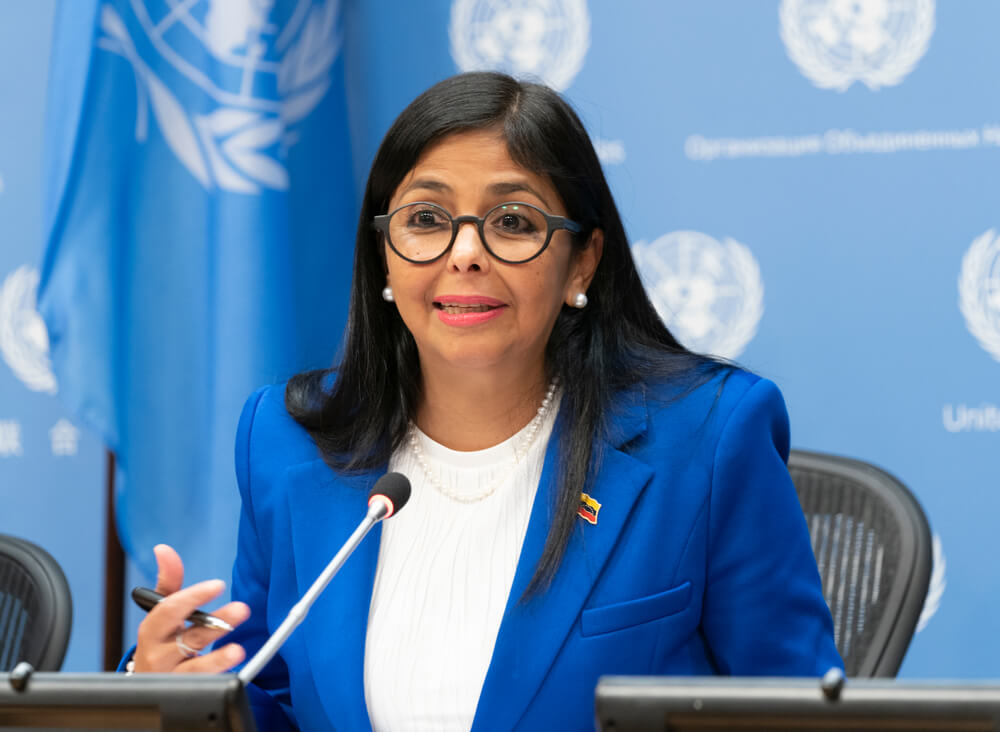 Contracts will be signed on Venezuela’s behalf by people who held senior positions during Maduro’s regime - Delcy Rodriguez
Contracts will be signed on Venezuela’s behalf by people who held senior positions during Maduro’s regime and who still lead key state institutions today. A short contract for the urgent repair of power lines will bind the future government only marginally.
A contract to manage a large part of the network for a quarter of a century, however, will tie the hands of governments that have not yet been elected.
Investors need certainty that the agreed conditions will remain in force after a change of government. Public tenders, independent verification and published contracts also protect them from future disputes.
After Chávez’s nationalisations, Venezuela spent years losing costly arbitration disputes with foreign companies. Contracts concluded today without clear rules could end up before the same tribunals after a change in government.
Who gets paid first and who pays later
It is highly likely that, by the end of 2027, Venezuela will launch the first projects prepared with the IDB and sign the first contracts with private investors in the power sector, without having reached an agreement with bondholders and other major creditors.
Funds for reconstruction will start to flow before it is known how much future income will go towards paying old debts.
Under such an arrangement, the interim government, which needs quick results, will benefit the most, followed by foreign traders and investors who strike deals while facing little competition, and creditors, who will be paid first.
The bill will go to a government that Venezuelans have yet to elect
The bill will go to a government that Venezuelans have yet to elect. It will have to honour contracts in which it played no part, and citizens will pay for them through the budget and through their electricity and water bills.
Venezuela is entitled to international aid and foreign capital, but there is no reason to incur obligations that future generations will have to repay before voters have had a chance to express their views.
The lucrative Venezuelan oil deals that Vitol and Trafigura won without a tender and without competition must not become the template for allocating power plants, networks and ports, because Venezuelans would otherwise spend decades paying off contracts whose terms they have never seen.
