On 2 November, US Secretary of State Marco Rubio received Oliver Blanco, the new Venezuelan foreign minister, in Washington to discuss preparations for free presidential elections.
Blanco, a former associate of opposition leader Henry Ramos Allup, also met US Treasury Secretary Scott Bessent that day to discuss increasing oil production and attracting investment.
In Caracas, the rules for electing the new Supreme Court were published simultaneously.
Ten months after US forces captured Nicolás Maduro, Washington is negotiating the country’s future with figures who have been part of his system for years, and Venezuelans still do not know when they will be able to elect a president.
The US operation on 3 January removed the man who had stayed in power despite compelling evidence that he had lost the 2024 election.
It created space for the opposition to return and for prisoners to be released, but at the same time raised serious questions about respect for international law.
The UN Secretary-General concluded that the operation set a dangerous precedent and expressed concern that the rules of international law had not been respected.
The justification for American action is now being assessed by its consequences, particularly the possibility that, for the first time in many years, Venezuela’s government will change through elections and the winner will actually assume office.
Maduro’s associates decide the future government
Delcy Rodríguez, Maduro’s vice-president, leads the interim government; her brother Jorge presides over parliament and negotiates with part of the opposition, while Diosdado Cabello runs the interior ministry and Vladimir Padrino commands the army.
The appointment of Blanco, a member of the opposition party Democratic Action, shows that the government is ready to broaden its political make-up, even though the most important state and security powers have remained in the hands of officials who held them before the US intervention.
Washington accepted their continued presence, calculating that the sudden collapse of the administration, army and police could trigger a new crisis.
Citizens still lack reliable guarantees that the government will accept electoral defeat
Foro Penal, a Venezuelan NGO whose lawyers defend political prisoners free of charge and keep records of their cases, documented the release of 1,105 political prisoners this year up to 26 October.
Opposition leader María Corina Machado, who was barred from standing in the 2024 election and later won the 2025 Nobel Peace Prize, has returned to Venezuela and is again publicly rallying supporters.
There are 322 people in prison whom Foro Penal considers to be political prisoners, of whom 171 have not received a verdict, while more than 11,000 people are subject to measures that restrict their freedom.
In September, UN investigators found that certain forms of repression have weakened, but that the police, intelligence services and other structures responsible for serious human rights violations have mostly not changed.
Without independent oversight of these institutions, citizens still lack reliable guarantees that the government will accept electoral defeat and that the police will not once again be used against its opponents.
Maduro’s majority selects the court that will rule on election disputes
In the presidential election in July 2024, the opposition collected records from more than 80 per cent of polling stations.
According to those documents, Edmundo González received 67.1 per cent of the vote and Maduro 30.4 per cent.
The Carter Center deemed the records credible, while the official election authority never released the full results by polling station.
The Supreme Court then upheld Maduro’s victory without providing evidence that would allow independent verification.
The US recognised González as the winner, but after Maduro’s capture, power was handed to his former vice-president.
Donald Trump claimed in January that María Corina Machado did not have enough support or respect to lead the country immediately, even though the candidate she backed had won by a landslide, according to the published voting records.
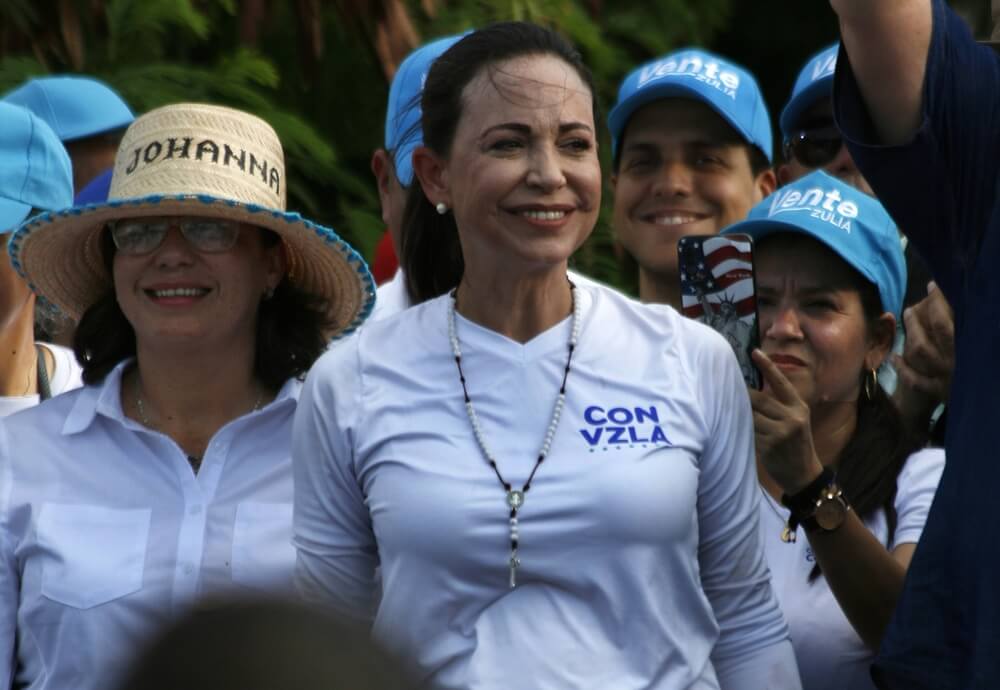 Donald Trump claimed in January that María Corina Machado did not have enough support or respect to lead the country immediately
Reform of the Supreme Court was presented as a safeguard against a repetition of such an outcome.
In May, at the suggestion of Delcy Rodríguez, the number of judges was increased from 20 to 32, and their election was scheduled for the end of the year, for 12-year terms.
In 2004, Hugo Chávez expanded the court from 20 to 32 judges and strengthened political control over it, a move against which international legal organisations warned.
Criteria for evaluating candidates were announced on 2 November, but the ultimate test of the new court’s independence will depend on who is appointed and how it rules in politically sensitive cases.
The final decision is made by the National Assembly. A two-thirds majority is required for the appointment of judges, and the coalition that governed alongside Maduro holds more than 250 of the 285 parliamentary seats, so it does not need opposition votes.
The negotiators included representatives of civil society in the pre-selection commission, allowing more thorough vetting of candidates, but the parliamentary majority still has the decisive say. Judges elected now could rule on disputes in future elections long after the current interim president’s term expires.
Negotiations on behalf of part of the opposition are led by Dinorah Figueroa, the former president of the parliament elected in 2015, while the Machado movement, which supported González in 2024, is not directly participating.
Future voting also requires renewal of the electoral council, the abolition of politically motivated bans on candidacy and an updated voter register.
In the 2024 election, only about 69,000 Venezuelan citizens were registered to vote abroad, even though millions of Venezuelans of legal age live outside the country.
Without resolving these problems, neither a new court nor a technically correct vote count will be enough for the result to be accepted as fair.
Washington already has the oil, Caracas still has no election date
The agreement with North American Blue Energy Partners grants access to 17 oil fields, with an estimated 65 billion barrels of reserves.
According to the White House, the US, through the Pentagon’s Office of Strategic Capital, has acquired a 35 per cent stake in the parent company.
The White House speaks of 100-year concessions, while Venezuela’s state oil company claims it has signed a 25-year deal with the option of extension.
Under the agreement, the US has the right to buy one-fifth of production at $30 a barrel, less than a third of the market price in recent months.
The board of directors must have an American majority, while a seat for a representative of the Venezuelan state is optional.
The agreement does not even guarantee the $200 billion in expected taxes and fees that the White House has announced as a benefit for Venezuela.
The first tanker carrying 1 million barrels of oil under the new arrangement arrived in Texas on 27 October
Venezuelan businessman Alejandro Betancourt is behind the company. His firm, Derwick Associates, received state contracts worth about $2 billion to build power stations during Chávez’s rule, partly awarded without competitive tendering.
US prosecutors investigated his possible connection to money laundering involving the state oil company PDVSA, but no charges were brought against him and the US investigation was halted this year.
According to prosecutors in Switzerland, the proceedings there are ongoing. Betancourt rejects all allegations of wrongdoing.
The choice of such a partner shows the US administration’s willingness to work with business figures who prospered under the previous Venezuelan government.
The first tanker carrying 1 million barrels of oil under the new arrangement arrived in Texas on 27 October.
Following its arrival, Donald Trump declared that “the booty belongs to the winner” and went on to speak about the possibility of Venezuela becoming the 51st US state.
Such words carry particular weight coming from the president of a country whose armed forces captured the Venezuelan leader.
The agreement may bring income and jobs to Venezuela, but the announced investment of $100 billion remains only a plan, while any increase in production is constrained by the poor condition of facilities and a lack of equipment and financing.
For now, the greatest immediate benefit lies in the rights already secured by the signatories.
Elections before the end of 2027 are increasingly unlikely
Machado believes that a presidential election should be held in 2027 and has proposed 24 July as the deadline.
On 26 October, Rubio did not specify a date but said the electoral system created under Maduro had to be replaced quickly, while Donald Trump believes the country is not yet ready for a nationwide vote.
During a dispute with the opposition in September, Diosdado Cabello even mentioned 2028, though without any official announcement of such a timetable.
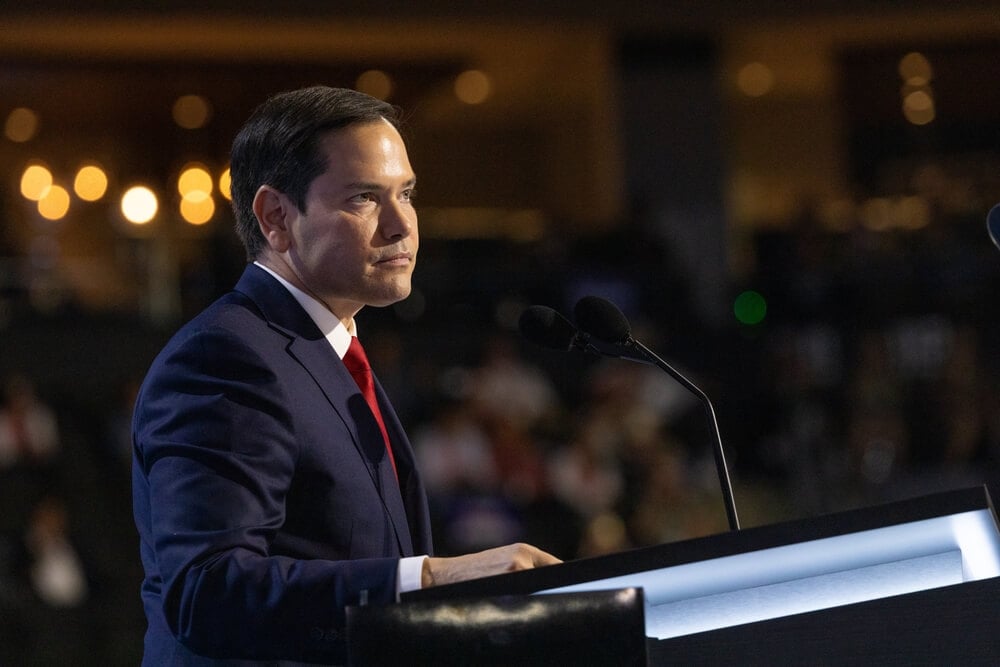 The electoral system created under Maduro had to be replaced quickly - Marco Rubio
More important than the statements themselves is the sequence of reforms already being negotiated: first the Supreme Court is overhauled, then the Electoral Council, while the timing of elections remains undecided.
It is highly likely that the presidential election will not be held before the final quarter of 2027, and that a postponement to 2028 is a serious possibility.
The current pace of reforms, the preserved parliamentary majority of the former regime, and the major economic deals already concluded by Washington give the interim leadership considerable room to negotiate the timing and conditions of its own departure.
Washington should make the publication of a binding electoral calendar a condition for further cooperation with Caracas, including the oil agreement, since no such obligation has yet been publicly established.
With Maduro’s removal, one of the main obstacles to democratisation has disappeared, and some citizens have regained freedoms they had previously lost.
At the same time, the institutions that protected his power remain in place, while oil exports and the allocation of long-term commercial rights have advanced much faster than citizens’ return to the ballot box.
The United States bears particular responsibility for the consequences of the intervention it carried out.
Its political value will be determined only once it is clear that Venezuela has a government that can lose an election and accept defeat.
Voters in 2024 have already shown that they can decide; now they must receive guarantees that their decision will be respected.
