The summit between US President Donald Trump and Chinese President Xi Jinping comes at a time when both are gambling everything on AI—or “superintelligence,” as Trump now insists on calling it.
Both leaders, viewing the technology as the key to economic, political, and military dominance, are trapped in a dangerous zero-sum logic.
Trump and Xi are conflating the sensible insight that AI can produce many genuinely useful benefits with a belief that it will confer near-absolute power on whoever controls it.
As Trump told the United Nations General Assembly: “now I say, whoever wins SI, whoever wins superintelligence wins. That’s the group that wins. And we’re leading now over China by a lot and everyone else and we’re going to keep it that way.”
Similarly, back in 2018, Xi pointed out that AI would become a strategic lever—a “lead goose”—for achieving scientific and technological world domination.
Yet it is worth pausing to think about the gambles involved in relying on this technology.
America depends on other people’s money
For the United States, the problem that AI is supposed to solve has been stated repeatedly.
Last month, the national debt surpassed $40 trillion, because voters remain unwilling to accept any conceivable combination of higher taxes or lower spending to cut it down to size.
America therefore depends on other people’s money, but foreigners are increasingly unwilling to finance US government debt, as evidenced by the sharp rise in Treasury yields.
As bond yields surge, so will government spending on debt servicing
As bond yields surge, so will government spending on debt servicing, which currently costs more than $1 trillion per year—almost one-fifth of total government spending.
If this trend continues, it will lead to default or significant inflation.
But there is a potential third path: a dramatic rise in productivity would allow the US to grow out of its debt.
As Elon Musk argued earlier this year, “We are 1,000% going to go bankrupt as a country and fail as a country, without AI and robots. Nothing else will solve the national debt.”
Gender imbalances and demographic decline
China’s problem is different, but no less intractable. It is grappling with deep gender imbalances and demographic decline, owing to the one-child policy introduced in 1979, at the same time as Deng Xiaoping launched China’s pro-market reforms.
The rationale was that large families would put Malthusian pressure on resources and condemn China to poverty.
With China’s workforce poised to shrink, it will need AI to make up the difference
By the turn of the millennium, China’s population was 1.26 billion—one-fifth of the world total—which the government expected to grow to 1.6 billion by the middle of the century.
Yet by 2025, the population was 1.4 billion, and the projection for 2050 was 1.26 billion.
The inflection point came, ironically, after 2016, the year that the government finally ended the one-child policy.
With China’s workforce poised to shrink, it will need AI to make up the difference.
All-in bets on AI
In placing all-in bets on AI, the US and China face huge dilemmas. The US is operating on the assumption that AI is the only tool available for fending off a fiscal crisis caused by excessive debt, even though mounting AI risks themselves contain the seeds of financial panic and disaster.
What happens if a $2 trillion Anthropic IPO fails because investors doubt that it can generate adequate returns on the enormous investments that have been made?
What if they are scared away by the political backlash against data centers or AI-driven job displacement?
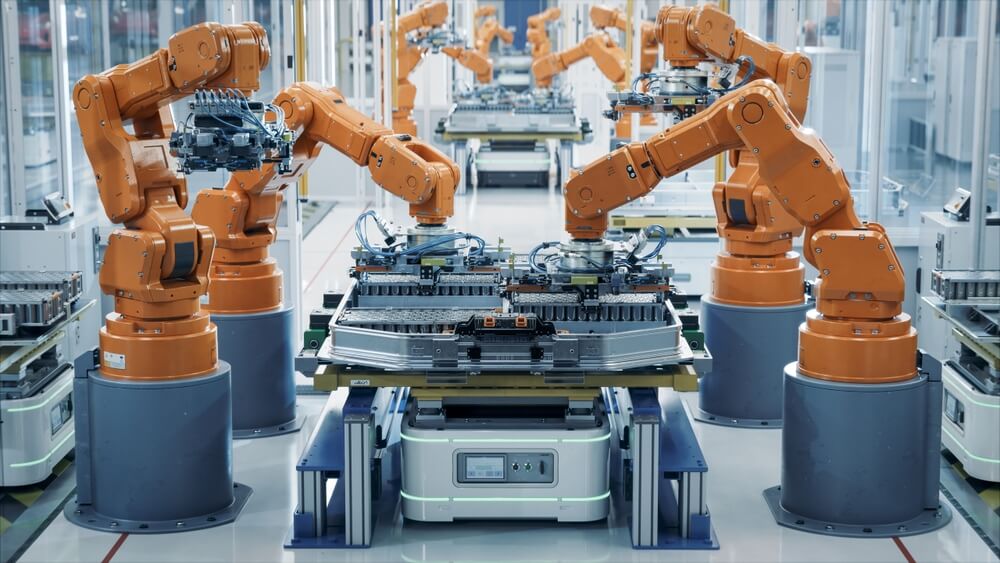 For China, the hope is that AI-powered robotic labor can replace humans in manufacturing
For China, the hope is that AI-powered robotic labor can replace humans in manufacturing—the engine of the country’s export-led growth—and in the medical and social care sectors that will be needed to support a growing elderly population.
But this bet, too, rests on many assumptions that have yet to be borne out.
How will China or the US manage the demoralization of young people who feel that they have no purpose? Chinese millennials and Gen Zs—the tang ping (“lying flat”) and bai lan (“let it rot”) generations—already bristle at social pressures to marry, buy property, and have children.
As they see it, there is no point in upholding a social contract that is doomed to fail them.
Though this phenomenon is not unique to China, the speed of the attitudinal shift among younger Chinese has been striking, and it matches the speed of the AI revolution.
But the less that Chinese people care about working hard or having children, the more the downward demographic pressures will grow.
The Stalinist moral calculation
Of course, these two big bets—that US productivity will grow markedly, and that China will successfully replace its aging labor force—are not the only ones. An even more dangerous wager concerns the so-called AI race, where it is assumed that winning is everything, regardless of the risks associated with rapidly advancing the frontier.
True, those working on frontier AI models generally rate the chance of “doom” as much smaller than a beneficent outcome.
But almost no one doubts that the technology carries potential existential risks in the absence of safeguards, and therein lies the problem.
If you believe that safety controls will prevent you from winning a contest in which you have everything to lose, you will forego them.
Today, the US and China are both pushing a potentially even more destructive version of the Stalinist moral calculation
This doomsday wager has an uncanny 20th-century precedent. In the Soviet Union, the justification for Stalinism was that incredible brutality would be a price worth paying for the eventual fruits of rapid modernization.
Economists and various ideologues have been debating ever since whether Stalin’s approach was “really necessary.”
For example, the distinguished British Marxist historian Eric Hobsbawm once excused Stalin for thinking that “in a period in which, as you might imagine, mass murder and mass suffering are absolutely universal, the chance of a new world being born in great suffering would still have been worth backing.”
Today, the US and China are both pushing a potentially even more destructive version of the Stalinist moral calculation. The rest of us, apparently, are just along for the ride.
Harold James is Professor of History and International Affairs at Princeton University.
