Does the US-Israeli attack on Iran have an impact on the war in Ukraine? Of course, it does – and a very strong one.
The United States has deployed numerous aircraft and various types of missiles for strikes on Iranian territory, as well as missile defence systems to repel Iranian counterattacks.
And while Ukraine never counted on purchasing combat aircraft or cruise and ballistic missiles from the US, it has always relied on American missile defence systems.
First and foremost, missiles for the MIM-104 Patriot system, which can intercept Russian ballistic and hypersonic missiles.
Moscow is literally terrorising Ukraine with daily missile and drone attacks. If fewer than 150 Iranian-made strike drones – which Russia is now actively producing itself – are launched against Ukraine in a single day, this is considered a very low-intensity attack.
Once a week, Russia carries out a massive missile-and-drone strike on Ukraine, simultaneously using 50–60 missiles of various types and 500–600 combat drones. And every week Ukraine must repel such an attack.
Four months ago, when 20 Russian strike drones allegedly accidentally entered Polish territory, all of Poland’s and NATO’s aviation assets were engaged against them. This included F-16 and F-35 fighter jets, as well as air and missile defence systems.
After seven hours of operations, only five drones were shot down. At that point the Russians realised that Alliance countries were not prepared for modern warfare.
Western capitals reached the same conclusion. War with tanks, armoured personnel carriers, and artillery belongs to the past; war with missiles and aviation is the war of the present. Drone warfare is the war of the future.
NATO exercises in Estonia
Last year, NATO conducted an exercise in Estonia in which Ukrainian personnel—specifically, a unit of 10 drone operators—participated in addition to the troops of the Alliance members. They were assigned the role of NATO's notional adversary.
In two hours of exercises, the Ukrainian drone operators conditionally destroyed more than two battalions of a British tank brigade and an Estonian division. Their launch positions were not even detected.
The organisers immediately barred the Ukrainians from further participation in the manoeuvres, officially stating that they had already demonstrated their capabilities sufficiently.
In reality, the organisers realised that by actively and skilfully employing drones, the Ukrainian side could have destroyed two more notional NATO battalions in the next two hours and possibly the remaining intact units after that if drone supplies had lasted.
Moscow understands that European forces are not yet prepared for modern warfare and may be tempted to test them
In other words, 10 experienced Ukrainian drone operators could have eliminated the main Alliance forces participating in the manoeuvres.
According to the Ukrainian officers present, this was possible only because Alliance units are not prepared for modern warfare and are using outdated combat methods.
It therefore becomes evident that NATO units from European countries would currently be unable to counter Russian units that have already gained combat experience in Ukraine.
Moscow understands that European forces are not yet prepared for modern warfare and may be tempted to test them.
If most conventional US forces are withdrawn from Europe in 2026, the Russians could wait a year, attempting to achieve something in Ukraine during that period. After that, they might move against one or several European countries, counting on a quick victory.
Combat experience of the US and Israel
Unlike European armies, Israelis and Americans have extensive combat experience.
Israel’s recent adversaries have included Hamas, Hezbollah, the Houthis in Yemen, and Syrian forces – all somewhat below the level of the Iranian army.
The US fought for a long time in Iraq and Afghanistan – again, not the strongest opponents.
Meanwhile, Israel has carefully studied the consequences of drone warfare and has actively used drones in combat.
The US also makes extensive use of drones and was a pioneer in their application.
Iran relied specifically on ballistic missiles and drones when it adopted a defiant tone in negotiations with the US
So what makes the Iranian army dangerous? Not armoured vehicles or artillery. Iran has significantly advanced its drone production programmes, as well as its ballistic and hypersonic missile capabilities.
Clearly, Iran relied specifically on ballistic missiles and drones when it adopted a defiant tone in negotiations with the US.
During the June 2025 Israel-Iran war, Iranian ballistic missiles caused the greatest damage to Israel.
That is why drones have become the primary tool of Iranian attacks in the current conflict.
Israel has learned to destroy them relatively effectively, but the air defences of Gulf countries have not.
Several Iranian drones have even reached Cyprus. Greece immediately responded by sending ships, air defence systems, combat aircraft, and even a Patriot battery to the island.
Kyiv is ready to assist allies in the Gulf
However, Patriot systems are effective against ballistic and aeroballistic missiles but are much less effective against drones, as are many other missile defence systems.
Meanwhile, a single Iranian strike drone costs about 100 times less than a missile for the Patriot system.
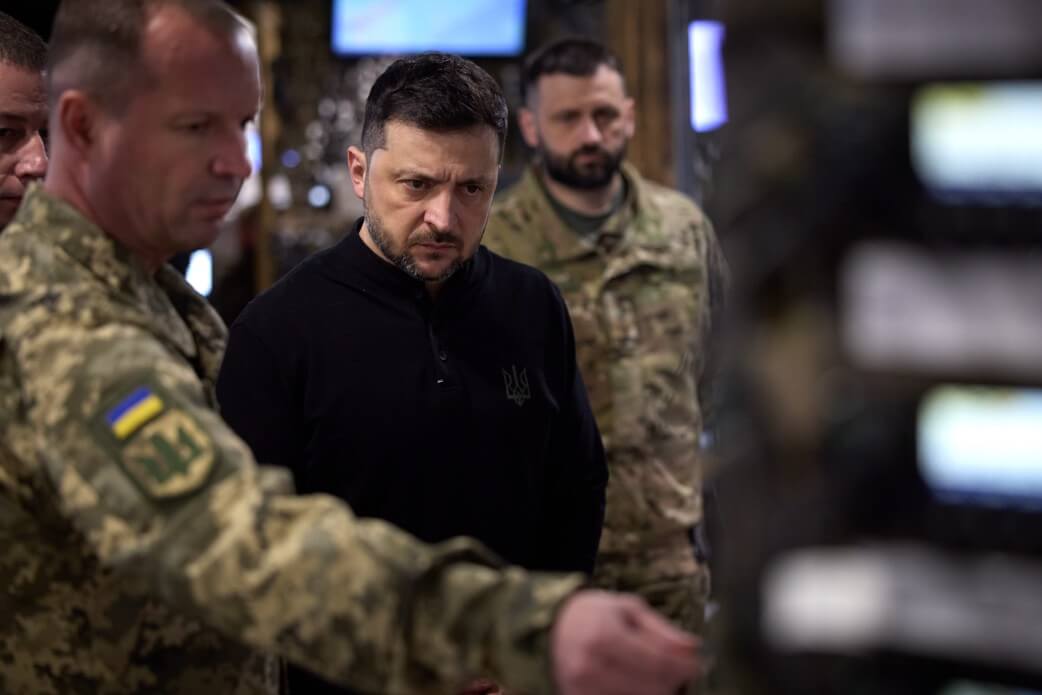 Currently, Ukrainians shoot down up to 90% of Russian drones over their territory - Volodymyr Zelenskyy
The Americans and Israelis have launched powerful missile strikes on many of Iran’s strategic facilities.
However, it is extremely difficult to target the launch sites of combat drones, as their compact nature allows them to be located almost anywhere.
This is why Washington refers to 3–5 weeks of bombing Iran – largely due to the difficulty not only in striking strategic facilities but also in suppressing drone launch sites.
President of Ukraine Volodymyr Zelenskyy has appealed to the leadership of the United Arab Emirates with a proposal: if the Russians can be persuaded to stop bombing Ukraine for some time, Kyiv is ready to send many drone operators to help Gulf countries effectively shoot down Iranian drones.
They would also train local militaries to operate interceptor drones. Currently, Ukrainians shoot down up to 90% of Russian drones over their territory.
If the Emirates and other Gulf countries reach an agreement with Moscow, Ukrainians would help protect the UAE, Saudi Arabia, Qatar, Kuwait, Bahrain, and Oman from Iranian drone terror.
In return, Kyiv is asking for missiles for Patriot systems, which Ukraine lacks to counter Russian ballistic missiles. This is an issue everyone should consider.
Oleksandr Levchenko, a former Ukrainian diplomat, is a professor at the State University (Kyiv) and a member of the Academy of Geopolitics and Geostrategy (Kyiv).
