It was just one mid-term result but victory for the Green Party in a by-election last week may have signalled the end of the century-old domination of UK national politics by Labour and Conservatives.
That, at least, was the view of the country’s veteran polling guru John Curtice, who concluded: “That political duopoly is being fundamentally challenged.”
In a result that appeared to reflect a considerable degree of tactical voting, the Greens took four out of 10 votes in the north of England constituency of Gorton and Denton to push one-time favourite Reform into second place.
Ruling Labour, which had cautiously hoped to retain a traditional stronghold, came an ignominious third.
Amid the inevitable intra-party recriminations, party loyalists insisted that Prime Minister Keir Starmer’s leadership remained secure but acknowledged that the electorate was impatient to see the benefits from his promises of change.
Starmer himself acknowledged the result was very disappointing and reflected the frustration of voters, but he pledged to “keep on fighting”.
Labour critics accused the PM of giving away the election by blocking the candidacy of the popular Manchester mayor and party leadership rival, Andy Burnham.
How far is it a guide to 2029?
The by-election outcome inevitably poses an increased risk to Starmer’s premiership ahead of local elections in May. But how far is it a guide to the likely state of the parties in 2029 when the next nationwide parliamentary elections are due?
In Gorton and Denton, a socially mixed but predominantly working-class area of Greater Manchester, the insurgent parties of the left and right took some 70 per cent of the votes of the half of the electorate who turned out.
Reform candidate Matt Goodwin put the Green victory down to a “coalition of Islamists and woke progressives”
The outcome was the culmination of a three-horse race in which any of the three front runners might conceivably have won but in which two other established parties, the Conservatives and Liberal Democrats, were destined to be eclipsed.
In the final result, the Greens had a clear edge on right-wing Reform, which had been optimistic about taking the seat after early polling that favoured Nigel Farage’s party. Reform candidate Matt Goodwin put the Green victory down to a “coalition of Islamists and woke progressives”.
A less comforting conclusion for Goodwin’s party is that many middle-of-the-road voters may have opted for the Greens as the best option for keeping out Reform.
A “seismic” victory offering voters an alternative
Labour too might have hoped that it could salvage the seat by holding on to those ‘anyone but Reform’ voters. The fact that centrists and disaffected Labourites shifted to the Greens holds out the prospect of a sustained Green wave in May and at other elections further down the line.
In the Manchester constituency, at least, they were credited with capturing the current mood in areas where many feel left behind by the two main parliamentary parties.
Pollster John Curtice noted that Labour, the self-declared party of the working class, had been defeated by an authentic working-class woman, referring to the successful Green candidate, Hannah Spencer.
Zack Polanski greeted a “seismic” victory that he said had ended Labour’s electoral stranglehold by offering voters an alternative
Spencer, a 34-year-old local plumber and recently qualified plasterer, may have struck a chord with many disgruntled voters when she said in her victory speech that regular work was no longer adequately rewarded and served instead to line the pockets of billionaires.
Her party has moved sharply leftwards from its environmentalist origins under the leadership of Zack Polanski, who greeted a “seismic” victory that he said had ended Labour’s electoral stranglehold by offering voters an alternative.
Being fundamentally challenged – not doomed
Despite Labour and its leader confronting record levels of unpopularity in national opinion polls, its strategists believe it remains the only viable alternative to Reform at a future general election.
But, just as the Conservatives have been overshadowed by Reform with senior figures defecting to Farage’s right-wing populists, will Labour suffer the same fate at the hands of Polanski’s Greens?
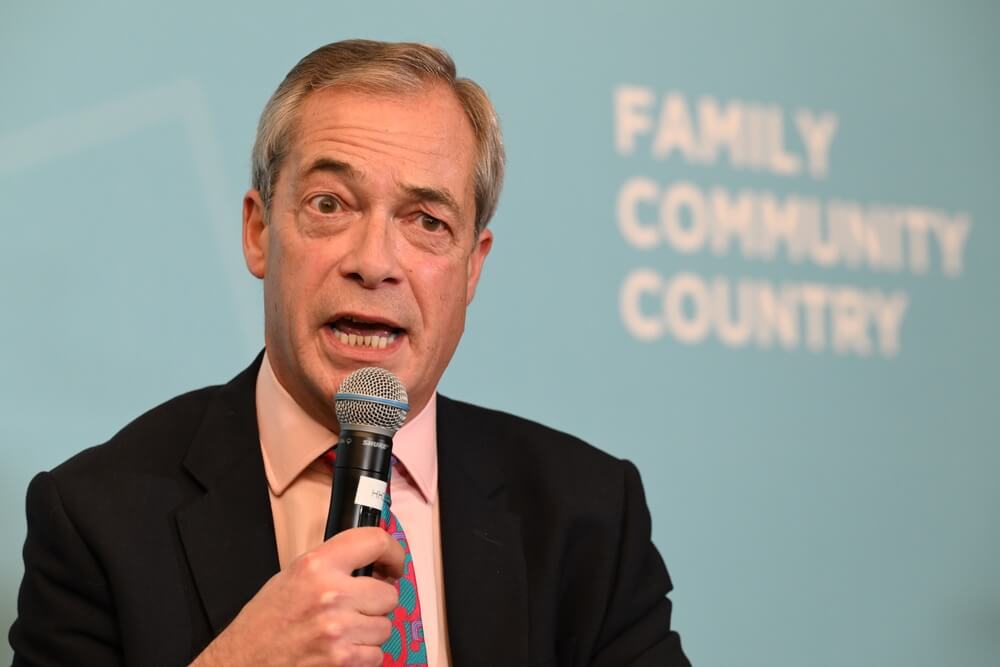 Could the UK electorate face the choice in three years’ time between two parties, Reform and the Greens, that have never been tested in office? - Nigel Farage
Or, in other words, could the UK electorate face the choice in three years’ time between two parties, Reform and the Greens, that have never been tested in office?
Although the current outlook is bleak for both Labour and the Conservatives, the short answer is: probably not.
Even the canny Curtice said the current duopoly was being fundamentally challenged; he didn’t say it was doomed. He nonetheless acknowledged that the Greens’ historic success, the first by-election win in its history, meant the future of British politics is now even more uncertain than it already was.
Reform, which faces its own dissenters on the right, can only go so far with its obsession with immigration and may see its progress stall unless it can convince voters it has a coherent programme to meet their economic demands.
The Greens, meanwhile, may succeed more in prompting the Labour Party to revise its policy priorities and presentation than in replacing it as the main party of the left.
One trend that might evolve in coming months and years, and within the limitations of the UK’s first past the post electoral system, is towards more cooperation on the centre and left. Given the current frictions, the prospects are perhaps dim.
There is nevertheless a vast constituency, ranging from disaffected one-nation Conservatives to the Labour left and Polanski’s Greens, that are already agreed on one thing: Keep Reform Out.
