The concentration of American military forces around Iran has reached a level not seen since 2003, inevitably prompting comparisons with Iraq.
However, such comparisons can be misleading if the differences in the structure and purpose of the deployed forces are not considered.
In 2003, the military deployment was clearly aimed at a land invasion of Iraq, the rapid overthrow of the regime, and full control of the territory.
The current deployment of forces around Iran does not bear this signature. There are no visible elements indicating preparations for a large-scale ground operation.
Instead, a combination of naval and air capabilities has been assembled to conduct an intense but limited strike campaign, designed to last, be repeated, and function even under constant Iranian counterattacks.
A series of smaller decisions, not a single tipping point
Such deployment of forces changes how the conflict is fought and controlled. It allows the decision to use force to be divided into phases, the intensity of strikes to be adjusted according to political signals and the adversary’s reactions, and escalation to remain under constant civilian control.
Rather than a single tipping point, a series of smaller decisions can be made, which can be escalated, paused, or stopped without losing military initiative.
This ability to control the pace makes the current deployment more dangerous and unstable, as it prolongs a state of constant tension and increases the risk of misjudgement on both sides.
Such a structure is not maintained at a high level of readiness without a realistic assessment that it will be used
The presence of two aircraft carriers with full strike groups, numerous destroyers equipped with anti-aircraft and anti-missile defence systems, and a submarine with cruise missiles constitutes a force that is not a temporary show of strength.
It is a combat configuration capable of initiating and sustaining operations for several weeks, even under enemy attack.
Such a structure is not maintained at a high level of readiness without a realistic assessment that it will be used, unless a late and politically costly decision to withdraw is taken.
In this respect, the military logic has already been established. What remains open is the political timing of the decision.
Aircraft carriers as mobile air bases
The naval component of the deployment plays a central operational role. Aircraft carriers are not present merely as a show of force but serve as mobile air bases that enable continuous combat flights without depending on land-based airfields in the region.
Their purpose is not a single strike but maintaining continuity of operations over an extended period. With destroyers, which provide missile strikes against land targets and anti-aircraft protection for the fleet, the capacity for repeat attacks and the suppression of enemy defences is established.
This deployment of forces is designed to conduct combat operations over a prolonged period
Submarines further complicate the opponent’s planning. Their presence introduces constant uncertainty into assessments of the direction and timing of attacks, expands the range of possible actions, and forces the opponent to allocate resources defensively.
Overall, this deployment of forces is designed to conduct combat operations over a prolonged period, rather than a brief and limited demonstration of force.
A system that observes, strikes, defends, and adapts
The distribution of air forces in the region reflects clear operational requirements. Bases in the Gulf and the wider area have been selected to enable continuous combat flights, rapid reinforcement, and the continuation of operations even under enemy attacks.
Such deployment allows for deep strikes, constant reconnaissance, repeated attacks, and the protection of one's own bases and airspace.
Its strength lies not in its individual aircraft, but in its ability to conduct continuous operations with a clear division of tasks and reliable control and coordination from command centres.
It is a system that observes, strikes, defends, and adapts simultaneously.
Initial actions would focus on disabling observation and command systems, creating opportunities for precise strikes on key targets deep inside the territory
Such a distribution of forces allows the campaign to be conducted in clearly defined stages, with the ability to adjust intensity as needed.
Initial actions would focus on disabling observation and command systems, creating opportunities for precise strikes on key targets deep inside the territory.
Subsequent actions would be repeated to permanently reduce military capabilities, rather than attempting their complete destruction in a single attack.
Throughout the process, maintaining air superiority and protecting bases and naval forces would remain constant priorities.
A state of constant uncertainty
Iran is not a passive participant in this framework. Its response does not rely on countering American military power in the traditional sense but on exerting pressure through large-scale and asymmetric strikes.
Iran's missile strategy employs a mix of various missile types and unmanned systems, aiming to overwhelm air defences, deplete interceptor stocks faster than they can be replenished, and keep the enemy in a constant state of uncertainty.
The mere perception of risk raises insurance costs, slows shipping, and introduces instability into energy markets
The greatest risk for the American side is not a single successful attack, but a series of limited-intensity attacks that are repeated and dispersed across the region.
Large, fixed bases, logistics hubs, and maritime routes are particularly vulnerable. The Strait of Hormuz plays a central role in this context.
Iran does not need to close it to have a significant impact; it is sufficient to make it insecure. The mere perception of risk raises insurance costs, slows shipping, and introduces instability into energy markets.
The political timing of the decision
Therefore, the military and economic aspects of this crisis cannot be considered separately.
Prolonging the conflict increases the likelihood that markets will begin to internalise long-term volatility in energy and transport prices.
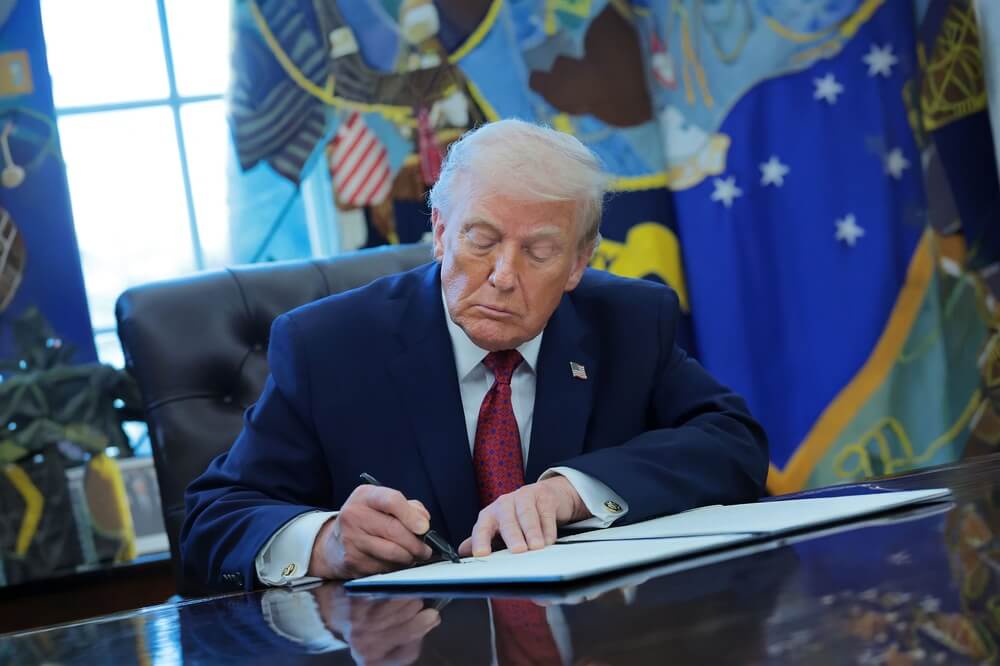 American forces are already deployed to allow rapid action without further preparations or visible changes on the ground - Donald Trump
Even limited physical damage can have a disproportionate global effect if the region is perceived to be entering a phase of permanent unpredictability and crisis.
This situation cannot be understood if viewed solely through the ratio of military capabilities.
American forces are already deployed to allow rapid action without further preparations or visible changes on the ground.
The absence of signs of a ground operation does not mean that the option of using force is off the table; rather, it indicates that a form of warfare conducted from a distance, through air and naval strikes, has been chosen.
Thus, the key question is no longer whether the United States has the capability to conduct such a campaign. That issue does not exist.
The questions of the timing of the political decision, the scope of possible strikes, and the assessment of whether the risks of wider escalation and economic consequences are acceptable in relation to Washington's objectives remain unresolved.
For now, the distribution of forces itself leaves little room for alternative interpretations. This level of readiness cannot be sustained indefinitely without a decision to use force.
