Aggressive anti-immigrant policies have been a hallmark of US President Donald Trump’s first year back in the White House, and this appears unlikely to change in 2026.
A growing number of Immigration and Customs Enforcement (ICE) agents carry out raids and deportations, often in defiance of judges’ orders and repeatedly sweeping up US citizens, and the administration is closing legal pathways to immigration, including by halting all applications for migrants from 19 countries.
Now, other countries concerned about immigration are wondering if they should follow Trump’s lead.
But can Trump’s immigration policy really be considered successful? Leaving aside the legal issues raised by ICE’s disregard for due process and the economic consequences of mass deportations, the answer is a resounding no.
Trump’s strategy is two-pronged: remove as many immigrants as possible and deter new immigrants from attempting to enter.
The more aggressive the tactics used to advance the first objective, the easier it will be to achieve the second.
The possibility of being deported is one thing; the risk of being sent to a notoriously brutal prison in a country where you have no ties is quite another. And the more deportations are carried out, the more salient that risk becomes.
Trump’s pledge
Both to advance such deterrence and to delight his MAGA (Make America Great Again) base, Trump’s administration is loudly publicizing its anti-immigration measures.
According to the Department of Homeland Security (DHS), 527,000 “illegal aliens” had been “removed” from the US, as of the end of October.
Toward the end of this period, deportations averaged 7,500 per week – a little over 1,000 daily.
This falls far short of Trump’s pledge of one million deportations – roughly 3,000 per day – in his first year.
The Trump administration will probably end up deporting fewer people in 2025 than the 685,000 Joe Biden’s administration did in 2024
The Trump administration will probably end up deporting fewer people in 2025 than the 685,000 Joe Biden’s administration did in 2024.
And that is if you believe the official figures. (Many institutions, including the American Immigration Council and the Migration Policy Institute, are not convinced.)
Small wonder DHS tried to pad its record by claiming that 1.6 million have left the US through voluntary “self-deportation.”
If there are about 14 million undocumented immigrants in the US, as some estimate, it will take decades to deport them all, at the current rate. And this assumes that third countries would continue to accept them – hardly a foregone conclusion.
The refusal or reluctance of many governments, such as Cuba, Haiti, and Venezuela, to accept their own nationals is a key reason why deportees are being sent to third countries.
This projection also assumes that no new immigrants will enter the US without authorization in the coming years – an absurd premise.
Immigrants remain vital to the US economy
Even now, the Trump administration’s boasts that daily “encounters” at the US border with Mexico have fallen practically to zero are dubious.
Before Trump’s crackdown, those “encounters” involved mainly non-Mexicans who surrendered willingly to US officials, because they were seeking asylum.
Those not seeking asylum, including most Mexicans, are far less likely to encounter border agents, whom they actively avoid. This does not mean they have stopped trying to get to the US.
The Trump administration has significantly increased the number of authorized workers entering the US
In any case, the Trump administration has significantly increased the number of authorized workers entering the US, including from Mexico, in order to address labor shortages arising from its deportation operation.
The US issued some 315,000 H-2A agricultural visas in 2024, and the number of certified positions is expected to approach 400,000 this year.
Whether or not Trump wants to admit it, immigrants remain vital to the US economy.
A model for the rest of the world
All of this is relevant for Latin American countries, not only as sources of migration, but also as destinations.
In Chile, the far-right presidential candidate José Antonio Kast is promising that, if elected on December 14, he will immediately expel every unauthorized foreigner in Chile, and many authorized ones, in addition to tackling crime and invigorating the economy.
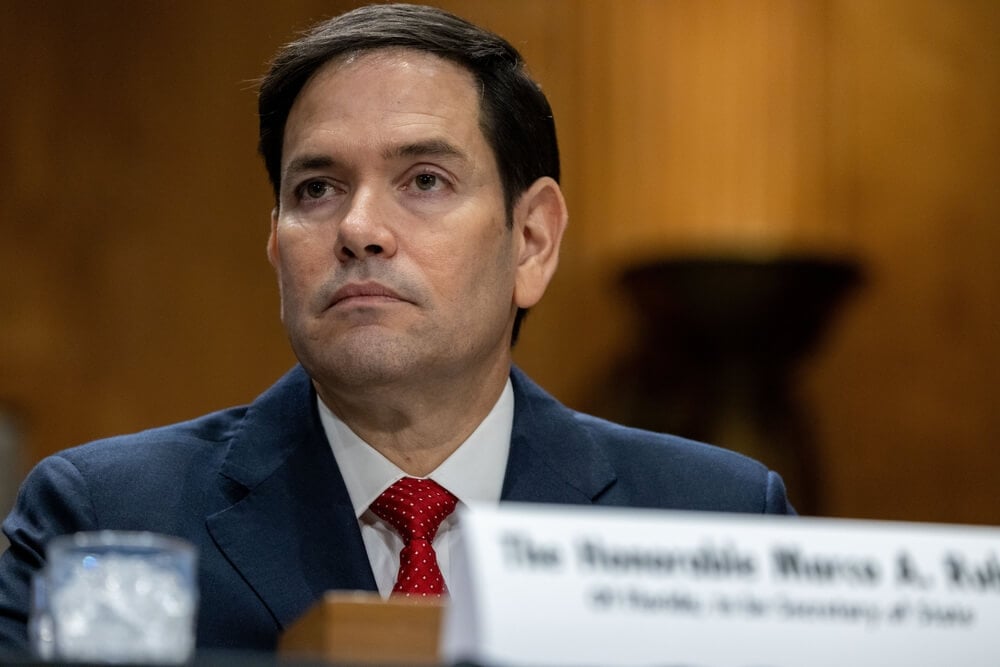 Marco Rubio instructed US diplomats in Europe to press their host governments to restrict most immigration and file reports if the governments appear to be overly supportive of immigrants
But as his opponent, center-left candidate Jeannette Jara, points out, this would be inhumane, in many cases illegal – and impossible to carry out.
Chile’s 1.6 million migrants, about 18% of whom are undocumented, comprise nearly 10% of the country’s population.
If the US has barely managed to deport 500,000 undocumented immigrants in a year, despite having a population more than 17 times as large as Chile’s and infinitely more resources at its disposal, there is no way Kast could deliver on his promise.
Chile doesn’t even have diplomatic relations with Venezuela, from which nearly 42% of its immigrants hail, and is in regular spats with Peru, another key source country, meaning that neither is likely to welcome deportees from Chile. The same is probably true for Haiti.
The Trump administration wants nothing more than to serve as a model for the rest of the world.
US Secretary of State Marco Rubio – himself the son of Cuban refugees – recently instructed US diplomats in Europe and elsewhere to “press their host governments to restrict most immigration and file reports if the governments appear to be overly supportive of immigrants.”
And the administration’s new National Security Strategy blames European migration policies for “transforming the continent and creating strife.”
But the US record on deportations over this year suggests that, while denouncing foreigners can be politically fruitful, attempting to get rid of them is both economically costly and demonstrably futile.
Jorge G. Castañeda, a former foreign minister of Mexico, is a professor at New York University.
