In a January 2026 interview with CNN’s Jake Tapper, U.S. Homeland Security Advisor Stephen Miller offered a blunt description of world politics: “We live in a world... that is governed by strength, that is governed by force, that is governed by power. These are the iron laws of the world.”
Miller’s comment captures the governing fantasy of the Trump administration - that power is self-justifying, that size bestows wisdom, and that the strongest country can simply impose its will.
Might makes right. If the United States has the largest economy and the most powerful military, then it can threaten Greenland, joke about annexing Canada, kidnap a foreign president, and patronize allies as if international politics were a protection racket.
But the world is not bending as expected. The confrontation with Iran is only the latest reminder that military superiority no longer guarantees political victory.
Great powers can bomb, invade, blockade, sanction, and occupy. However, without a clear strategy, they cannot convert destruction into obedience.
The weak survive by refusing to play the same game
That is the central reality of modern conflict. Strong powers want submission. The weaker powers want survival. The strong want a clean ending. The weak play for time. The strong want to dictate the fight. The weak survive by refusing to play the same game. We are seeing it play out in Iran.
Of course, the weak do not always defeat the strong. Powerful states can still shatter cities, kill leaders, collapse infrastructure, and punish societies.
But their adversaries have spent decades learning how to survive punishment. They disperse forces, bury command networks, use drones and missiles, fight through proxies, exploit tunnels, wage cyber campaigns, manipulate information, mobilize law, and turn time itself into a weapon.
While firepower still matters, survivability, legitimacy, endurance, and adaptation often matter more
Moscow’s spies and terrorist groups figured this out long ago. If you cannot compete directly with America’s military might, find asymmetric means to inflict political damage.
The result is a world in which strength is harder to cash in. While firepower still matters, survivability, legitimacy, endurance, and adaptation often matter more.
The military lesson of our time is not that power no longer matters. It is that power without a political theory of victory becomes self-destructive.
Why is the world not bowing to American power?
The Trump administration appears flummoxed by this. Why is the world not bowing to American power? Why do adversaries not surrender when confronted with superior force? Why do smaller states and movements keep absorbing punishment instead of disappearing?
The answer has been visible for decades. We saw it in Vietnam, Iraq, Afghanistan, Ukraine, Gaza, and now Iran.
Vietnam remains the foundational example. The United States could bomb, interdict, and kill. What it could not do was break Hanoi’s will.
America fought a war of firepower and body counts. North Vietnam fought a war of political endurance. Washington had airpower, artillery, money, and technology. Hanoi had time, discipline, sanctuary, and a theory of victory that did not require winning every battle.
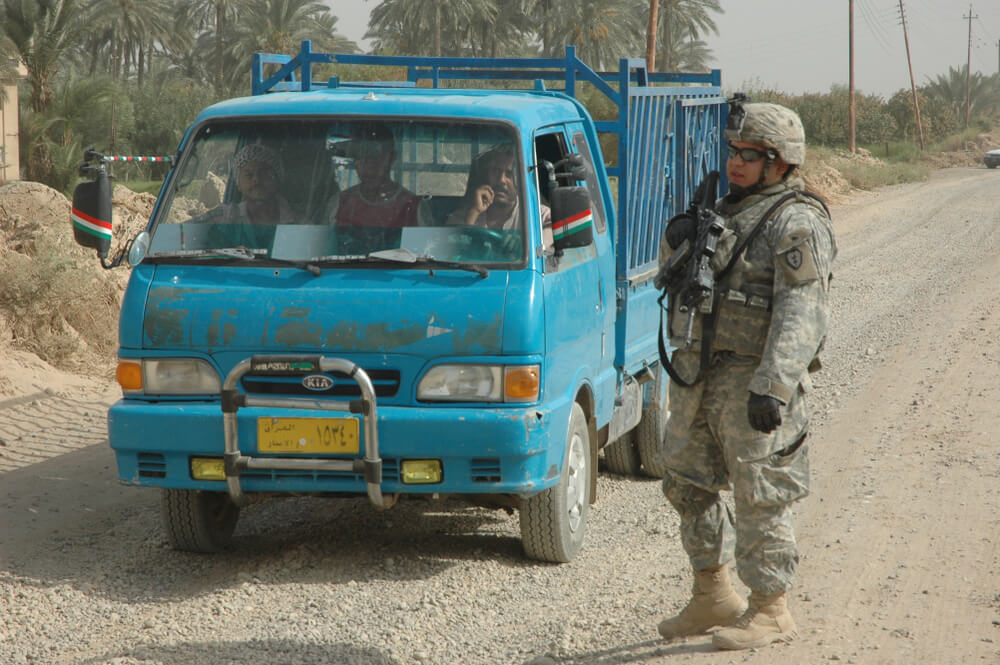 The US destroyed Saddam Hussein’s conventional military with extraordinary speed. But destroying a state is not the same as building a political order
That is the lesson policymakers still refuse to absorb: the stronger army can win most engagements and still lose the war. Wars are not decided only by casualties inflicted. They are decided by whose political will survives the punishment.
Iraq repeated the error. The United States destroyed Saddam Hussein’s conventional military with extraordinary speed. But destroying a state is not the same as building a political order.
The occupation produced insurgency, sectarianism, Iranian influence, and a long-term American trap. The initial invasion showed what American power could demolish. The aftermath showed what it could not control.
Afghanistan followed the same rule with even greater clarity.
The United States and NATO possessed overwhelming technological superiority. The Taliban possessed patience, sanctuary, local knowledge, ideological commitment, and the ability to wait out an expeditionary power. Time became their weapon.
Afghanistan was not lost because America lacked firepower. It was lost because the Taliban’s theory of victory was simpler than ours: survive, wait, return.
Ukraine only had to make conquest impossible
Russia’s war in Ukraine exposed the same delusion. Moscow assumed mass, proximity, and brutality would produce quick submission.
Instead, Ukraine proved that a smaller state can deny victory through national mobilization, intelligence, cohesion, outside support, drones, air defenses, missiles, naval innovation, and narrative legitimacy.
Ukraine did not need to march on Moscow to defeat Russia’s original war aim. It only had to make conquest impossible at an acceptable price.
Gaza shows the darkest version of the same distinction. Destruction is not disappearance. A place can be pulverized, its civilians shattered, its infrastructure erased, and the armed movement at the center of the war can still survive in altered form.
That does not make the movement noble. It makes the military lesson unavoidable. Devastation is not the same as victory.
Iran’s task is not to become stronger. It is to make strength expensive, politically messy, and strategically inconclusive
Iran does not need to defeat the U.S. military to make American power look vulnerable. It needs to raise the cost of control, threaten chokepoints, disperse capabilities, activate proxies, disrupt shipping, rattle energy markets, and deny Washington a clean ending.
The United States may be far stronger. But Iran’s task is not to become stronger. It is to make strength expensive, politically messy, and strategically inconclusive.
That is why this moment should also unsettle Beijing. China can hurt Taiwan. The more serious question, however, is whether China can conquer Taiwan, pacify it, govern it, survive sanctions, manage escalation, and prevent a long asymmetric struggle from delegitimizing the regime.
Taiwan has watched Ukraine turn resistance into strategy. It has watched Iran impose costs without matching American power. It has watched weak actors survive by refusing the strong actor’s preferred war.
The lesson is that Taiwan may be much harder to swallow than Beijing imagines.
Nuclear deterrence prevents intervention
The political scientist Ivan Arreguín-Toft captured this dynamic in How the Weak Win Wars. Asymmetric conflicts are not decided by material strength alone. They are decided by the interaction of strategies.
When strong and weak actors fight in similar ways, the strong usually prevail. When they fight in opposite ways, the weak gain room to maneuver. The weak win not by becoming miniature versions of the strong. They win by refusing to fight the war the strong power prepared for.
 The conventional army loses if it does not win. The guerrilla wins if he does not lose - Henry Kissinger
Henry Kissinger put the same idea more brutally in Vietnam: “The conventional army loses if it does not win. The guerrilla wins if he does not lose.”
There is, however, a more dangerous lesson from recent wars. The more casually great powers use force, the more they teach weaker states the darkest lesson in international politics - do not be virtuous, be untouchable.
Ukraine’s experience after giving up Soviet-era nuclear weapons, North Korea’s survival, and Iran’s confrontation with the United States all feed the same perception. Conventional weakness invites intervention, while nuclear deterrence prevents it.
This is the poisoned incentive structure great powers are creating. They condemn proliferation while demonstrating the vulnerability of states that lack ultimate deterrence. They praise international law while treating it as optional. They insist that smaller states trust the system while proving that the system bends under pressure. Then they wonder why more states conclude that survival requires the bomb.
Further, the arsenal of empire has become a tax on the society it claims to protect. The Trump administration is seeking a $1.5 trillion military budget at the same time that they are expending expensive interceptors to shoot down cheap drones.
The weak have learned how to make power bleed. That is the lesson from Vietnam to Ukraine, from Gaza to Iran, and perhaps one day across the Taiwan Strait.
The world’s bullies can still break cities. What they can no longer assume is that broken cities mean obedient people.
John Sipher ( @johnsipher.bsky.social ) is a non-resident senior fellow at the Atlantic Council and co-founder of Spycraft Entertainment. He worked for the CIA’s Clandestine Service for 28 years and is the recipient of the Agency’s Distinguished Career Intelligence medal. He is also a host and producer of the "Mission Implausible" podcast, exploring conspiracy theories.
