US President Donald Trump’s designation by various publications as one of the most influential people of 2025 is not surprising.
But it is nonetheless striking: rather than being honored for his leadership – for, say, resolving crises or consolidating institutions – Trump is being recognized for shattering norms, upending alliances, spearheading economic fragmentation, and ushering in a transactional form of international politics.
In past decades, the United States could harden its policies without relinquishing its role as the ultimate guarantor of the post-World War II order. No more.
While America’s retreat from global leadership was arguably a long time coming, Trump has now cemented and operationalized it.
As he attempts to leverage the country’s hard-won influence to reap immediate rewards (not least for himself and his inner circle), he actively sabotages international cooperation and undermines the rule of law.
US trade policy is no longer a means of maximizing the shared benefits of openness, but rather an instrument of economic and geopolitical pressure.
Alliances are assessed not according to intangible factors, such as shared values and geopolitical interests, but in terms of immediate returns.
Cooperative frameworks focused on long-term stability and prosperity are being replaced by bilateral deals that reflect a narrow understanding of reciprocity.
Strategic engagement, which blended hard and soft power, gave way to short-sighted coercion. The “shining city upon a hill” became the schoolyard bully.
Most chose adaptation over confrontation
This shift did not unfold in a vacuum. While responses to Trump’s foreign policy varied, most chose adaptation over confrontation.
Some actors endured the blows they were dealt, in the hopes that Trump would not continue to target those who did not challenge him.
Others balanced acceptance, even appeasement, with quiet efforts to build resilience. Countries like Brazil and India neither bowed to nor directly challenged Trump, seeking instead to preserve their autonomy and identify opportunities created by this new post-postwar order.
China has emerged as the principal beneficiary of the turmoil
China took this a step further. Having long sought to decenter the West in international politics, Chinese leaders saw in the Trump-induced disruption of 2025 an opening: a world unsettled by America’s withdrawal from global leadership would be inclined to embrace a new champion of stability and continuity.
By positioning itself accordingly, China has emerged as the principal beneficiary of the turmoil.
China wants to lead the way
In September, Chinese President Xi Jinping unveiled a Global Governance Initiative, based on the premise “that all countries, regardless of size, strength, and wealth,” must be “equal participants, decision-makers, and beneficiaries in global governance.”
The GGI, together with the Global Development Initiative (2021), the Global Security Initiative (2022), and the Global Civilization Initiative (2023), sends a clear message: China wants to lead the way in creating a more stable, pluralistic global order capable of facilitating shared progress.
This is not a liberal project, and China has not sought to position it as such.
Instead, it focuses on supporting international cooperation in critical areas – such as advancing the United Nations 2030 Agenda for Sustainable Development and “peacefully resolving differences and disputes between countries” – while respecting countries’ sovereignty and rejecting narratives of the “superiority of certain civilizations.”
Far from a revolutionary power, China wants to be viewed as a reliable force for continuity, prosperity, and respectful coexistence
Crucially, China packages this vision not as an entirely new order that will emerge from the rubble of the postwar order – which would imply a period of chaos for which few have an appetite – but rather as a natural evolution of the existing system.
Far from a revolutionary power, China wants to be viewed as a reliable force for continuity, prosperity, and respectful coexistence.
When contrasted with Trump’s capricious, self-serving, and coercive behavior, this prospect is highly appealing, particularly in the Global South.
And this contrast has been on stark display. Consider the October meeting between Trump and Xi at South Korea’s Busan airport: while Trump appeared eager to close a deal, even if it meant shifting the goalposts, Xi offered selective concessions while displaying the confidence to walk away from an unfavorable offer.
Europe found itself exposed
Unlike China, which found ways to benefit from Trump’s presidency in 2025, Europe found itself increasingly exposed.
Not only can it no longer count on the US to fulfill its NATO commitments and backstop European security.
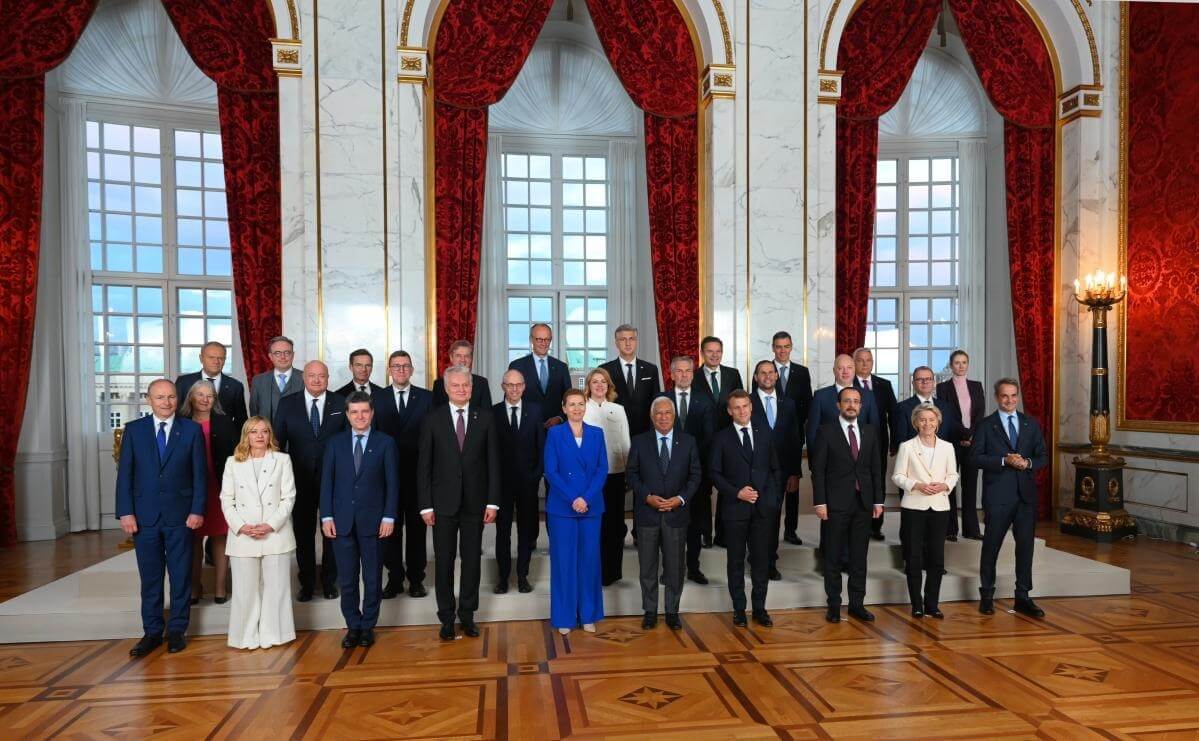 The coming year will test the EU’s ability to move past its legacy of dependency and act cohesively and decisively
By openly favoring Russia in negotiations to end the war in Ukraine, Trump has contributed to a more dangerous European security environment.
There are even reports that the Trump administration hopes to convince some countries to leave the European Union.
But Europe cannot simply throw its weight behind the Chinese-led world order that Xi is touting.
While Europe does not share America’s animosity toward China, it cannot ignore the country’s role in sustaining Russia’s war in Ukraine technologically, economically, and diplomatically.
The coming year will test the EU’s ability to move past its legacy of dependency and act cohesively and decisively.
It seems likely that 2025 will be remembered as a year of reckoning. The future of the global order remains unknown, but now we know which countries are best prepared to adapt to the loss of what came before.
What follows this disruption will be determined not by the leader who commands the most attention, but by those who show strategic vision and do the hard work of setting the new rules of engagement.
Ana Palacio, a former minister of foreign affairs of Spain and former senior vice president and general counsel of the World Bank Group, is a visiting lecturer at Georgetown University.
