Early January 2026 saw renewed unrest in Iran, with demonstrations rapidly spreading from smaller towns to major cities.
The protests began in late December 2025, triggered by a sharp fall in the value of Iran's rial to record lows – down to 1.42 million rials per dollar – and rising food and fuel prices.
By 3 January, unrest had engulfed more than 40 locations in at least 19 provinces, including Tehran, Isfahan, Shiraz, Kerman, Lorestan, Chaharmahal and Bakhtiari, Kuhdasht, and Fuladshahr.
Violence escalated on 1 and 2 January. Security forces reported casualties from direct fire in Kuhdasht in Lorestan province and Fuladshahr in Isfahan province.
In Azna, Lorestan province, three people were killed and 17 injured when protesters attacked a police station, according to reports from the Fars news agency, which is closely linked to Iranian authorities.
Two deaths were reported in Lordegan in Chaharmahal and Bakhtiari province during clashes with security forces. Human rights organisations, such as Hengaw, which monitors the situation in Kurdish areas, reported further casualties from direct fire by security forces elsewhere.
By 3 January, at least ten deaths had been confirmed, with dozens injured and arrested. Footage on social media shows groups of protesters throwing stones at government buildings and setting fire to security forces' vehicles, while the forces respond with tear gas and live ammunition.
The unrest presents a serious test for the government of President Masoud Pezeshkian, elected in 2024 on promises of reform and easing economic pressures.
In his address, Pezeshkian acknowledged that the protesters' demands were justified, especially regarding inflation, which had reached 42 per cent, and called for dialogue. At the same time, he accused foreign powers of inciting violence.
The government closed the bazaars and declared non-working days until 4 January, officially due to cold weather and to save energy, but also certainly to reduce gatherings.
Exchange of messages intensifies crisis
The unrest coincided with the sixth anniversary of the assassination of General Qasem Soleimani, commander of the Revolutionary Guards' Quds Force, who was killed on 3 January 2020 in a US drone strike near Baghdad Airport.
Official commemorations attracted thousands of regime supporters in Kerman, where Soleimani was buried, and in Tehran, with speeches by Supreme Leader Ali Khamenei and announcements by the Islamic Revolutionary Guard Corps (IRGC).
However, in some areas, protesters burned banners and statues of Soleimani, treating him as a symbol of the regime's power.
The exchange of messages with the United States intensified the situation. On 2 and 3 January, President Donald Trump issued warnings to Iran on the Truth Social platform.
"If Iran shots and violently kills peaceful protesters, which is their custom, the United States of America will come to their rescue" - Donald Trump
In one message, he wrote, "If Iran shots and violently kills peaceful protesters, which is their custom, the United States of America will come to their rescue." In the second message, he added that the USA is "locked and loaded and ready to go".
Iranian authorities responded the same day. Foreign Minister Abbas Araghchi called Trump's messages "reckless and dangerous” and demanded a response from the United Nations.
Adviser to the Supreme Leader, Ali Akbar Velayati, warned of a swift and comprehensive response in the event of interference. Parliament Speaker Mohammad Bagher Ghalibaf stated that US bases in the region would become legitimate targets.
The government sent an official letter to the UN Secretary-General and the Security Council, accusing the US of violating international law and inciting violence.
Economic crisis with a political dimension
While most reporting views this as the potential start of a larger crisis and the end of the Iranian regime, the actual dynamics indicate limited opportunities for rapid change.
The protests are primarily economic, targeting the fall of the rial and inflation, rather than directly calling for the collapse of the system, as in 2022.
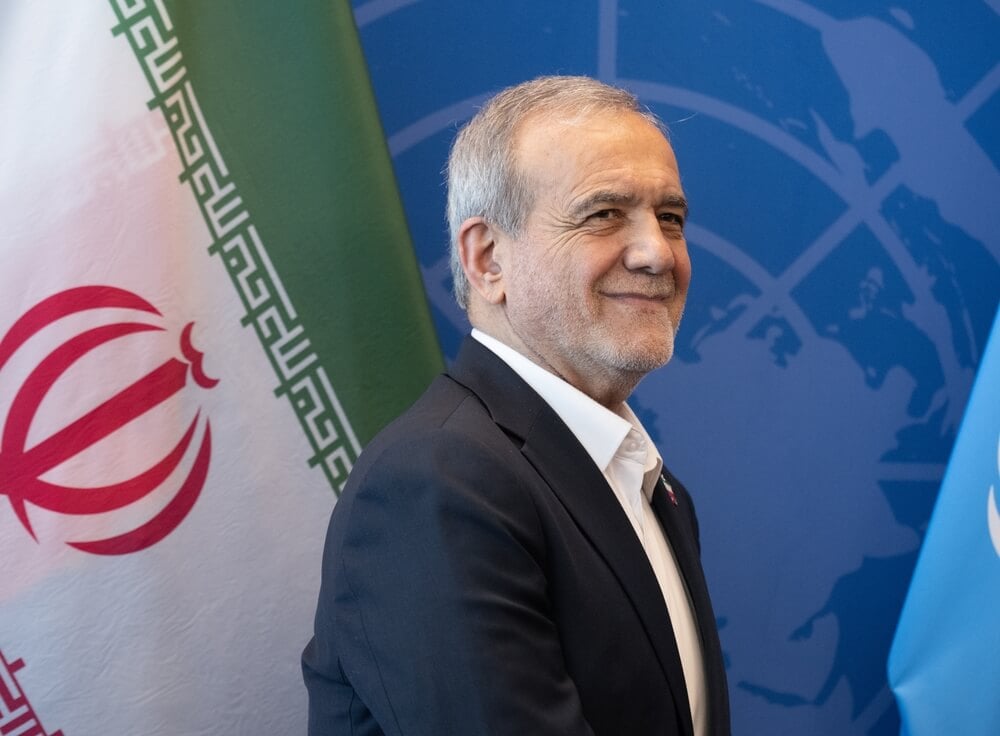 If Masoud Pezeshkian quickly introduces measures such as increasing fuel subsidies or stabilising the currency through central bank reserves, the unrest may subside in the coming weeks
Pezeshkian's government has limited room for manoeuvre – reforms depend on the approval of hardliners and the IRGC, who control key sectors of the economy such as oil exports and subsidies.
If Pezeshkian quickly introduces measures such as increasing fuel subsidies or stabilising the currency through central bank reserves, the unrest may subside in the coming weeks and remain confined to the periphery.
If the IRGC maintains its hard line and violence, the protests could spread to urban centres, such as Tehran, where the middle class has greater access to the organisation. This would weaken Pezeshkian, paving the way for hardliners to gain more control ahead of the next election.
Trump's rhetoric is likely to remain limited to statements – realistic intervention is unlikely given US domestic priorities and the risk of a wider conflict – but it does serve to increase pressure on Iran's oil exports.
Economically, volatility directly affects oil prices. Iran exports about 1.5 million barrels per day, mostly to China. Any major disruption would cause prices to rise by 10–15 per cent in the short term, affecting European importers and Asian economies. Trump uses this leverage to weaken Iran's revenue without direct military involvement.
In the coming weeks, everything will depend on whether Pezeshkian can secure concrete economic concessions from the IRGC and hardliners.
If successful, the regime will survive with minimal concessions, and the protests will likely subside within weeks.
If he fails, the unrest will solidify and become chronic, further weakening Iran's negotiating position with the West – especially regarding sanctions and the nuclear programme.
This situation clearly demonstrates how limited reforms are in authoritarian systems: an economic crisis can quickly acquire a political dimension, but as long as the elite remains united and without internal weaknesses, deep regime change remains unlikely.
