South Korean President Lee Jae Myung proposed changes at the top of the diplomatic service, the intelligence service, and the ministry responsible for relations with North Korea.
Former MP Hong Ik-pyo is set to replace Unification Minister Chung Dong-young, whose statement in March regarding North Korea’s nuclear facility preceded the US cap on intelligence sharing.
Deputy National Security Adviser Im Ung-sun, a diplomat who served in Washington, has been nominated as Minister of Foreign Affairs, and former Minister of Justice Kang Kum-sil has been nominated as Director of the National Intelligence Service. The president's office says that policy towards the US and North Korea will not change.
If appointed, Im Ung-sun and Kang Kum-sil will have, as one of their first tasks, to regain full access to US intelligence on North Korea from Washington.
South Korean Defence Minister Kang Shin-chul claims that conditions have been met for a South Korean general to lead joint defence with the US in the event of war. The two governments have not yet jointly confirmed that assessment, and neither has announced that Washington has lifted the restriction.
In December, the defence ministers of the two countries will discuss the transfer of command, although it remains unclear how regularly Seoul receives US assessments of North Korea. South Korea now has greater scope to negotiate access to that data while the terms of the handover are being decided.
One statement reduced data exchange
Unification Minister Chung Dong-young told a parliamentary committee on 6 March that North Korea has a uranium enrichment facility in Kusong, a city in the country's north-west about 50 kilometres from Yongbyon, North Korea's main nuclear complex.
His ministry said he relied on publicly available sources, and President Lee denied the allegation that Chung Dong-young had leaked classified US information.
After the dispute, Washington reportedly restricted the release of some satellite-collected data, including information on North Korea's nuclear facilities, according to reports in April. The US embassy in Seoul declined to comment on the restriction.
South Korea's chief of staff says the allies continue to exchange warnings about imminent threats and that, in his opinion, the restriction has not undermined the military's readiness. The National Intelligence Service says the cooperation also includes data on North Korea's conventional forces.
Seoul still receives warnings of a possible attack, but data on nuclear facilities is now used for other purposes. If Pyongyang, in future negotiations with the US or South Korea, offered to halt nuclear tests or close a facility, Seoul would need to know whether North Korea could still produce nuclear weapons material at other sites, such as Kusong.
Washington stated in April that it expects its allies to protect confidential information they receive from it
Without that assessment, the South Korean government cannot confidently determine what it is prepared to offer in return or what safeguards it should seek.
On 2 November 2025, South Korea placed its fifth military reconnaissance satellite into orbit. Using its own imagery, it can partly replace the type of data whose exchange Washington has restricted.
However, satellite imagery provides only part of the picture of what the plant is doing, and for joint defence it is also important that the two countries’ headquarters compare findings and agree on an assessment.
Washington stated in April that it expects its allies to protect confidential information they receive from it. Seoul wants to speak freely about what it learns from public sources.
In the case of Kusong, the two sides disagreed over whether the minister's statement disclosed a US secret or publicly available information, and the consequences were borne by the South Korean military and intelligence services, which were denied access to part of the US information.
If the allies had agreed in advance on how to establish the origin of information in such a case, Washington would better protect its secrets and Seoul would not lose access to the information because of a dispute over one statement.
Seoul claims to be ready, but there is still no joint assessment
In peacetime, each country controls its own forces. If war breaks out again, the two governments can place certain US and South Korean units under the Combined Forces Command.
Today it is led by a US general with a South Korean deputy, and the plan is to switch their roles. Both governments would continue to provide guidance to the commander and retain the right to decide on the use of their forces.
The two countries agreed in 2014 that a South Korean general would assume command only once they had jointly assessed that the South Korean military was ready to lead the defence, including responses to North Korean missiles and nuclear weapons, and that the threat from the north at that time was not so great that a change in command would be risky.
Seoul is now asking Washington to explain how it is handling the findings on which the joint readiness assessment is based
Defence ministers agreed in November 2025 to seek confirmation in 2026 that the future headquarters under the South Korean general is fully operational. Even if that confirmation is given, the date when Seoul will take command is decided separately by the two governments.
Defence Minister Kang Shin-chul’s assessment that the conditions for assuming command have been met has been challenged by retired General Robert Abrams, the former commander of US forces in South Korea, who cited information he received during a visit to the country in September.
On 20 November, the Ministry of Defence in Seoul announced that it would investigate how the US stored the classified findings of the joint readiness assessment, and then seek to establish how former US commanders obtained the sensitive information and whether they should have received it.
Public statements do not confirm that Abrams had access to classified material. Seoul, which in the spring rejected the accusation that it had disclosed US data, is now asking Washington to explain how it is handling the findings on which the joint readiness assessment is based.
Congress protects US presence, Trump decides on drills
The US defence law for fiscal year 2026 restricts the use of funds authorised by that law for transfers beyond the joint plan or for reducing the number of US troops in South Korea below 28,500.
In both cases, the Pentagon must submit confirmation and an assessment to Congress, and the funds can be used only 60 days after those documents have been submitted. In the confirmation, the Pentagon must state that the move is in the interests of US security and that allies, including South Korea and Japan, have been consulted in advance.
This limits rash decisions by the administration, but the number of troops alone says little about the scale of training or support the US would provide to the South Korean commander.
US President Donald Trump and South Korean President Lee Jae Myung confirmed in a joint statement in November 2025 that the two countries would continue preparations for a South Korean general to take over military command and for US forces to remain in South Korea.
In the same announcement, Lee Jae Myung said that South Korea would increase defence spending to 3.5 per cent of gross domestic product as soon as possible and would buy US weapons worth 25 billion dollars by 2030. It suits Washington that Seoul invests more in its own defence while US forces remain on the peninsula.
The Pentagon estimated that the changes would still allow key training goals to be achieved and maintain force readiness
The announcement did not specify how much the US military would participate in joint exercises when a South Korean general takes command, and the scope of the exercises is decided by the two countries each year.
On 16 August, Donald Trump ordered a joint military exercise to be shortened. He cited as reasons that Seoul had refused to help the US in the war against Iran and that he had a good relationship with Kim Jong Un. The command-and-staff exercise was completed six days ahead of schedule, and half of the 14 planned field exercises were postponed.
The Pentagon estimated that the changes would still allow key training goals to be achieved and maintain force readiness. It is important for Seoul that the US president is willing to change the training schedule because of the dispute over the war far from the Korean Peninsula.
After the transfer of command, such a decision would affect the preparation of the forces for which the South Korean general would be responsible during wartime.
For Seoul, US assessments matter more than the date of taking command
The two countries' defence ministers will meet in December in Washington, and their regular annual meeting on alliance defence has been postponed until early 2027. South Korean President Lee Jae Myung wants a South Korean general to take command before his term expires in 2030, and his government expects the December talks to prepare that decision for the annual meeting.
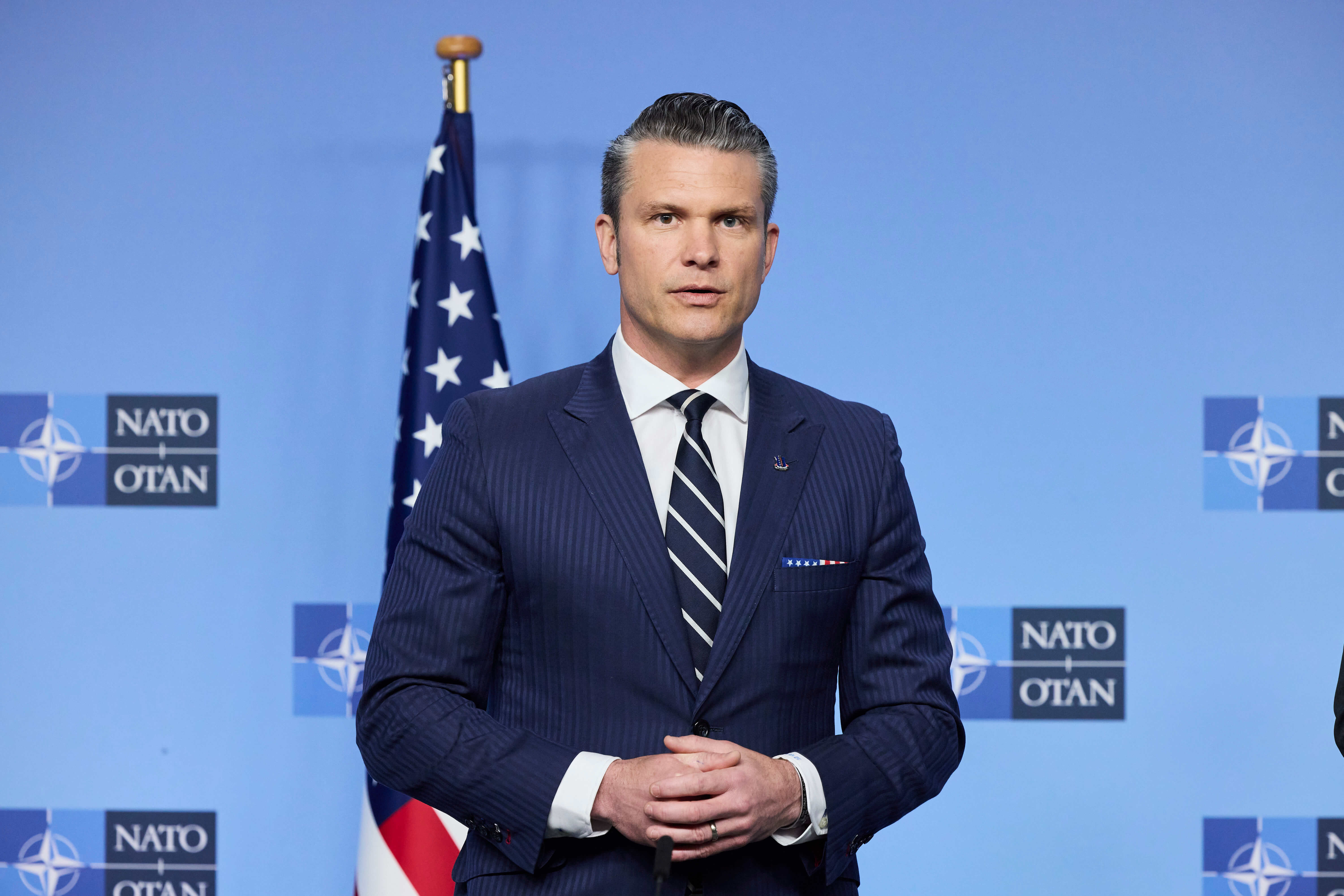 Pete Hegseth confirmed in late October that the US still supports a change of command, but even with that support Washington may seek additional checks before agreeing a date
US Secretary of War Pete Hegseth confirmed in late October that the US still supports a change of command, but even with that support Washington may seek additional checks before agreeing a date.
At the December meeting, progress is more likely in assessing the readiness of the future headquarters than in agreeing on the year when Seoul will assume command.
For South Korea, a more useful outcome than an early date would be agreement on which US assessments the future joint staff will receive regularly, and whom the South Korean commander should turn to if Washington withholds any information.
This can be tested even before the change of command, in an exercise in which the current headquarters would work only with the assessments it received under a South Korean general. US services could provide the findings without revealing their sources, and Seoul would see in which areas its officers still needed US help.
The mere announcement of a date would not commit Washington to maintaining the current scope of exercises and data sharing. If the governments agreed only on a date, the South Korean general could assume responsibility for joint defence and learn only in a crisis which US assessments were available.
Seoul would then be responsible for the conduct of the war, while Washington would still decide how much the South Korean commander knew about the adversary.
