On 5 November, South Korea presented a proposal to expand its naval mission to waters south of Oman, adding a patrol aircraft, mine-clearance equipment and 75 military personnel. The plan still requires government and parliamentary approval.
President Lee Jae Myung is offering a greater contribution to the protection of navigation, but rules out participation in a war against Iran, even though Donald Trump has already punished the refusal of military support by shortening joint exercises on the Korean Peninsula.
Seoul is trying to avoid two dangers at once. Refusing Washington could weaken the cooperation needed to defend against North Korea, while moving closer to the US war campaign would expose South Korean ships and citizens to Iran’s retaliation.
Tehran has already threatened such a response, and the seizure of a South Korean tanker in 2021 showed how quickly a merchant vessel can become the focus of an interstate dispute.
The success of the mission will also depend on how its boundaries are interpreted by Washington and Tehran. Washington should accept a contribution that it cannot expand at will, and Tehran should distinguish the protection of civilian traffic from participation in US operations.
Seoul can dictate what its soldiers will do, but it cannot dictate how the other side will respond to their presence.
Seoul already knows the cost of conflict with Iran
The South Korean Cheonghae naval unit has been protecting ships from pirates off Somalia since 2009. The new plan extends its operational area towards Oman’s Port of Duqm, about 650 kilometres from the Strait of Hormuz, and adds a P-8A patrol aircraft and mine-clearance equipment, which would raise the number of personnel to a maximum of 395.
The Ministry of National Defense attributes the expansion to a rise in piracy, as international naval forces have diverted some of their ships to war zones.
In January 2020, the Moon Jae-in administration expanded the deployment of the same unit to Hormuz and the Persian Gulf, again in response to US requests. It maintained an independent command and did not join the US-led coalition.
Fresh parliamentary approval was not sought at the time, with the government citing the existing mandate to protect citizens in emergency circumstances, whereas the current administration envisages a special parliamentary vote before any operation in the Strait itself.
The 2020 plan also assigned two liaison officers to an international maritime coalition based in Bahrain to share intelligence, a decision Washington welcomed at the time. The unit cooperated with US forces, but Seoul set its tasks.
Trump is now asking the same ally for contributions in the middle of a war, when such a division of responsibility makes it much harder to avoid a confrontation with Iran.
Seoul had to negotiate the release of the vessel and its crew, even though it had not previously joined the US-led coalition
On 4 January 2021, the Iranian Islamic Revolutionary Guard Corps seized the South Korean-flagged tanker Hankuk Chemi in the Strait of Hormuz. Tehran blamed the incident on marine pollution, which the shipowner denied.
The seizure took place amid a dispute over approximately $7 billion in Iran’s oil revenues frozen in South Korean banks due to US sanctions. Seoul had to negotiate the release of the vessel and its crew, even though it had not previously joined the US-led coalition.
The funds were transferred to Qatar in 2023, and today they form part of the conditions that Tehran sets for Washington in talks over Hormuz.
This time, Tehran issued an advance warning, when the spokesperson for the Iranian Ministry of Foreign Affairs, Esmail Baghaei, stated on 7 September that it would regard any military presence or participation in operations in the Persian Gulf and the Strait of Hormuz as direct support for the aggressor, with serious consequences. He also published the message in Korean.
The proposal keeps the unit under South Korean command and prohibits the aircraft from monitoring Iranian territory, territorial waters or the interior of the strait, so that data collected during trade protection cannot be interpreted as preparation for US attacks.
If attacked, the unit would respond in self-defence in accordance with the rules of engagement, according to the Ministry of National Defense.
The defence of the Peninsula becomes a means of pressure
On 16 August, Trump announced that the South Korean president had replied, ‘No, thanks,’ to his invitation to take part in what he called the ‘denuclearisation’ of Iran.
He described the exercises as expensive and hostile to North Korea and ordered the Pentagon to reduce them substantially, linking Seoul’s refusal to training that prepares US forces for the defence of the peninsula.
The command and staff exercise Ulchi Freedom Shield ended on 21 August, six days ahead of schedule, after five rather than eleven days.
The number of accompanying field exercises was reduced from fourteen to seven, and the remaining seven were postponed.
On 15 October, the South Korean Joint Chiefs of Staff announced that two of these would be held in conjunction with the autumn exercise Hoguk and the other five by the end of the year. The Pentagon claims that key training objectives have been preserved, but some joint activities have been postponed.
Trump’s attitude towards the exercises predates the dispute over Iran
For US units, such training involves practising joint decision-making, sharing information and executing orders with South Korean forces. Shortened training affects both armies and requires US commanders to adjust how they prepare their units.
Trump’s attitude towards the exercises predates the dispute over Iran. After meeting Kim Jong Un in Singapore in 2018, he announced the suspension of large-scale exercises, citing their cost and alleged provocation.
Seoul has reason to expect new demands even after a possible agreement with Tehran, especially if the US president offers a reduction in training as a concession to Pyongyang, and its contribution in the Middle East does not eliminate that risk.
The US presence on the Peninsula is largely financed by the ally itself. In 2018, the US military estimated the cost of expanding Camp Humphreys, the largest US military base overseas, at about $10.7 billion, of which South Korea paid approximately 90 per cent.
By punishing that ally through training cuts, Washington is jeopardising the ability of the two militaries to make joint use of what they have already invested in.
Oil compels Seoul to protect shipping
South Korean industry depends on maritime trade, and in 2025, 70 per cent of crude oil imports came from the Middle East. The need to protect those shipments would exist even without Trump’s pressure, so an expanded mission on its own does not demonstrate the success of American conditionality.
A government that fully abandoned the protection of shipping would have to explain to its citizens how it would provide energy.
That dependence does not give the US president the right to decide with whom South Korea will go to war.
The Mutual Defence Treaty of 1953 requires a joint response to any armed attack on the territories of the contracting parties in the Pacific area, in accordance with their constitutional procedures.
Lee is accountable to his constituents and to parliament for the consequences of entering another war, including possible attacks on South Korean interests.
South Korea plans to deploy unmanned assets to detect and destroy mines, which its navy, according to military officials, has so far scarcely dealt with
Seoul has already given political support to the British-French initiative for Hormuz. Its joint statement of 12 May envisages a self-contained, strictly defensive mission, separate from other military campaigns, and subject to national restrictions and parliamentary procedures.
That framework allows for a contribution to the restoration of navigation without accepting American war aims, and also shows that this separation itself calls for more allies.
For demining in the strait itself, the Ministry of National Defense is seeking an end to the US-Iran conflict, or an agreement between the two parties that would allow navigation to be restored, followed by explicit consent from Parliament.
Sending equipment in advance would shorten preparations for such an operation, as crews in the region could familiarise themselves with it earlier.
South Korea plans to deploy unmanned assets to detect and destroy mines, which its navy, according to military officials, has so far scarcely dealt with. Soldiers in the region would first test the equipment and learn to use it, so actual demining could only begin once they are ready for the job.
Negotiations do not eliminate the danger of new strikes
Washington and Tehran are negotiating an agreement through Qatar, but new strikes have not been ruled out. A US official confirmed limited strikes near the Strait of Hormuz on 2 November, citing Iran’s use of surface-to-air missiles against US forces.
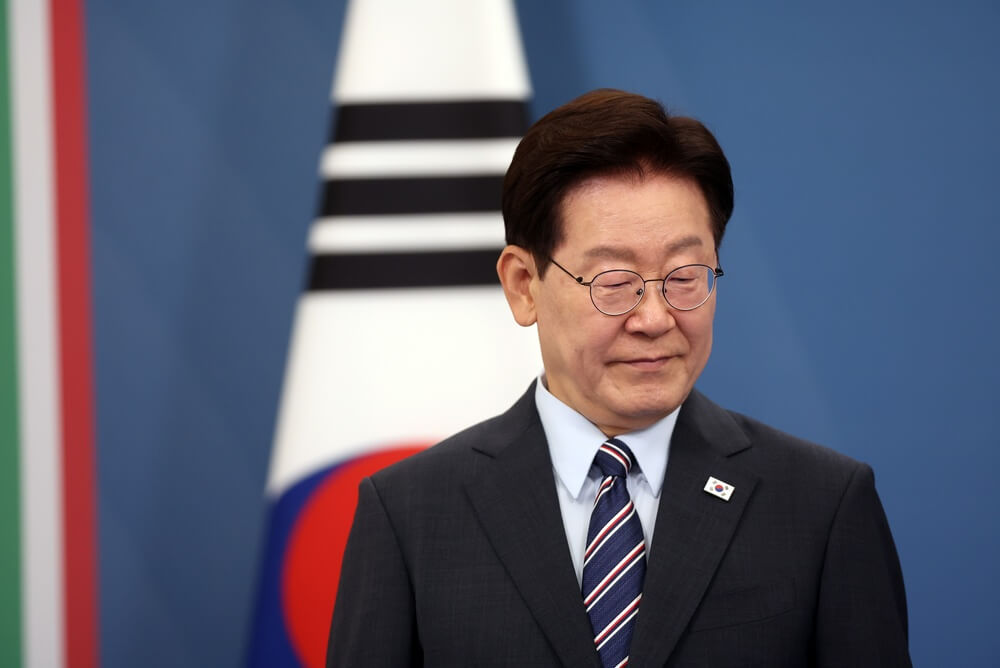 Parliament, where President Lee’s Democratic Party holds a majority, is likely to approve the expansion of the mission before the current mandate expires on 31 December
Shifting from trade protection to demining in the midst of such conflict could draw the South Korean unit into combat without a political agreement that Seoul would deem acceptable.
Parliament, where President Lee’s Democratic Party holds a majority, is likely to approve the expansion of the mission before the current mandate expires on 31 December.
The operation in the strait itself will depend on a US–Iranian agreement or the end of the conflict, as well as on a special decision by MPs. Until then, the deployed personnel and equipment will allow Seoul to prepare for the restoration of navigation without taking on tasks in the US war campaign.
An important indicator of the alliance’s future will be the plan for the Freedom Shield spring exercise in 2027. Its scope and any new conditions will show whether Washington still links joint training to concessions in other conflicts.
Even if demining is approved, Seoul will need to assess whether it can rely on stable defence cooperation at home. Trump can secure valuable assistance in the Middle East while undermining the trust needed for the same ally to support him in the next crisis.
