US President Donald Trump ended his visit to Asia without meeting North Korean leader Kim Jong Un, although before leaving he said that Kim might come to Shenzhen in China, which is hosting this year's Asia-Pacific Economic Cooperation (APEC) summit.
Trump, Chinese President Xi Jinping and Russian President Vladimir Putin held their first joint meeting there, where nuclear weapons were among the main topics.
Their declaration heralds a dialogue on reducing nuclear risks and preventing the spread of nuclear weapons, yet it did not contain a single word about North Korea, the only country this century to have carried out a confirmed nuclear test.
A day earlier, the International Atomic Energy Agency (IAEA) announced that Pyongyang had added a uranium enrichment facility at Yongbyon, its main nuclear complex, where new equipment could increase the production of nuclear weapons material.
Any talks would raise the question of how much Washington is willing to pay Kim to refrain from testing if production of the material continues.
In September 2025, Kim said he could talk to the US if it dropped demands for disarmament, and he ruled out giving up nuclear weapons in exchange for sanctions being lifted.
Trump called North Korea a nuclear power on his inauguration day, 20 January 2025. Those positions leave room for talks on curbing the programme, although neither side has yet publicly offered to refrain from testing in exchange for sanctions relief.
Negotiations on the gradual reduction of the nuclear threat deserve support even when complete disarmament appears unattainable. Their value should be measured by verifiable limits, with a clear distinction between a ban on test explosions, a freeze on nuclear production, and a cap on the number of warheads.
Without that distinction, collectively known as a “programme freeze”, the White House could claim it has halted the growth of the threat, even though Pyongyang would only have committed not to conduct another test.
Kim expands facilities without inspector access
According to IAEA findings on 18 November, upgrades to the older enrichment facility at Yongbyon began in mid-September, with exterior work completed in late October. That facility is separate from the new one unveiled by the North Korean leadership in June.
Centrifuges in both facilities increase the proportion of uranium-235, the form of uranium that can sustain a nuclear chain reaction. For weapons, uranium is usually enriched to about 90% or higher.
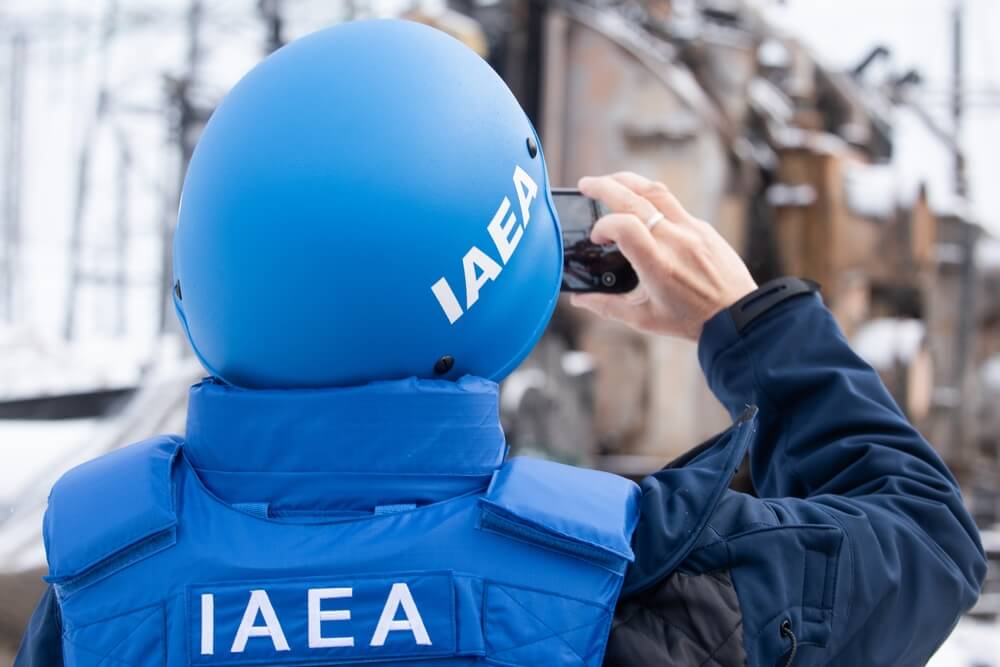
Inspectors have not had access to North Korea since 2009, which makes it difficult to assess the current situation and prepare any future agreement. A satellite image may show a completed hall, but it does not confirm that centrifuges are installed and operating inside.
To verify a work stoppage, negotiators would need to secure access to the facilities and determine whether production from the closed facility has been moved to another location.
North Korea conducted its last confirmed nuclear test on 3 September 2017
The London-based research centre VERTIC, which specialises in verifying the implementation of international agreements, estimated in June that the capacity of the plant it analysed could be roughly two and a half times greater than at the beginning of 2021.
The estimate depends on how the equipment layout is interpreted and was made before the autumn extension, which further increases the production space. The IAEA also uses satellite images to monitor the operation of the Yongbyon reactor, which produces plutonium, another material used to make nuclear warheads.
North Korea conducted its last confirmed nuclear test on 3 September 2017, and in more than nine years without another explosion it has continued to expand its facilities, demonstrating that it can refrain from testing while simultaneously increasing the production of weapons materials.
A promise not to conduct new tests would not change that pattern unless the agreement specifically included production.
The price of restraint already in place
Kim's pledge to abandon new tests would still have real value, as explosive tests provide data on the strength and reliability of weapons and support the development of new designs.
The ban on tests makes it difficult to improve the arsenal and reduces the risk of a crisis, such as one that a new explosion would cause on the Korean peninsula. South Korea and Japan would benefit from such a deal even if broader restrictions take longer to agree upon.
 Negotiations over allowing inspectors into the facilities would take longer and would open disputes over how much data North Korea must disclose
The deal would become costly for Washington if Kim were to receive concessions that should be the price of halting production, in return for merely maintaining the restraint already in place.
Warheads with tried-and-tested designs can be produced without new explosions, allowing Pyongyang to increase its arsenal while diplomatic rapprochement continues.
Kim would then immediately receive eased sanctions, maintain production, and demand new concessions for the subsequent monitoring of the plant.
A swift agreement on testing would be politically more convenient for the Trump administration, as compliance would be monitored by an international network of stations detecting nuclear explosions.
Negotiations over allowing inspectors into the facilities would take longer and would open disputes over how much data North Korea must disclose. Kim could offer a visible result before resolving those issues, calculating that the US president wants an agreement he can present to the public immediately.
A shutdown programme does not erase existing stock
The Stockholm International Peace Research Institute (SIPRI) estimated that North Korea may have about 60 assembled warheads and enough nuclear material for at least another 30 as of early 2026.
This estimate is based on public data and has not been confirmed by any inspection or inventory. Even if the centrifuges were shut down and the production of new plutonium ceased, the existing stockpile could still be used to assemble additional warheads.
Closing the facility would be a major achievement, but limiting the number of warheads would require a separate agreement to monitor the material Pyongyang already possesses.
Without that oversight, any new warheads produced from existing stockpiles would undermine America's claim that the arsenal's growth has been halted.
North Korea is unlikely to agree to reveal the entire programme immediately
The agreement should begin with a list of facilities and materials, so that it is clear to both parties what is covered. Inspectors should be given access, the ability to monitor implementation of the agreement and the right to verify suspicions about undeclared facilities.
North Korea is unlikely to agree to reveal the entire programme immediately, which allows for the gradual introduction of oversight with precisely defined obligations and concessions at each stage.
As a first step, an agreement limited to a single plant should be made public, clearly stating the activities and stocks that remain outside its scope.
With Moscow's backing, Kim can fend off Washington for longer
The White House said on 23 October that Trump is ready for talks without preconditions. Kim Yo Jong, the North Korean leader's sister and one of the regime's most influential figures, said on 4 November that Pyongyang has no reason to negotiate until the US abandons what it calls hostile policies, citing its insistence on complete nuclear disarmament and joint military exercises as examples.
With this, Pyongyang shifts the dispute from the meeting itself to its substance and demands that Washington accept the survival of the North Korean arsenal.
Washington no longer even has the earlier agreement of the great powers to put pressure on Pyongyang. On 28 March 2024, Russia vetoed the extension of the mandate of the UN expert group that monitored the implementation of sanctions.
Kim already receives part of what he would expect from American concessions from Moscow
The sanctions remained in place, but the Security Council no longer had its own body to record violations. On 18 November, the European Union again rejected claims by Russian officials that North Korean nuclear disarmament was a settled issue.
Moscow has a military interest in maintaining cooperation with Pyongyang, from which it has received soldiers, artillery ammunition and ballistic missiles for the war against Ukraine. Thanks to this relationship, Kim can more easily reject the American offer, as Russia mitigates his international isolation.
The group of 11 countries that assumed responsibility for monitoring the sanctions after the Russian veto alleges that Russia supplied Pyongyang with oil derivatives exceeding the annual limit of 500,000 barrels set by the Security Council, as well as air defence systems.
Kim already receives part of what he would expect from American concessions from Moscow, without any obligation to open facilities.
Trump cannot lift sanctions on his own
UN Security Council sanctions can be amended, suspended or cancelled only by a decision of that body, as set out in Resolution 2397.
Russia and China, permanent members of the Council with veto powers, would gladly support easing sanctions, but scarcely the verification conditions that Washington would demand. Once the issue of concessions was raised in the Council, Pyongyang could obtain them before inspectors entered its facilities.
Trump could offer only limited concessions, which would be unlikely to suffice for Kim to agree to production controls
Trump has greater control over US sanctions, and his administration can approve certain deals with Treasury Department licences and amend measures based on presidential executive orders.
To suspend certain statutory sanctions, the president must certify to the relevant congressional committees that North Korea has made progress in areas specified by law, including financial transparency and the treatment of political prisoners.
Without such certification, Trump could offer only limited concessions, which would be unlikely to suffice for Kim to agree to production controls.
Kim buys time while Seoul and Tokyo are put at risk
South Korea and Japan would need to participate in negotiations that directly determine their security. An agreement to limit ICBMs would reduce the threat to US territory but leave allies exposed to shorter-range missiles.
American guarantees would lose credibility if Washington asked its allies to accept greater danger for the sake of its own security.
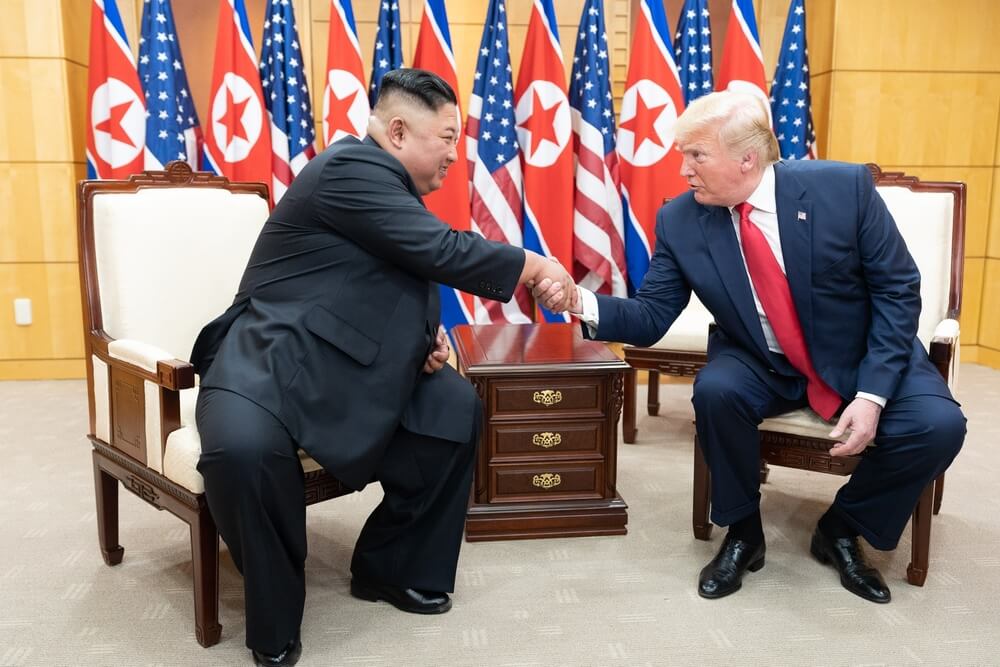 If Trump offers his biggest concessions too early, the North Korean leader would gain time to produce new warheads
In the coming months, Washington and Pyongyang are more likely to argue about the agenda than to agree on a new summit, and work at Yongbyon will continue in the meantime.
Any renewed talks would probably begin with an agreement on limited restraint and reciprocal concessions, while the most difficult issues would be production, inventory reporting and inspector access.
Kim has reason to postpone that phase, as supervision would deprive him of the opportunity to expand his arsenal imperceptibly. If Trump offers his biggest concessions too early, the North Korean leader would gain time to produce new warheads, along with economic benefits.
Washington would then pay to limit the military power that Pyongyang has continued to build up in the meantime.
An agreement on tests is worth signing only if it includes a deadline and sequence for monitoring production, and the biggest concessions should be reserved for the day when international inspectors, for the first time since 2009, enter North Korean facilities.
Any other sequence would give Trump a publicity boost and leave Kim with an arsenal that continues to grow.
