The Trump administration’s capture of Venezuelan President Nicolás Maduro marks a watershed for international law and the global order.
Of course, this isn’t the first time that the United States has intervened in another country’s internal affairs.
Such moves were not uncommon during the Cold War. Even as that era was nearing its end, in December 1989, the US toppled Panama’s de facto ruler, Manuel Noriega, who was also charged with drug trafficking.
But in all these previous cases, there was a critical difference from Maduro’s capture.
Past US actions, even when cynical and driven by nothing but realpolitik, had a different veneer.
During the Cold War, American democracy and institutions, however imperfect, were preferable to Soviet repression.
Before Donald Trump, US presidents could plausibly claim to be defending democracy and supporting a “rules-based order,” and the US itself still had functioning institutions to check the executive and authorize foreign interventions.
Yes, the veneer was always thin. In several cases – such as the 1960 toppling of Patrice Lumumba in the Democratic Republic of the Congo, the 1953 coup against Iranian Prime Minister Mohammad Mossadegh, and support for brutal dictatorships across Latin America (from Nicaragua’s Somoza regime to General Augusto Pinochet’s government in Chile) – the defense of democracy was little more than a euphemism.
But in these cases, the CIA’s unlawful activities were ultimately investigated by the Senate, such as in the famous Church Committee hearings of 1975.
Because US institutions and political norms were far more robust than they are today, congressional oversight could not be stopped or defanged. The CIA was reined in, at least for a while.
Maduro’s forceful extraction represents something new
Maduro’s forceful extraction represents something new, partly because US institutions have become much weaker and less democratic, but also because the veneer of legitimacy has been stripped off. All that remains is selfish, narrow self-interest.
To be sure, Maduro was a brutal dictator who repressed the Venezuelan population, wrecked the economy, rigged elections, and jailed and killed political opponents.
Human Rights Watch (certainly no mouthpiece for the US government) and the United Nations have both documented a significant number of extrajudicial killings sanctioned by Maduro.
Almost eight million people have fled Venezuela to escape his reign of terror and economic incompetence.
Still, it remains to be seen what evidence the Trump administration actually has to support its claim that Maduro was a drug kingpin.
This wasn’t about helping ordinary Venezuelans or bolstering democracy
Trump’s frequent talk of Venezuelan oil and of the money that US companies supposedly stand to make signals to everyone that this wasn’t about helping ordinary Venezuelans or bolstering democracy. It was about nakedly advancing US and American corporate interests.
The fact that the administration has provisionally backed Maduro’s own vice president, Delcy Rodríguez, rather than opposition politicians who commanded the most public support in past elections, further confirms this interpretation.
Only financial motives remain
Of course, fighting communism during the Cold War was about US interests, too, as was the cultivation of client regimes such as in the DRC (under Mobutu Sese Seko) and Chile (under Pinochet’s military rule).
But the equation changes once arguments about improving the lives of a country’s people have been fully abandoned and only financial motives remain.
All this is happening, moreover, at a time when the US is suffering its own crisis of democracy.
Trump’s gutting of institutions makes it even more difficult to imagine that he and his henchmen will ever be held accountable for their lawlessness.
The US today is not a hegemon. Its soft power has declined considerably over the last several decades
Yet when a country is capable of unilaterally deposing foreign leaders at its discretion, the only constraints on it must be self-imposed.
So much for the “rules-based order,” then. Implicit in this term was that the rules would be set and largely enforced by the US, which was playing its natural role as the world’s hegemon.
But the US today is not a hegemon. Its soft power has declined considerably over the last several decades, especially after Trump arrived on the scene, and China has emerged as a credible economic, military, and technological rival. That means a new approach must underpin any vision of a rules-based order.
A post-Trump world
The philosopher Michael Walzer has suggested one possibility. He argued more than 45 years ago that in international relations, one should start with the presumption that rulers in every state are “legitimate.”
The very fact that a people are putting up with their government, and that the government has emerged from a country’s own history and culture, should lead outsiders to presume “that there exists a certain ‘fit’ between the community and its government.”
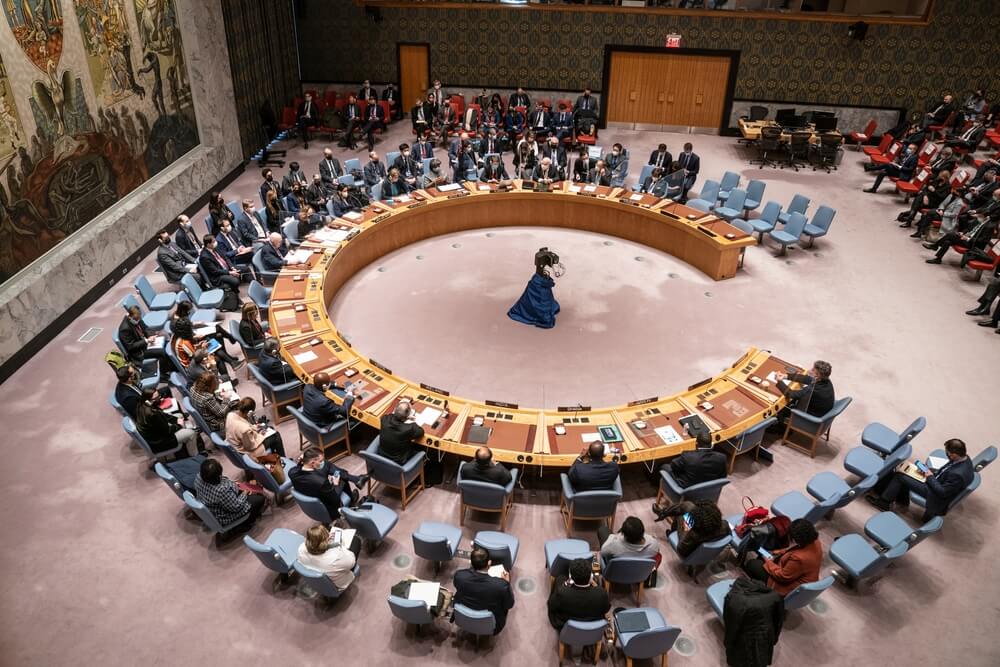 The UN General Assembly or Security Council may or may not be up to this task. If they are not, a new international institution would be needed
Of course, there will be cases where the presumption proves untenable, such as if a government carries out genocide against its own people.
But the point is that there should be a high bar for rejecting the default position.
Moreover, the process of concluding that a government has lost legitimacy should be multilateral, and preferably carried out through some well-specified supranational institutional structure.
The matter should not be unilaterally decided by a single country. And the judgment itself should be independent from whatever decisions (military or otherwise) follow from it, so that no single institution can act as prosecutor, judge, and executioner.
The UN General Assembly or Security Council may or may not be up to this task. If they are not, a new international institution would be needed.
Either way, the pre-Trump equilibrium was untenable because it allowed the US unilaterally to judge other governments’ legitimacy and move against them.
Trump has taken off the mask and pushed this reality to the limit. If and when we get to a post-Trump world, we should remember these lessons and strive to create a global order that rests on sound philosophical foundations and fairer institutions.
Daron Acemoglu is a 2024 Nobel laureate in economics and an Institute Professor of Economics at MIT.
