On 8 January in Amman, the European Union and Jordan agreed to establish a formal security and defence dialogue.
This decision, confirmed in a joint statement from the summit, for the first time links European security instruments with a Middle Eastern country in a manner that goes beyond political cooperation and technical assistance.
King Abdullah II of Jordan, President of the European Council António Costa, and President of the European Commission Ursula von der Leyen participated in the meeting.
The adopted document announces the launch of the first EU-Jordan Security and Defence Dialogue in Amman in 2026. The dialogue is connected to the European Peace Facility (EPF) and the Common Security and Defence Policy (CSDP).
These are existing European mechanisms. The EPF is a fund that finances security support to partner countries, including training, equipment, and institutional capacity building.
The CSDP is the framework through which the European Union conducts civilian and military missions and develops security partnerships with non-EU countries.
By including the EPF and CSDP in the joint statement, cooperation with Jordan was brought into a framework in which decisions are financed with predefined funds and guided through existing European security procedures.
The European Union selected Jordan for this arrangement due to its significant role in the region. The country is located at the intersection of key regional flows, with borders under constant pressure, but has maintained functional security structures and control over its territory. Within European institutions, this is seen as a prerequisite for serious security cooperation.
From public finances to border control
Security dialogue forms part of a broader package of relations. The European Union has confirmed financial support to Jordan amounting to three billion euros for the period from 2025 to 2027.
The package includes grants, macro-financial assistance, and investments. Macro-financial assistance is intended to support the stability of public finances and the functioning of institutions.
In practice, security cooperation depends on the economic resilience of the partner state.
The summit also addressed issues of energy and water resource management. Jordan has joined the Global Energy Transition Forum (GETF), an initiative that brings together countries and institutions committed to transitioning to sustainable energy sources.
EU Council documents mention cooperation in border management, combating smuggling, human trafficking, and organised crime
In Jordan, where water resources are extremely limited (with less than 100 cubic metres of water per inhabitant per year, placing it among the countries with the lowest water availability in the world) and energy is largely dependent on imports, these issues are an integral part of national security.
EU Council documents mention cooperation in border management, combating smuggling, human trafficking, and organised crime.
These are areas where European and Jordanian interests directly intersect. Cooperation focuses on early pressure points because the flows passing through the region later impact the European area.
EU institutionalises security cooperation with Jordan
The security and defence dialogue with Jordan creates opportunities for concrete arrangements that have not previously been possible within the framework of EU–Middle East relations.
When cooperation is linked to the EPF and CSDP, it is integrated into the annual plans, budget cycles, and risk assessment processes that the EU already uses for its own missions and partners.
In practice, this means that cooperation with Jordan will be considered alongside other security priorities of the Union, rather than as an isolated regional issue.
For the EU, it is a way to shift part of the pressure beyond its own borders, through a state that already has the capacity to control key security flows in its environment.
If this model proves viable, it will probably be extended to other partners in the immediate European neighbourhood. Cooperation with Jordan is the first case in which such an approach is clearly institutionalised.
The EU is not attempting to resolve regional conflicts but to establish a reliable source of stability in an environment that remains unstable
The weight of this decision lies in its structure. Security dialogue is linked to existing funds, policies, and procedures. Jordan thus enters the European security framework as part of the system, not as an external interlocutor.
The European Union, for its part, recognises that stability outside its borders has a direct impact on its own security.
The security and defence dialogue with Jordan comes at a time when the European Union is seeking ways to reduce its exposure to crises that it cannot control solely from its own territory.
Wars, the collapse of state structures, and porous borders in the wider neighbourhood have for years produced consequences that spill directly into European space.
In this arrangement with Jordan, the EU is not attempting to resolve regional conflicts but to establish a reliable source of stability in an environment that remains unstable.
It is important to note that this is not a military alliance, nor does it involve security guarantees. The European Union remains committed to its model of gradual inclusion through procedures, standards, and financial instruments.
This is precisely why the choice of EPF and CSDP is crucial. These frameworks enable the gradual expansion of cooperation, with ongoing assessment of performance and risk. In practice, this means that any subsequent phase of cooperation with Jordan will depend on concrete results, not political promises.
The price of EU security integration
For Jordan, this decision carries some risk. Entering the European security framework means greater visibility but also greater exposure.
Cooperation with the EU implies harmonisation with European standards, transparency, and acceptance of external supervision in certain areas of security policy.
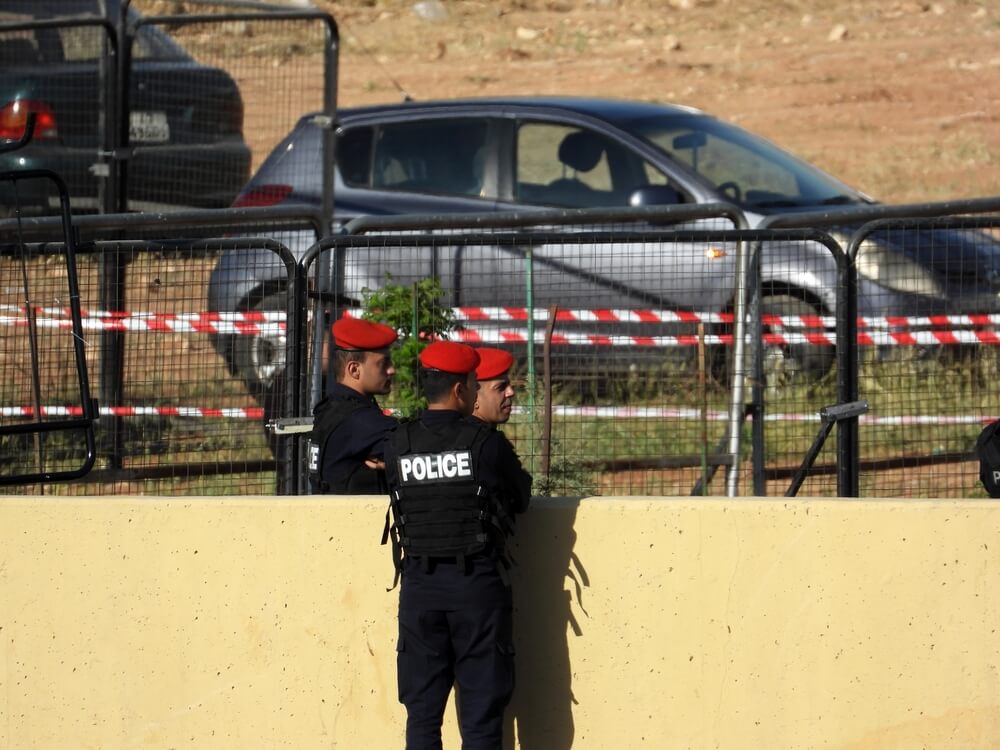 Cooperation with the EU implies harmonisation with European standards, transparency, and acceptance of external supervision in certain areas of security policy
That is the price of institutional partnership. Jordan has apparently judged that the price is worth it, as the alternative involves relying on fragmented bilateral relations and ad hoc support.
What distinguishes this case from previous EU efforts in the wider area is the absence of grand political narratives. There is no mention of a "new era" or "strategic shift".
Instead, the focus is on dialogue, instruments, and frameworks. This is precisely why the agreement is important, albeit limited in scope.
It does not promise quick solutions or political shortcuts. Rather, it provides a structure in which collaboration can develop or diminish based on results.
What will set this arrangement apart from earlier EU attempts to structure relations with the Middle East is the degree of discipline in its implementation.
The security and defence dialogue with Jordan will, by its nature, have to fit into the already crowded European planning system, where resources are allocated among the Eastern wing, the Mediterranean, and the Union's internal priorities.
Jordan therefore competes for attention and resources with other partners but with one advantage: its security agenda aligns with areas in which the EU already has established instruments and clear interests, primarily border control, combating smuggling, and the institutional stability of security structures. This is precisely where the real value of this agreement lies.
If this model proves effective, Jordan will not be an exception. European security policy will inevitably expand to states outside the formal borders of the Union but within its actual security environment.
