The last time the US Congress explicitly adopted a resolution formally recognising a state of war was during World War II, at the end of 1942.
Since then, no major military operation has received such a decision.
Instead, presidents have relied on various legal bases, including Authorisations for the Use of Military Force (AUMF) and their own interpretation of constitutional authority, to initiate and conduct military actions abroad.
This practice continues in the conflict with Iran in February–March 2026, where the central issue is who decides before the start of armed operations.
Administrative position and notifying legislative authority
The president of the United States did not seek prior authorisation from Congress before beginning operations on 28 February.
Hours before the strike on Iran, the highest congressional leaders and members of the intelligence committees received a briefing instead of a vote.
The administration argues that no law requires prior approval before the initiation of "limited military action"
The State Department and other officials have publicly confirmed that the discussion was limited to back-and-forth communications and that formal congressional approval was not sought.
It is not the first time the executive branch has used this interpretation of constitutional powers.
The administration argues that no law requires prior approval before the initiation of "limited military action" and that such action does not trigger an automatic congressional consent requirement.
This approach is part of a long-standing practice in which military activity is initiated based on presidential authority as commander-in-chief, with subsequent notification to the legislature.
War Powers Resolution: requirements without effective implementation
The War Powers Resolution of 1973 requires the president to notify Congress within 48 hours of the commencement of military action and obliges the withdrawal of forces if there is no legislative approval after 60 days.
Although this law is formally in force, its practical application has been circumvented for years through varying definitions of "hostilities" and the scope of engagement.
Forms of engagement without large numbers of ground troops are exempt from the strict application of the War Powers Resolution
Presidential administrations in recent decades have broadened the interpretation that airstrikes, drone use, support for allies, and other forms of engagement without large numbers of ground troops are exempt from the strict application of the War Powers Resolution.
This has resulted in administrative interpretations and legal positions that have effectively eliminated the functional obligation to seek consent before operations begin, leaving Congress with a controlling role only after the fact.
Terminated and remaining authorisations for the use of force
In 2025, Congress repealed the old AUMF resolutions adopted after the 1991 Gulf War and the 2003 invasion of Iraq.
This removed one of the standard legal bases used to expand presidential powers in military operations.
The 2001 AUMF, enacted after the 9/11 attacks and originally intended to facilitate operations against al-Qaeda and affiliated groups, remains in effect.
Iran as a state was never involved in the attacks that led to the 2001 AUMF, which should limit its application in this context
The 2026 administration is seeking to expand that authority by arguing that certain Iranian groups and proxy forces fall within the scope of “associated with” entities defined in 2001.
This is the central legal question under intense debate: whether this scenario truly falls within the original intent of that law.
Many legal experts note that Iran as a state was never involved in the attacks that led to the 2001 AUMF, which should limit its application in this context.
Withdrawal of forces and budgetary leverage
The only solid institutional leverage Congress possesses is budgetary control. Congress can withhold funding for certain operations, effectively halting their implementation.
However, when American forces are already engaged, such action carries significant political risks.
Ongoing operations involve military casualties and rhetoric about protecting US bases and allies in the region. This context reduces the political willingness to restrict resources, even when the legal issues are clear.
The prospect of American soldiers losing support while engaged in conflict often becomes a key argument against defunding.
War Powers Resolution and political dynamics
Democratic Senator Tim Kaine, a long-standing member of the Senate Foreign Relations and Armed Services Committees, introduced S.J.Res. 104, which calls for a suspension of hostilities against Iran not authorised by Congress.
This resolution is a procedural priority and aims to activate certain mechanisms of the War Powers Resolution, including deadlines for the withdrawal of forces.
A presidential veto would require a two-thirds majority, which is currently unrealistic given the sharp political polarisation
However, while the resolution formally exists, its chances of effectively redirecting the course of operations remain limited.
Even if the Senate were to pass the text, the Republican-controlled House of Representatives could withhold support.
If both houses adopted the resolution, a presidential veto would almost certainly be used and overcoming it would require a two-thirds majority, which is currently unrealistic given the sharp political polarisation.
Judicial practice and political issues
Courts have repeatedly decided not to consider such disputes as suitable for judicial decision-making.
In Goldwater v. Carter, the Supreme Court indicated that conflicts between the executive and the legislature in the domain of foreign policy and security belong to the political sphere, outside the jurisdiction of the courts.
During the 1999 NATO air campaign against the Federal Republic of Yugoslavia, President Bill Clinton did not receive formal congressional authorisation for the use of force.
On 28 April 1999, the House of Representatives rejected a resolution that would have explicitly supported the airstrikes. On the same day, a resolution to end the operation was also rejected.
The administration continued the bombing, citing the president's constitutional powers and the fact that Congress had already approved budget funds for operations in the Balkans.
A federal appeals court in Campbell v. Clinton rejected the lawsuit of congressmen who claimed that the operation was unconstitutional, explaining that the dispute falls within the domain of political decision-making and that the petitioners had no procedural basis to seek an injunction.
This is the essence of that precedent: the operation continued for 78 days without formal congressional approval, and institutional mechanisms did not stop it.
Congress has debated the legality of such measures but has passed no changes to limit similar actions in the future
This practice shows that US courts are unwilling to assume the role of arbitrator in disputes between the executive branch and Congress regarding the use of armed forces.
A similar situation occurred in 2011, during the intervention in Libya under President Barack Obama.
The administration at the time argued that US engagement did not constitute "hostilities" within the meaning of the War Powers Resolution because US forces were not directly exposed to significant risk.
In both cases, Congress had two concrete options: to pass a binding resolution ordering the end of the operation or to withhold funding for it. It did neither.
Resolutions aimed at limiting or terminating operations did not receive the required majority, and budget allocations for military activities continued. This enabled the executive to bring operations to an end without formal consent but also without a formal ban.
The killing of General Qasem Soleimani on 3 January 2020, on the orders of President Donald Trump, is another example in which the executive branch expanded the interpretation of presidential powers towards preventive strikes.
Congress has since debated the legality of such measures but has passed no changes to limit similar actions in the future.
What is at stake today?
The conflict with Iran continues. Decisions regarding the use of American force were made before Congress voted to approve them.
The formal resolutions and political processes that followed do not change the fact that the action was initiated without congressional approval.
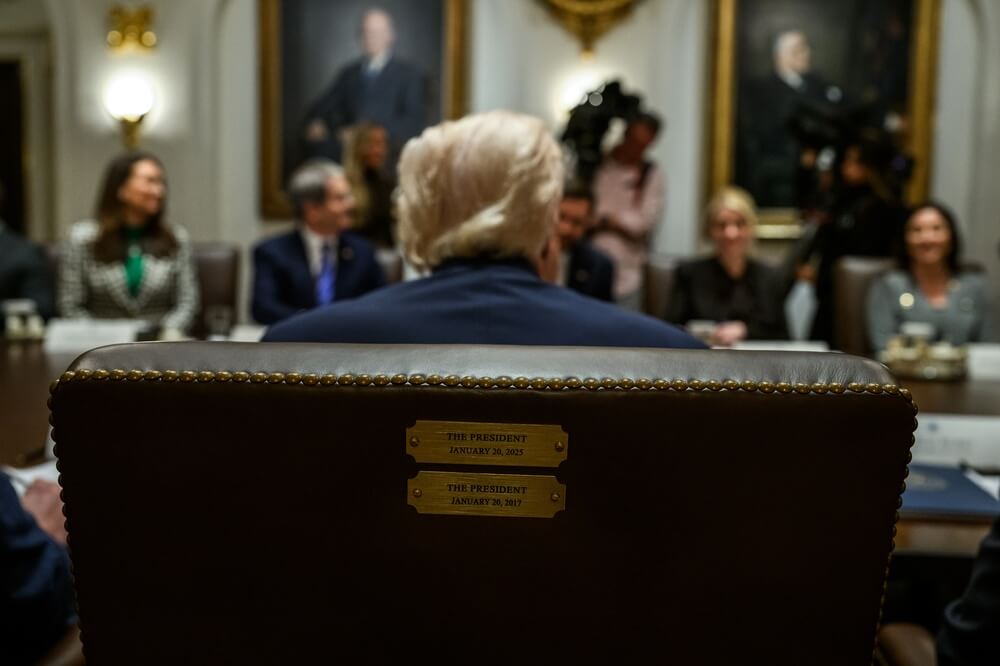 The conflict with Iran continues. Decisions regarding the use of American force were made before Congress voted to approve them
This is not a dispute about a single operation or administration. It is a test of the constitutional distribution of powers in real time.
If military action can begin, expand, and gain operational continuity before the legislature expresses its position, the order of decision-making is no longer a procedural matter but a shift in the balance of power.
Congress formally retains its powers. However, an authority exercised only after forces have been engaged and objectives defined loses its preventive function. It becomes corrective rather than decisive.
In such a situation, the actual decision on war is made by the executive branch. Congress can subsequently confirm, limit, or criticise that decision, but the initiative is no longer its own.
If that pattern becomes established, the question is no longer whether the law has been broken, but whether the constitutional balance has actually shifted.
