Azerbaijan and Uzbekistan are steadily expanding their economic, energy, and investment cooperation, creating new direct links between the South Caucasus and Central Asia while reducing dependence on traditional Russian economic, transport, and energy channels.
During the 4th Azerbaijan–Uzbekistan Interregional Forum in Tashkent, Azerbaijan’s Minister of Economy, Mikayil Jabbarov, stated that the state-owned oil company SOCAR is entering Uzbekistan’s retail market.
At the same time, the Azerbaijani company AzerGold will conduct geological exploration and participate in gold production projects together with Uzbek partners.
This expansion of cooperation covers strategically important sectors and contributes to the development of a new system of economic interdependence between the two countries.
Baku turns to Turkish defence technologies
Azerbaijan is deepening its military-technical cooperation with Turkey, gradually strengthening its own defence capabilities and reducing its dependence on Russian military technologies.
In Baku, Azerbaijani Defence Minister Zakir Hasanov met a delegation led by Selçuk Bayraktar, Chairman of the Board of the Turkish company Baykar.
The sides discussed prospects for developing joint production, including unmanned aerial vehicles and electronic warfare systems, and identified additional areas for military-technical cooperation.
Azerbaijan is expanding its circle of external partners and strengthening its strategic autonomy
Zakir Hasanov emphasised the need to further expand joint production capabilities through the introduction of advanced technologies and innovations.
For Baku, this cooperation has not only a military-technical but also a strategic dimension.
Amid the transformation of the security environment in the South Caucasus and the gradual erosion of Russia’s previously dominant influence, Azerbaijan is expanding its circle of external partners and strengthening its strategic autonomy.
Turkey is therefore emerging not only as a supplier of advanced defence technologies but also as a key strategic partner capable of counterbalancing Russian influence in the region.
The US strengthens its economic presence in the South Caucasus
Meanwhile, Washington is stepping up its economic presence in the South Caucasus, focusing on developing the Trans-Caspian Trade Route, known as the Middle Corridor.
US Secretary of State Marco Rubio issued a statement regarding the declaration signed a year ago by the United States, Azerbaijan, and Armenia, which envisages the launch of the Trans-Caspian Enterprise Fund.
Its objective is to stimulate private sector investment along the Middle Corridor, which connects Central Asia, the South Caucasus, and European markets.
Rubio also expressed hope for further progress towards achieving lasting peace in the South Caucasus.
The development of the Middle Corridor is of strategic importance
Increased US engagement indicates Washington’s intention to strengthen its economic and political position in the region while promoting the development of transport routes that offer alternatives to those controlled by Russia.
The development of the Middle Corridor is of strategic importance because it creates additional opportunities for the movement of goods between Central Asia, the South Caucasus, and Europe while bypassing Russian territory.
In the long term, this could strengthen the transport and economic independence of regional states and reduce their reliance on Russian infrastructure.
Shift from a confrontational model
Armenia and Azerbaijan are beginning to develop a new economic model for bilateral relations without Moscow’s mediation.
Armenian Prime Minister Nikol Pashinyan has stated that an agenda for mutual trade in goods between Armenia and Azerbaijan is already being developed.
The expansion of trade ties between the two countries is taking place against the backdrop of a broader restructuring of the regional system of relations and Yerevan’s growing focus on developing ties with Western partners.
At the same time, deeper economic interaction between Armenia and Azerbaijan has a direct political dimension.
The potential expansion of Armenian exports to Azerbaijan signals a gradual shift from a confrontational model towards pragmatic economic cooperation.
The normalisation of relations between Yerevan and Baku objectively reduces the need for Moscow to act as the traditional mediator
If this process continues, it could become one of the practical instruments for consolidating peace between the two countries and contribute to the establishment of a new regional security and economic architecture.
The normalisation of relations between Yerevan and Baku objectively reduces the need for Moscow to act as the traditional mediator and arbiter in the South Caucasus.
The strengthening of the US presence, the development of transport and energy routes that provide alternatives to Russia, the deepening of Azerbaijani–Turkish military-technical cooperation, and the emergence of new economic ties between Armenia and Azerbaijan are gradually reshaping the regional balance of influence.
Taken together, these developments indicate the emergence of a new system of interaction in the South Caucasus and the surrounding region, in which Baku, Ankara, Washington, and Tashkent are playing increasingly important roles.
For Russia, this means a gradual reduction in its ability to use economic, energy, transport and security dependencies as instruments of regional influence.
Israel’s strategic partner and a link to Central Asia
Azerbaijan is steadily strengthening its status as a reliable partner of Israel while simultaneously creating additional opportunities for Israel to access Central Asian markets and contributing to the further erosion of Russian influence in the region.
Baku already maintains well-developed bilateral relations with Israel and actively pursues political, economic, and transport ties with Central Asian states.
This creates the conditions for Azerbaijan to become an important link between Israel and Central Asia.
More broadly, the decline of Russian influence in Central Asia and the South Caucasus is becoming one of the key factors reshaping the regional system of relations.
Regional states are increasingly diversifying their economic, political, and security ties by expanding cooperation with China, the United States, Türkiye, the European Union, Israel, and other external partners.
Central Asian countries generally pursue a pragmatic approach to relations with Israel, focusing primarily on trade and economic cooperation, energy, technology, and security.
Kazakhstan and Azerbaijan play an important role in meeting Israel’s oil import needs
In this context, Azerbaijan is particularly significant because of the combination of two factors: its established strategic partnership with Israel and its extensive contacts with Central Asian states.
Kazakhstan and Azerbaijan play an important role in meeting Israel’s oil import needs.
At the same time, Baku’s strategic importance extends far beyond the energy sector. Azerbaijan can serve as a transit and diplomatic intermediary between Israel and the Central Asian states, particularly through multilateral cooperation formats and the development of the Middle Corridor.
Azerbaijan’s geographical position, transport infrastructure, and access to the Caspian Sea enhance its importance for economic and logistics projects connecting Central Asia with Europe and other external markets. In the longer term, this could facilitate the expansion of Israel’s economic and technological presence in the region.
Thus, the changing regional balance creates mutually reinforcing opportunities for Israel and Azerbaijan: Israel gains an additional channel to expand its economic, technological, and political presence in Central Asia, while Baku strengthens its own role as a regional transport, energy, and diplomatic hub.
Germany and Azerbaijan
The strategic partnership between Azerbaijan and Germany is gradually expanding beyond traditional energy cooperation.
According to Orkhan Yolchuyev, Director of the CASPIA analytical centre, the development of bilateral relations reflects a broader European effort to reduce dependence on Russia, diversify energy sources, and establish alternative transport and logistics routes.
More than 250 German companies operate in Azerbaijan, including in mechanical engineering, transport, renewable energy and high-tech manufacturing.
This indicates a gradual shift from a predominantly energy-focused relationship towards broader industrial cooperation.
In 2025, bilateral trade reached approximately €1.7 billion, with a significant share consisting of German exports of industrial equipment, machinery and transport systems.
The key indicator of the development of bilateral relations is increasingly not the growth in trade volumes, but the deepening of industrial cooperation.
German businesses could play an even more important role in the reconstruction and development of Azerbaijan’s industrial zones, particularly in mechanical engineering, transport, renewable energy, and high-tech manufacturing.
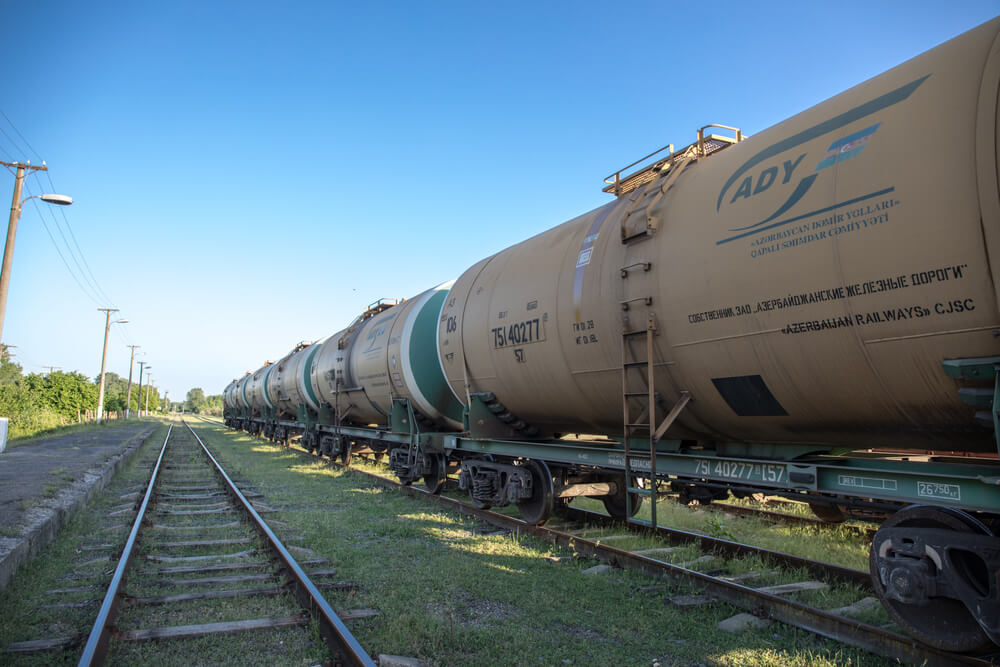 The Middle Corridor is of particular importance, connecting China and Central Asia with European markets via the Caspian Sea, Azerbaijan, Georgia, and Türkiye
The Middle Corridor is of particular importance, connecting China and Central Asia with European markets via the Caspian Sea, Azerbaijan, Georgia, and Türkiye.
Following the beginning of Russia’s full-scale war against Ukraine, the route has gained strategic importance as an alternative to Russian transit routes.
As a result, Azerbaijan is emerging as a key logistics hub within Europe’s strategy to diversify supply chains.
According to Orkhan Yolchuyev, the economic potential of the Middle Corridor is determined primarily by its capacity to transport high value-added goods.
The expansion of the Port of Baku and the development of the Alat Free Economic Zone are creating new opportunities to attract investment and increase transit flows.
Energy nevertheless remains the foundation of the Azerbaijan–Germany partnership.
At the beginning of 2026, Azerbaijan began direct gas supplies to Germany and Austria, strengthening its role as an alternative supplier amid Europe’s gradual reduction of its reliance on Russian energy resources.
In the longer term, Azerbaijan could also play an important role in the transit of Kazakh oil and Turkmen gas to European markets, further enhancing its importance for European energy security.
Russia’s war against Ukraine has been one of the key factors accelerating this transformation.
The decline of Russian influence in the South Caucasus has coincided with European countries’ efforts to diversify energy sources, transport routes, and supply chains.
In this context, Azerbaijan is gradually acquiring a new strategic status, not merely as a hydrocarbon supplier, but also as an important component of the emerging architecture of economic and transport connectivity between Europe, the Caucasus, and Central Asia.
Oleksandr Levchenko, a former Ukrainian diplomat, is a professor at the State University (Kyiv) and a member of the Academy of Geopolitics and Geostrategy (Kyiv).
