Uzbekistan is systematically expanding its economic and migration ties beyond the Russian sphere, seeking to reduce its one-sided dependence on Russia and integrate more deeply into global economic structures.
One of the key aims of this policy is to conclude negotiations on accession to the World Trade Organization (WTO), while another is to diversify legal labour migration routes, including through cooperation with the United States and countries in Europe and Asia.
Uzbekistan has reaffirmed its intention to complete the WTO accession process in 2026.
According to Azizbek Urunov, Special Representative of the President of Uzbekistan for WTO Affairs, negotiations with WTO member states have reached a more advanced stage.
Since March this year, the country has brought 190 legislative and regulatory acts into line with WTO requirements.
According to Choi Sung-young, Chairman of the Working Group on Uzbekistan’s WTO accession and Ambassador of the Republic of Korea, Tashkent has already concluded 31 of the 34 bilateral agreements on market-access conditions.
Negotiations on the remaining three agreements are at their final stage. WTO member representatives have also urged Uzbekistan to continue structural reforms, including the modernisation of state-owned enterprises, the improvement of agricultural support mechanisms, and greater transparency in the business environment. The next working group meeting is scheduled for late autumn.
Uzbekistan’s progress towards WTO membership has significance beyond trade and economics.
Accession requires adapting national legislation to international trade rules, ensuring broader access to foreign markets and fostering deeper integration into the global trading system.
For Tashkent, it also means reducing dependence on individual regional economic centres and expanding opportunities to attract investment and develop trade relations with a wider range of partners.
This process is part of a broader trend towards diversifying Uzbekistan’s foreign economic and foreign policy strategy.
Tashkent is intensifying its engagement with the European Union, the United States, international financial institutions, South Korea, Japan and other Asian countries.
At the same time, relations with Russia remain economically important but are increasingly taking on a pragmatic character.
Particularly important in this context is Uzbekistan’s effort to minimise the risks associated with growing sanctions pressure on Russia.
Tashkent remains keen to maintain economic relations with Moscow but does not want dependence on the Russian market to restrict its access to other centres of the global economy.
The objective, therefore, is not so much to break with Russia as to establish a more balanced model of external economic relations.
Diversification of labour migration
A similar trend is evident in the field of labour migration. Russia remains the largest foreign labour market for Uzbek citizens, but Tashkent is systematically expanding the geography of organised employment in an effort to reduce dependence on a single destination.
Particular attention was paid to pilot projects for employing Uzbek citizens in the US agricultural sector, including processing the necessary documentation. The two governments are in talks about the administrative procedures for hiring Uzbek workers in the US.
Although this remains a relatively limited initiative in terms of scale, its political and strategic significance is greater than the number of participants involved in such programmes.
Labour migration has generated substantial remittances for Uzbekistan
An estimated 1.3–1.5 million Uzbek citizens work in Russia, and for many years this dependence on the Russian labour market has been an important factor in the economic interdependence between the two countries.
Labour migration has generated substantial remittances for Uzbekistan, while Moscow has gained an additional instrument of economic and social influence over the country.
Today, Tashkent is gradually seeking to change this model. Uzbekistan is developing organised employment opportunities for its citizens in Germany, the United Kingdom, South Korea, Japan, the United Arab Emirates and other countries.
Reducing Russia’s monopolistic influence
The broader the range of countries to which citizens can legally travel for employment, the lower the country’s dependence on a single labour market and the associated economic and political risks.
At the same time, this process should not be interpreted as an unequivocal turn away from Russia.
Moscow remains an important trading partner, a source of employment for a significant proportion of Uzbek citizens, and one of Tashkent’s key economic partners.
However, the structure of the relationship is gradually changing: Russia is increasingly less of an indispensable centre of Uzbekistan’s economic and foreign policy orientation.
Tashkent is increasingly moving away from a logic of one-sided dependence towards a model of multi-vector economic engagement.
This policy allows Tashkent to maintain pragmatic relations with Russia while at the same time developing alternative economic, trade and migration channels
WTO membership, cooperation with the United States in the field of labour migration, and expanded partnerships with European and Asian countries are all components of a single strategic process: the creation of a more autonomous and diversified system of international relations.
For Russia, this means a gradual reduction of its traditional levers of influence in Uzbekistan and, more broadly, the need to adapt to a new reality in Central Asia.
Regional states are not abandoning cooperation with Moscow, but they are increasingly using competition among different centres of power to expand their own room for manoeuvre.
In Uzbekistan’s case, this policy allows Tashkent to maintain pragmatic relations with Russia while at the same time developing alternative economic, trade and migration channels.
In the long term, this strengthens Tashkent’s autonomy in foreign-policy decision-making and supports its deeper integration into global economic structures.
Military partnership with the United States
Uzbekistan is deepening its military cooperation with the United States, reflecting the gradual transformation of Central Asia’s security architecture and Tashkent’s efforts to reduce its dependence on traditional external centres of power.
According to media reports, during a meeting between Major General Michael Lene, Deputy Commander of the US Army Central Command (CENTCOM), and representatives of Uzbekistan’s National Guard, the parties agreed a bilateral military cooperation plan for 2026–2027.
One of the key priorities is the professional training of Uzbek military personnel and increased participation in the US International Military Education and Training (IMET) programme.
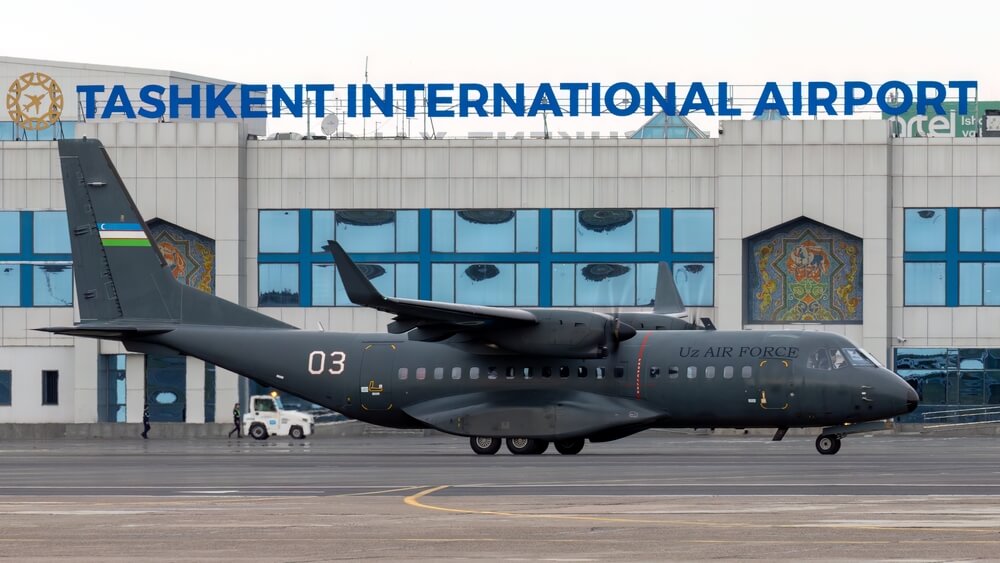 For Tashkent, cooperation with the United States is a means of modernising the security sector and, at the same time, expanding its strategic room for manoeuvre
For Tashkent, cooperation with the United States is a means of modernising the security sector and, at the same time, expanding its strategic room for manoeuvre.
Uzbekistan has traditionally avoided rigid alignment with military-political blocs and has favoured a multi-vector foreign policy. Strengthening the US dimension therefore does not automatically imply a strategic realignment of Tashkent towards Washington.
Rather, the objective is to establish a diversified system of security partnerships in which the United States, European states, Türkiye and other partners complement Uzbekistan’s traditional relationships.
Such a model gives Tashkent access to modern approaches to military education, management, planning and personnel training without allowing any external centre to acquire a monopoly over its security policy.
The development of cooperation with the United States is particularly significant against the backdrop of Russia’s declining ability to retain its former role as the principal security centre in Central Asia.
Regional states are increasingly diversifying their external relations to avoid critical dependence on either Moscow or any other single power.
In this context, Tashkent is leveraging competition among external partners to strengthen its own strategic autonomy.
Uzbekistan is also not a member of the Collective Security Treaty Organization (Russia, Belarus, Kazakhstan and Kyrgyzstan), giving it additional scope to pursue an independent defence policy.
Expanded cooperation with the United States, alongside the development of ties with the Organization of Turkic States, creates additional layers of security and political interaction.
For Russia, this trend means a gradual erosion of its monopoly over military and security ties in Central Asia. For Uzbekistan, it provides an opportunity to strengthen its defence capabilities while preserving freedom of strategic choice.
Uzbekistan’s military partnership with the United States should therefore not be viewed as the replacement of Russian influence by American influence, but rather as part of a broader transition in Central Asia from a unipolar model of security dependence to a multi-vector system of balancing among several centres of power.
Oleksandr Levchenko, a former Ukrainian diplomat, is a professor at the State University (Kyiv) and a member of the Academy of Geopolitics and Geostrategy (Kyiv).
