The Azerbaijani authorities continue to pursue a consistent policy aimed at strengthening the country's strategic autonomy and gradually reducing Russian influence in the South Caucasus.
The President of Azerbaijan, Ilham Aliyev, recently confirmed this course and commenting on Ukraine's resistance to Russian aggression, emphasised that it is impossible to defeat a nation determined to preserve its independence and national identity.
According to him, Azerbaijan's experience of enduring the occupation of part of its territory confirms the validity of this principle.
He also emphasised that the war must end and that internationally recognised borders cannot be altered by force or without the freely expressed will of the people of the respective country.
At the same time, Baku is actively expanding economic cooperation with the United States, taking advantage of Russia's weakening position in the South Caucasus.
Key transport and logistics hub
During a meeting between Azerbaijan's Minister of Economy Mikayil Jabbarov and a US delegation led by Senator Steve Daines, both sides reaffirmed their commitment to developing a strategic partnership and discussed prospects for expanding cooperation.
Particular attention was given to developing the Middle Corridor as one of the key routes for international trade and regional economic integration.
The consistent implementation of the provisions of the Strategic Partnership Charter, the development of mechanisms for economic dialogue, and the preparation of practical roadmaps confirm the systematic and long-term nature of Azerbaijani–American cooperation.
The development of the Middle Corridor strengthens the country's position as one of the principal regulators of Eurasian transit
For international investors, this is an important signal of the country’s political stability, the predictability of its state policies, and the presence of favourable conditions for implementing large-scale investment projects.
Against the backdrop of geopolitical instability and the growing risks associated with traditional transport routes passing through Russian territory, Azerbaijan is gradually becoming a key transport and logistics hub between Europe and Asia.
The development of the Middle Corridor (the Trans-Caspian International Transport Route) strengthens the country's position as one of the principal regulators of Eurasian transit and creates an alternative international transport infrastructure that enhances the resilience of global supply chains.
High-tech initiatives
At the same time, Azerbaijan is becoming increasingly integrated into modern high-tech industrial and scientific initiatives.
Discussions with the United States on cooperation in artificial intelligence, the digital economy, and critical minerals indicate that the country is offering Western partners not only energy resources but also promising opportunities for technological partnership.
The deepening strategic partnership with the United States confirms Azerbaijan's commitment to long-term cooperation with Western countries
As a result, Azerbaijan is gradually moving beyond its traditional image as solely an oil- and gas-producing state, taking advantage of current geopolitical opportunities to diversify its economy and integrate into global technological processes.
The weakening of Russian influence in the South Caucasus is creating a new regional balance of power, in which Baku is increasingly assuming the role of the leading political and economic centre of gravity.
The deepening strategic partnership with the United States confirms Azerbaijan's commitment to long-term cooperation with Western countries.
Global supply chain support
An important component of this policy is the development of international logistics infrastructure, supported by the World Customs Organization (WCO).
Azerbaijan’s Minister of Foreign Affairs, Jeyhun Bayramov, and WCO Secretary General, Ian Saunders, recently discussed mechanisms to facilitate international trade and improve the efficiency of global supply chains.
They highlighted Azerbaijan's growing importance in international logistics, citing the increased capacity of the Baku–Tbilisi–Kars railway, the development of the Middle Corridor, the modernisation of the Baku International Sea Trade Port, and the expansion of the Alat Free Economic Zone.
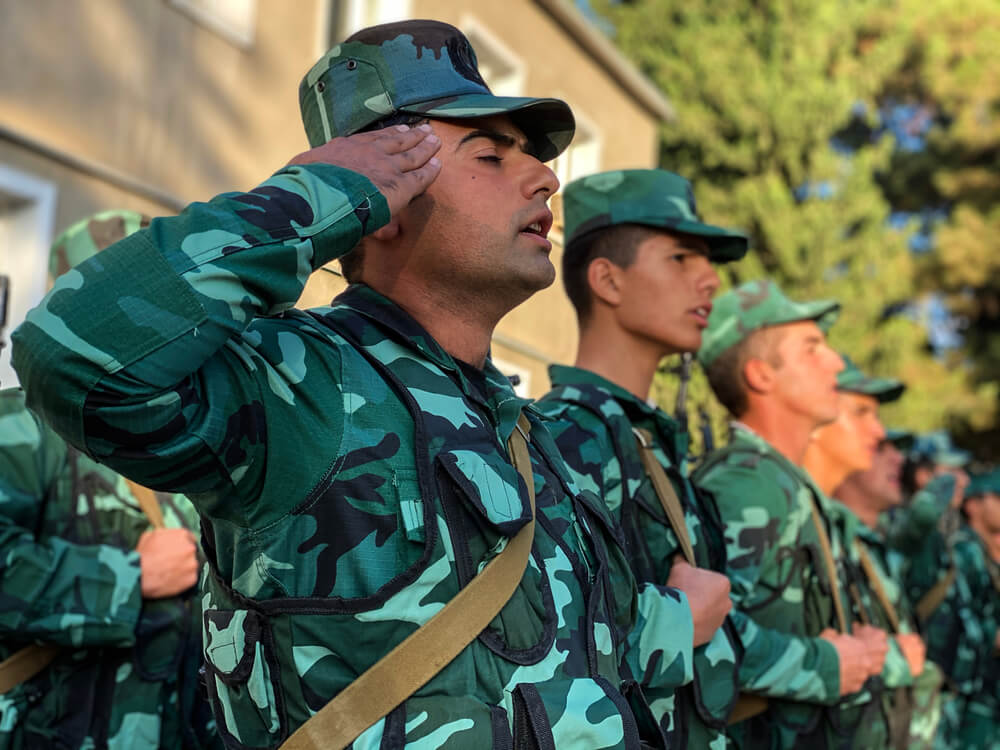 The country is exploring opportunities for Azerbaijani military personnel to take part in new peacekeeping operations under the auspices of the UN and NATO
The expansion of Azerbaijan's cooperation with the World Customs Organization and Western partners reflects the profound transformation of the geopolitical landscape in the South Caucasus.
At the same time, Azerbaijan continues to expand its military cooperation with Western security institutions.
Defence Minister Zakir Hasanov announced that the country is exploring opportunities for Azerbaijani military personnel to take part in new peacekeeping operations under the auspices of the United Nations and NATO.
Since 1999, more than 3,000 servicemen of the Azerbaijani Armed Forces have taken part in international peacekeeping missions in Kosovo, Afghanistan, and Iraq. Today, an Azerbaijani peacekeeping contingent continues to serve in South Sudan.
This experience has been positively assessed by international organisations and has significantly strengthened Azerbaijan's reputation as a responsible contributor to the international security system.
The expansion of Azerbaijan’s participation in UN and NATO peacekeeping operations demonstrates a qualitative transformation in its role within the regional and global security architecture.
Oleksandr Levchenko, a former Ukrainian diplomat, is a professor at the State University (Kyiv) and a member of the Academy of Geopolitics and Geostrategy (Kyiv).
