US President Donald Trump has once again expressed his interest in meeting with North Korean dictator Kim Jong-un.
But Kim’s sister, who is one of his closest advisers, has already poured cold water on the idea.
Whether this is a sign of disinterest or a bargaining tactic, two questions immediately arise: Where does Trump expect any talks with Kim to go? And how does he intend to achieve his objective(s)?
The goal of Trump’s conversations with Kim during his first presidency was to bring about North Korea’s nuclear disarmament. He failed.
Since then, North Korea’s warheads have increased markedly (to 57, says Trump), as has the range and accuracy of missiles that could deliver them throughout the region and around the world.
The same effort now is all but guaranteed to have the same result. Kim almost certainly believes his security rests on having a credible nuclear deterrent.
Kim has no doubt noted that the United States attacked an Iran that did not have nuclear weapons, that it did the same with Iraq, and that NATO did the same with Libya after its leadership surrendered its nuclear program.
Likewise, Russia invaded Ukraine in 2014 and again in 2022, after Ukraine had given up its post-Soviet nuclear arsenal in exchange for security assurances that were not honored.
Kim also understands that there would be little interest in him if North Korea did not possess nuclear weapons.
His and the country’s relevance and international standing depend in no small part on a growing stockpile.
Personal diplomacy
Trump exaggerates two factors underlying his confidence that diplomacy will pay off.
The first is the lure of personal diplomacy. Virtually every American president believes that his powers of persuasion and personal relationship with any given foreign leader matter a great deal. History suggests the opposite is closer to the truth.
Trump appears to exaggerate the lure of economic development that could benefit North Korea if international sanctions are lifted
Trump also appears to exaggerate the lure of economic development that could benefit North Korea if international sanctions are lifted.
What matters most to Kim is his continued rule and the rule of his chosen successor, rather than the prosperity and happiness of North Koreans.
If anything, opening up the country could threaten his grip on power. Revolutions are more likely to come about amid rising expectations than under effective repression.
Arms control
So, if disarmament is not a realistic goal, it is possible that some version of arms control is.
Establishing limits on the quantity and quality of North Korea’s nuclear and missile forces could be worth exploring.
It comes at some risk, though, as it would be seen as legitimizing and accepting North Korea’s decision to withdraw from the Nuclear Non-Proliferation Treaty and build a weapons program, leaving many in South Korea and Japan uneasy or worse.
North Korea’s support for Russia’s war of aggression in Ukraine is worth raising
North Korea’s support for Russia’s war of aggression in Ukraine is also worth raising, although Kim is unlikely to stop providing such support given the energy and nuclear weapons-related assistance his regime reportedly receives in return.
Here, too, there is a real question about what diplomacy might achieve, and at what cost.
South Korea
That brings us to South Korea, a critical, long-term ally of the US. The Korean Peninsula was the venue of the first hot conflict of the Cold War.
More than 36,000 Americans lost their lives, initially in liberating South Korea, and subsequently in a failed effort to unify the country by force.
South Korea today is a major success story, a case study in transformation from corrupt authoritarianism and dire poverty to vigorous democracy and a thriving economy, now the world’s 14th largest.
Trump appears to treat the relationship as zero-sum: that he is more likely to achieve his goals with North Korea if he sacrifices the US relationship with South Korea
Trump appears to treat the relationship as zero-sum: that he is more likely to achieve his goals with North Korea if he sacrifices the US relationship with South Korea. The opposite is more likely to be the case.
But history is not stopping Trump. He has imposed tariffs on South Korea despite a free-trade agreement, withdrawn missile defenses in the face of a growing North Korean missile threat, and, most recently, downsized and curtailed a major US-South Korean military exercise that he viewed as costly and unnecessarily provocative.
What is motivating Trump?
It is not clear what is motivating Trump. He may see in North Korea an opportunity for a foreign-policy success to distract from his failure in Iran.
Or he may simply be acting in a fit of pique over South Korea’s refusal to help him in a war it opposes (and which has meant higher energy prices and shortages of key manufacturing inputs).
What is clear is that Trump seems not to appreciate that deterrence depends on the ability to mount a credible defense.
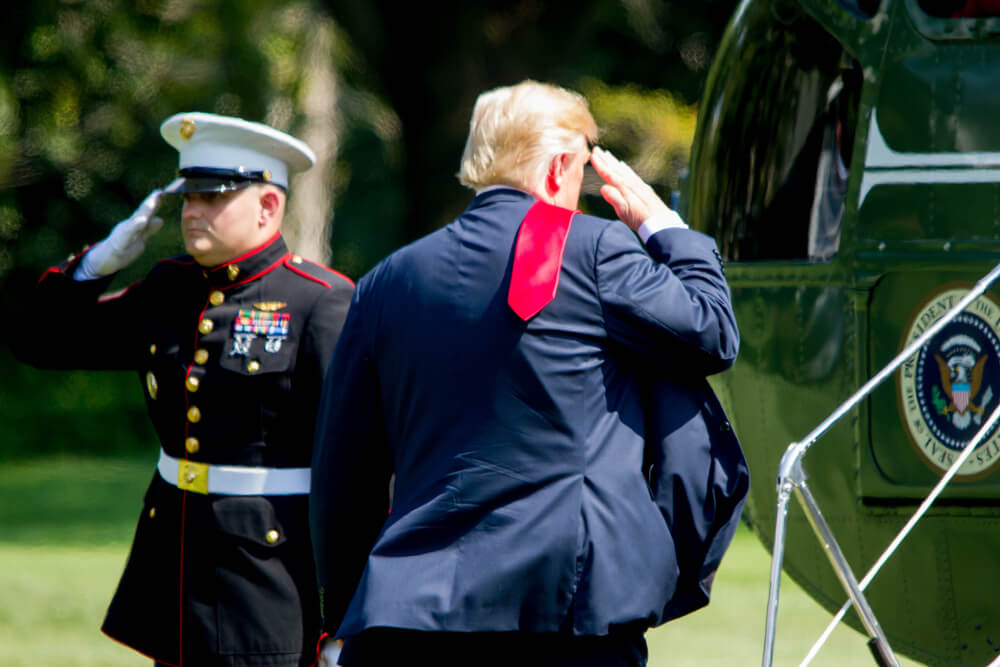 Trump seems not to appreciate that deterrence depends on the ability to mount a credible defense
This is dangerous, not least because 28,000 US troops are stationed in South Korea, which the US is obliged by treaty to defend.
Trump’s diplomatic foray will fail if success is defined as persuading Kim to give up his nuclear weapons.
Moreover, the diplomacy’s substance and form—conducted unilaterally, taking the South Korean government by surprise—is likely over time to undermine the credibility of US security guarantees.
Rather than one Korea with nuclear weapons, we could well find ourselves with two, increasing the prospect of war on the peninsula after three-quarters of a century.
Worse, the conditions that gave rise to nuclear stability during the Cold War will be extremely difficult to replicate, raising the specter of a nuclear weapon being used for the first time since 1945.
Richard Haass, President Emeritus of the Council on Foreign Relations, senior counselor at Centerview Partners, and Distinguished University Scholar at New York University, previously served as Director of Policy Planning for the US State Department (2001-03), and was President George W. Bush's special envoy to Northern Ireland and Coordinator for the Future of Afghanistan.
