At midnight between 21 and 22 August, the United States imposed a 50 per cent tariff on about $20 billion worth of Canadian goods. A few days earlier, Donald Trump had claimed that the agreement was practically concluded.
When the talks broke down, Canada suspended them and announced dollar-for-dollar retaliatory tariffs. A relatively small share of total Canadian exports is affected, but the political weight of the move far exceeds that 5 per cent figure.
Two countries with one of the world's most deeply interconnected economies and a decades-old system of trade rules are once again negotiating under the threat of punitive tariffs that, until recently, would have been unthinkable between such partners.
That is a good picture of Trump’s second term. American military, financial and technological power remained enormous, but the way it was used changed. Tariffs, sanctions, withdrawal of benefits, reductions in security cooperation and public threats of force became interchangeable tools for almost every type of dispute.
Partners are offered deals under pressure, while the president frequently changes the terms halfway through negotiations. As a result, countries are increasingly considering how to reduce the costs of American unpredictability.
The pattern was evident even before his inauguration on 20 January 2025. On 7 January, Trump refused to rule out military or economic coercion to acquire Greenland and to control the Panama Canal. He spoke of Canada as a possible American state. In March, the Pentagon was ordered to develop options for the United States to secure unrestricted access to the Panama Canal.
From the outset of his term, it became clear that alliances, treaties and decades of cooperation no longer guaranteed that Washington would not resort to methods previously reserved for its adversaries.
Tariffs have become a substitute for politics
In February 2025, Trump announced tariffs of 25 per cent on most goods from Canada and Mexico and an additional 10 per cent on Chinese imports.
Delays, exceptions and new deadlines followed, then came special duties on steel, aluminium and automobiles, and on 2 April a base rate of 10 per cent on almost all American imports, with significantly higher rates for dozens of states.
Financial markets reacted sharply, so many of the measures were soon temporarily halted. In the conflict with China, additional tariffs at one point reached 145 per cent.
The trade policy of the world's largest economy has been turned into a series of ultimatums, the size and duration of which can be changed by a single presidential announcement.
Trump’s supporters can point to certain concessions that Washington has secured, but it is more difficult to demonstrate a stable system that endured after those victories. Tariffs have been used in disputes over the trade deficit, fentanyl, migration, defence spending, taxes and regulation.
The International Emergency Economic Powers Act does not give the President the authority to impose broad, global tariffs in the way the administration has been using it
In its crudest form, Trump’s policy amounts to pressure exerted through American power. If the other country does not accept his demands, it faces the threat of tariffs, sanctions, more expensive access to the American market, or weakened security support.
Such pressure may yield short-term concessions, but it simultaneously encourages partners to look for ways to reduce their exposure to American decisions in future.
On 20 February this year, the Supreme Court ruled that the International Emergency Economic Powers Act does not give the President the authority to impose broad, global tariffs in the way the administration has been using it.
The White House immediately sought other legal bases, including Section 338 of the Tariff Act of 1930, which it invoked in its most recent showdown with Canada. This confirms that, for this administration, customs duties are not a temporary tool but a fundamental means of managing external economic relations.
The domestic balance does not justify the cost of the experiment
If the trade shake-up had produced exceptional growth, a strong industrial cycle and demonstrably lower costs, Trump would have a simple answer for critics. Data from the summer of 2026 do not provide such an answer.
Real GDP grew in the second quarter at an annual rate of 1.5 per cent, down from 2.1 per cent in the first quarter. In July, the number of employees outside agriculture fell by 23,000. Annual inflation was 3.4 per cent, and energy was 14.7 per cent more expensive than a year earlier.
Higher revenues from tariffs have come nowhere near solving the fiscal problem
The US economy is not in recession, but the results so far do not justify the cost of Trump’s trade policy. He deliberately disrupted relations with the largest trading partners, claiming this would accelerate growth, bring industrial production back to the US, and lower costs for Americans.
After a year and a half, growth is modest, the labour market has weakened, and prices remain above the Federal Reserve's target.
The Congressional Budget Office expects a deficit of about $1.9 trillion in fiscal year 2026, while the federal government's debt to creditors outside the federal system could reach about 101 per cent of GDP, exceeding the size of the entire American economy. Higher revenues from tariffs have come nowhere near solving the fiscal problem.
Conditional alliance
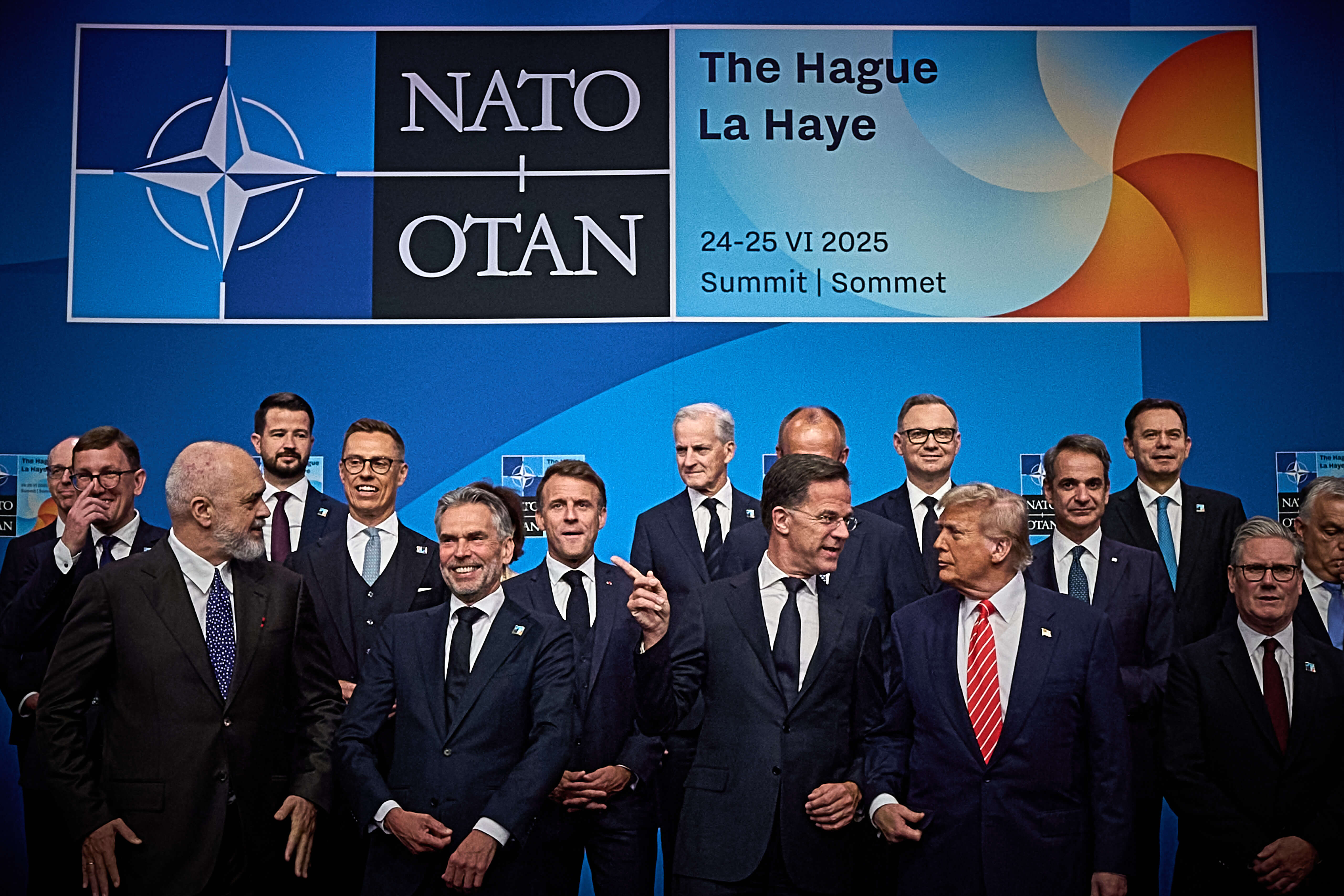
Trump often presents the increase in European defence spending as proof of the success of his NATO policy. In The Hague in 2025, the Allies adopted the goal of allocating 5 per cent of GDP to defence and broader security needs by 2035.
Yet that shift says much less about Trump's success than about the growing fear among European countries that they can no longer rely on American protection as they once did. During the campaign, Trump recounted how he told an ally that if he did not pay enough, he would encourage Russia to do “whatever it wanted.”
Today, Europe is investing more while weighing two dangers: Russia, and the possibility that American aid will be conditioned by the president's judgement of who has paid enough.
According to Putin, the belief persisted that a personal relationship would subsequently produce results
In March 2025, Ukraine saw how that logic works. After a meeting in the Oval Office that turned into a public humiliation of Volodymyr Zelenskyy in front of the cameras, with Trump and Vance accusing him of ingratitude and of not handling the war with Russia well enough, Washington temporarily suspended military aid and intelligence sharing.
Both were restored when Kyiv, at the Jeddah talks, accepted the American proposal for a thirty-day ceasefire. Access to US weapons and intelligence has become a lever with which to pressure a country defending itself against Russian invasion.
According to Vladimir Putin, a different standard was applied. At the G7 summit in June 2025, Trump said that expelling Russia from the G8 after the annexation of Crimea had been a mistake. Two months later, he received Putin on American soil in Alaska, without the Ukrainian president at the table, and again spoke of his “fantastic relationship” with the Russian leader.
The three-hour meeting ended without a truce or peace agreement, while Russian officials presented it as a diplomatic gain for themselves. Early concessions were demanded from the Allies; according to Putin, the belief persisted that a personal relationship would subsequently produce results.
Asia was given the same reason to be suspicious
In August 2026, Trump, without prior coordination, ordered the Pentagon to significantly scale back the Ulchi Freedom Shield exercise with South Korea. Both American and South Korean officials were taken aback. The exercise was shortened from eleven to five days, with reduced field training.
Trump cited the cost, Seoul’s refusal to support US policy towards Iran, and his good relationship with Kim Jong Un. Pyongyang did not offer any concessions in return.
Kim Yo Jong dismissed the reduction in exercises as inadequate and, on 20 August, while the shortened joint US–South Korean military drill was still under way, North Korea launched about ten short-range ballistic missiles.
Taiwan is another example of how Trump is turning the security of American partners into a tradable commodity. The Trump administration approved a record $11.1 billion arms sales package in December 2025, but the next package, worth about $14 billion, sat on the president’s desk for months.
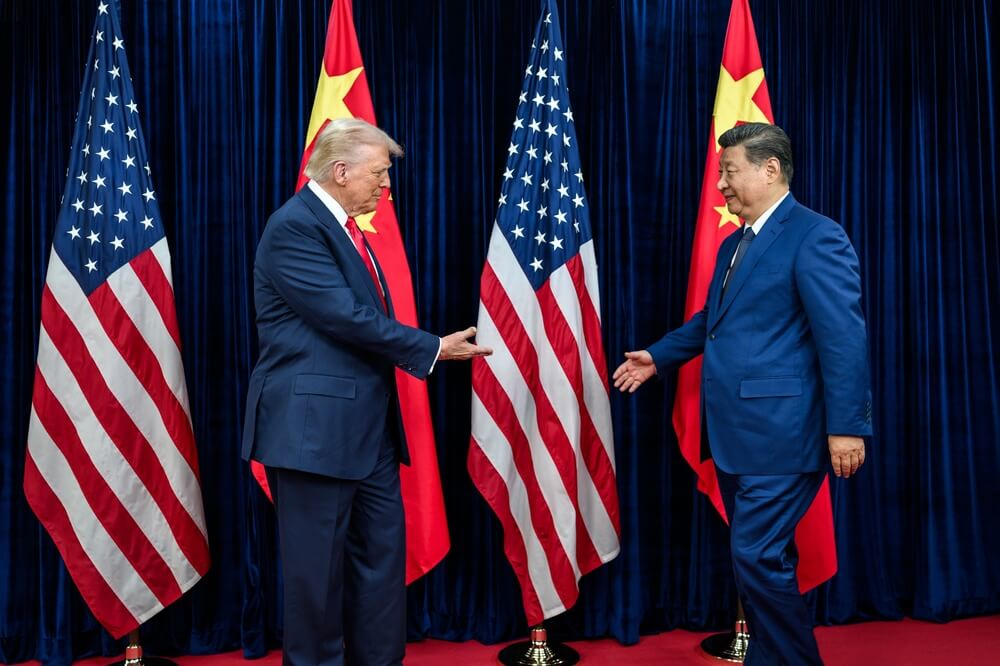 If Beijing starts to think that US support for Taiwan might vary depending on trade negotiations with China, it weakens the very factor that should prevent an attack
After meeting Xi Jinping, Trump described it as a “very good negotiating chip”, said he was keeping it on hold, and tied the decision to China. His top diplomat for East Asia then had to confirm before Congress that arms sales to Taiwan were not contingent on negotiations with Beijing.
Deterrence only works if the adversary believes it knows how far America will go. If Beijing starts to think that US support for Taiwan might vary depending on trade negotiations with China, it weakens the very factor that should prevent an attack.
Trump has turned a package of weapons intended to defend Taiwan into a bargaining chip with Beijing. This has opened up a much more dangerous question: what else in Taiwan’s security could become part of some future bargain with China?
Iran is revealing the cost of a dead-end policy
The most serious consequences have emerged in the Middle East. When he ordered strikes on Iran's nuclear facilities in June 2025, the US intelligence community had estimated, several months earlier, that Iran was not building nuclear weapons, and that the supreme leader had not reauthorised the weapons programme suspended in 2003.
At the same time, Iran had large stockpiles of uranium enriched to 60 per cent and had severely restricted international verification. The nuclear risk was real, but determining whether it had taken an immediate decision to build the bomb was another matter.
Trump rejected this distinction. When asked about Director of National Intelligence Tulsi Gabbard’s assessment, he said he did not care what she said, then publicly claimed her assessment was wrong.
In February 2026, the United States and Israel launched a new, much broader campaign against Iran. On 18 March, Gabbard stated in a written submission to the Senate that the US intelligence community had not detected any Iranian attempts to restore the ability to enrich uranium after the 2025 strike. At the hearing, she confirmed that this statement reflected the community’s assessment.
Even before the war, Iran posed a serious threat. The problem is that Trump chose war as the worst possible option, even though his own intelligence services did not confirm the full extent of the danger that the administration used to justify the attack.
Trump said Oman would have to act like everyone else or the United States would “have to blow it up”
The bombing brought neither peace nor agreement. Iran responded with missile and drone strikes across the Gulf, targeting the United Arab Emirates, Saudi Arabia, Qatar, Kuwait and Bahrain, countries that have relied on the US military presence for decades as part of their security. There were fatalities in Abu Dhabi, explosions and interceptions shook Dubai, and later energy facilities in Saudi Arabia, the UAE, Qatar, Kuwait and Bahrain were also targeted.
The war launched by Washington to eliminate a single threat has instead spread Iranian retaliation across almost the entire Gulf. Trump entered the war without a clear exit strategy and is now trapped between a conflict he cannot easily win and a peace whose terms he cannot dictate.
On 17 August, Brent crude closed at $90.87 per barrel. On some days, only a few large merchant ships passed through Hormuz, far below normal traffic through the strait, which before the war carried approximately one fifth of the world’s crude oil and liquefied natural gas.
Oman shows how routine the language of coercion has become. It is a country with almost two centuries of good relations with the United States and a long-standing role as a mediator between Washington and Tehran.
Speaking in May about a possible Iran–Oman arrangement for Hormuz, Trump said Oman would have to act like everyone else or the United States would “have to blow it up”. He repeated the threat of military action against Oman in August while Muscat was attempting to mediate.
Washington thus threatened with force the very country whose diplomatic value for years has been its maintenance of the channel to Iran.
America is losing what money cannot restore
The deepest cost of the second term is evident in the erosion of trust. The Pew Research Center surveyed more than 42,000 people in 36 countries this spring. In half of those countries, 37 per cent or fewer citizens had a favourable opinion of the United States; in the other half, 35 per cent or fewer respondents believed that America contributes to peace and stability.
In Canada, the share of citizens who consider the United States a reliable partner fell from 83 per cent in 2022 to 35 per cent in 2026.
The domestic political balance is no longer in Trump's favour either. Reuters/Ipsos recorded his support at 33 per cent in mid-August, the lowest level of his current term. Four-fifths of Americans fear that the conflict with Iran will drag on.
The Republicans’ advantage on immigration has almost disappeared, while voters now trust the Democrats somewhat more to manage the economy. Trump approaches the midterms facing trade disputes with allies, a war without a clear outcome, and an economy not strong enough to push all that into the background.
 After a year and a half, the United States is no safer, alliances are no stronger, and adversaries are no more reliably deterred
Trump can point to a few figures that at first glance appear to prove his success. NATO allies are spending more on defence, some countries have accepted trade concessions, tariff revenues have increased, and Iran has suffered heavy military losses. But presidential politics is measured not by isolated outcomes, but by what they amount to collectively.
After a year and a half, the United States is no safer, alliances are no stronger, adversaries are no more reliably deterred, and the American economy has not gained enough strength to justify the cost of such extensive disruption.
At the same time, American partners are increasingly planning on the assumption that Washington’s position can change overnight, without consultation and at the whim of one man.
America has a military network that China and Russia lack, deep financial markets, the dollar, an unmatched technological base, and dozens of countries that have spent decades building their security on the assumption that America’s commitment will hold even when the president changes. Trump turns that assumption into a variable.
In 2027, the greatest danger for Washington will not be the dramatic collapse of alliances, but the world slowly adapting to a less dependable America.
Canada will accelerate its search for trade alternatives, Europe will invest in capabilities that reduce dependence on American decisions, Asian partners will plan on the assumption that Washington’s support may be weaker, conditional or withdrawn, and the Gulf states will increasingly use ties with China, India and Europe as a hedge against sudden US policy changes.
The greatest loss for the United States will not occur when an ally publicly abandons it, but when allies begin making their most important decisions as though American support is no longer something they can rely on.
After 1945, American power had one advantage that no other great power has been able to match. States wanted to be part of the Washington-led order because American markets, the dollar, military protection and political reliability together offered more security and prosperity than any alternative.
Trump is destroying precisely the most valuable part of American power, as though it could be rebuilt overnight. He can force an immediate concession with tariffs, by issuing threats to secure higher defence spending, or by exerting pressure to bring a partner to the negotiating table. But by none of those methods can he compel others to trust him.
If Trump’s second term is remembered for anything, it will be for the paradox that the president who promised to make America great again set about dismantling the very thing that had long made its power greater than the sum of its military, its economy and its currency.
Rather than making America more indispensable, Trump has driven its allies towards the opposite goal: learning to live without it.
