The United States and Israel have launched a war that the Gulf states invested heavily in diplomacy to prevent. Now they find their civilian infrastructure under daily attack.
If there is a silver lining to the war, it is that by retaliating so broadly, Iran has put to rest concerns about it stoking existing divisions among the Gulf states.
In recent months, the United Arab Emirates and Saudi Arabia had landed on opposite sides of armed conflicts in Sudan and south Yemen.
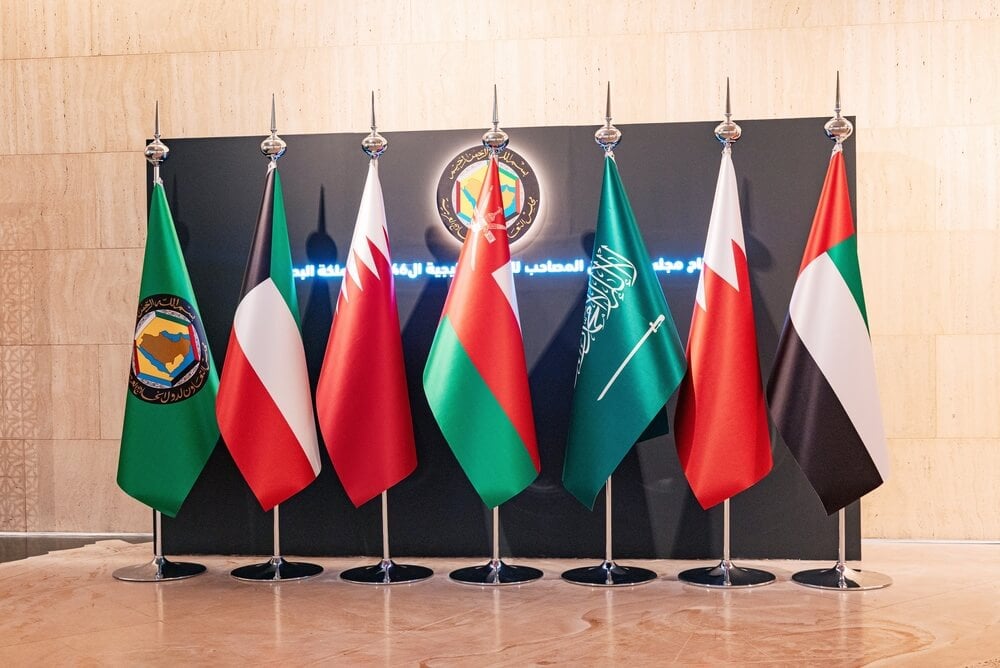
But now the Gulf is united in anger at Iran for its aggression, in frustration with the US for ignoring its warnings, and in confusion about what comes next.
Iran’s targeting of infrastructure and US bases across the Gulf reflects deliberate strategy.
Commentators on Iranian state television have noted that Kuwait was a burgeoning global hub before 1991 but never fully recovered that status after the Gulf War.
The Islamic Republic thus appears to recognize that forcing the US to return to the negotiating table requires not only disrupting global energy markets, but also leveraging the damage it is doing to the Gulf’s reputation for safety and stability.
No good options
The Gulf Cooperation Council’s six member states have no good options. Pursuing diplomacy too eagerly could anger a US president intent on absolute victory.
It would also risk legitimizing a regime that has brazenly attacked the GCC on an unprecedented scale.
GCC countries feel frustrated at having lost their ability to shape key outcomes in their own neighborhood
Increasingly, GCC countries feel frustrated at having lost their ability to shape key outcomes in their own neighborhood.
This frustration has fueled speculation that the UAE, Saudi Arabia, or even Qatar could act offensively against Iran, essentially joining the war.
Near-daily reports – often of Israeli origin and always quickly denied – have alleged that such operations are already underway.
The UAE is the focal point of such speculation. Having mounted a stellar defensive operation against an extraordinary volume of Iranian strikes, there is a case for the UAE to reassert deterrence by striking Iranian targets.
But Emirati leaders have been wary of assuming a belligerent role, given what is at risk.
Saudi Arabia has absorbed fewer strikes and kept a tighter lid on information.
But the Saudis have historically seen themselves as leaders within the GCC and may look for opportunities to assert that role.
Ideally, whatever effort they undertake would lead the way to a diplomatic resolution, but given the scope and scale of the Kingdom’s military capabilities, it is easy to see why the Israelis seem to want them involved.
Competitive dynamics
It is also worth considering whether competitive dynamics among the GCC could reemerge as the war continues.
The UAE and Saudi Arabia are competing to position themselves as US President Donald Trump’s indispensable Gulf partner.
If Trump signals a strong interest in Gulf participation in attacking Iran, one or more Gulf leaders could see an opportunity to gain ground against the other.
Once one Gulf state strikes Iran, it could create pressure on the others to follow.
The first priority across the Gulf is stopping the Iranian strikes, reopening transit routes, and restoring energy production
For now, the first priority across the Gulf is stopping the Iranian strikes, reopening transit routes, and restoring energy production.
But these states are also acutely aware that if the Islamic Republic emerges from this conflict intact and unmoderated, it will be emboldened and may be more likely to pursue a nuclear weapon.
Given the severity of Iran’s aggression, the UAE and Saudi Arabia in particular will only support a resolution that meaningfully mitigates the threat of further Iranian attack.
If diplomacy cannot deliver that outcome, the UAE, Saudi Arabia, and other Gulf states may, individually or collectively, consider other options.
Strategic patience
The most likely near-term posture for the Gulf states is strategic patience – ironically, an approach Iran itself has long favored.
The UAE and Saudi Arabia, especially, will track the war’s trajectory closely, looking, perhaps in vain, for signs that the US and Israel have a cogent strategy with achievable objectives.
If a decisive outcome appears within reach, the UAE and possibly the Kingdom could opt to join the effort, contributing air power or other resources at a relatively low-risk moment when the US-Israeli coalition already appears poised to win.
If, instead, the conflict begins to look more like an extended quagmire, the Gulf will move toward diplomatic facilitation, working to generate offramps that the US could accept without appearing to concede.
 Strategic patience may be the wisest approach for now, but the longer the war goes on, the more the Gulf’s credibility as a stable global hub erodes
Strategic patience may be the wisest approach for now, but the longer the war goes on, the more the Gulf’s credibility as a stable global hub erodes.
And yet, if the GCC countries are seen to push the US toward diplomacy – consistent with Iran’s own strategy of coercing the Gulf to pressure the US – it sets a dangerous precedent.
The next time Iran wants something from the US, all it would need to do is attack the GCC to get it.
Of course, the GCC countries could consider a partial decoupling from the US to take the targets off their backs.
In the past, they have flirted with hedging their US ties by seeking partnerships with China, which has vital interests in the Middle East and is hinting at a willingness to help resolve the current conflict.
But China’s primary concern – maintaining its flow of energy imports – can be addressed without major security investments or geopolitical confrontation with the US.
Its current strategy is working, and it is unlikely to shift unless the regional order fully collapses.
Neither a Gulf-state offensive nor a war-ending deal is likely in the immediate term.
But in the absence of a clear US strategy for the region, the Gulf will seek to shape events more actively.
One or more of these states, either in concert or independently, will eventually begin to assert their own vision of how the US-Israeli war on Iran should end.
Don Aviv is CEO of Interfor International.
Sam Worby is a senior adviser to Interfor International and a geopolitical risk consultant specializing in Iran and the Gulf states.
