A growing rift between Saudi Arabia and the United Arab Emirates in Yemen has left their proxies across the Horn of Africa and Red Sea fretting about how it will impact them.
Among humanitarians, there is fear that conflict and instability may increase amid only intermittent focus from Washington on Sudan, Somalia and Yemen.
Saudi-UAE rivalry burst into the open at the end of last month in Yemen, where the two monarchies back different parties to the conflict, as they do in Sudan and Somalia, part of a region whose resources they covet.
They have used state fragmentation to pursue their own geopolitical advantage by backing different parties and power centres.
Both Riyadh and Abu Dhabi enjoy close ties with Donald Trump. The outcome of their power struggle may partly hinge on which Gulf sheikhdom is most able to sway the US president, with serious implications for their proxy conflicts in the region.
Will Trump sustain the focus and attention needed to follow the ever-growing intricacies of the region’s complicated chess board amid the scramble for power and resources? Will he favour one side or, more likely, attempt to keep both in line with whatever Washington deems important to its interests?
Washington plays referee
The US has not been vocal about the Saudi-UAE friction so far as it tries to stay above the tensions of recent months, but it has responded to some of the requests of each country, particularly over Sudan, where the brutal war recently passed the 1,000-day mark.
“Sudan has become a political football between key US partners in the Middle East, with Washington now playing referee,” wrote the Sudanese analyst Kholood Khair.
For Riyadh, at the urging of Saudi Crown Prince Mohamed bin Salman last November, Trump promised to intervene in Sudan. “Arab Leaders from all over the World, in particular the highly respected Crown Prince of Saudi Arabia, who has just left the United States, have asked me to use the power and influence of the Presidency to bring an immediate halt to what is taking place in Sudan,” Trump wrote.
The apparent leeway shown by the administration towards Abu Dhabi can be partly explained by the UAE’s peace treaty with Israel signed in 2020
For Abu Dhabi, the White House pushed to prevent Congress last year from limiting US arms sales to the UAE over concern they would reach Sudan’s Rapid Support Forces (RSF), which has been fighting the Saudi-backed Sudan Armed Forces (SAF) since April 2023.
The apparent leeway shown by the administration towards Abu Dhabi, despite its backing of RSF “génocidaires”, can be partly explained by the UAE’s peace treaty with Israel signed in 2020.
The Abraham Accords normalising ties with Israel were also signed by Sudan, Bahrain and Morocco. But Saudi Arabia has resisted normalisation because of the Gaza war.
Some US lawmakers want to designate Sudan’s RSF as a foreign terrorist organisation, which would complicate Abu Dhabi’s backing of the group.
The UAE was helped by the US formally designating the Egyptian, Lebanese and Jordanian branches of the Muslim Brotherhood as global terrorists on 13 January.
The move puts the SAF at risk given its own ties to the movement and helps to give the Emiratis justification to its claim it is helping to fight extremism in Sudan. SAF is backed not only by Saudi Arabia but also Egypt, and it has received arms from Iran and Turkey.
From Yemen to Somaliland, Gulf competition reshapes the Red Sea
The competition over strategic resources and access reached a milestone in Yemen in late December when Saudi Arabia bombed the home region of Aidarous al-Zubaidi, the leader of a UAE-backed faction called the Southern Transitional Council, which has been pushing for an independent state in southern Yemen.
In Somalia, Abu Dhabi supports secessionists in the breakaway region of Somaliland, which in December was recognised as an independent state by Israel, the first country in the world to make such a move. Somaliland, for its part, said it would sign up to the Abraham Accords, giving Israel a diplomatic boost.
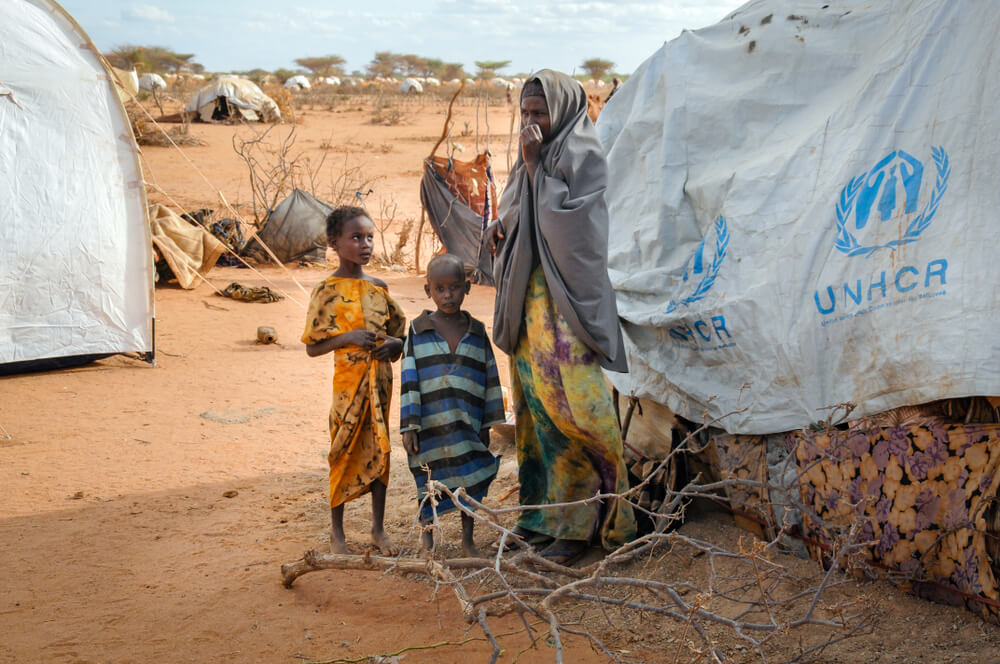 Aid needs in Sudan, Yemen and Somalia remain severely under-funded not only by the US but also by other key European donors
Mogadishu hit back at the UAE because of its ties with Israel and cancelled all port management and security co-operation agreements with Abu Dhabi.
Somalia has also accused the UAE of using its territory to help Yemeni separatist leader al-Zubaidi leave the country.
Diplomacy in the Red Sea is further complicated by the strained ties between Ethiopia and Eritrea, which may be on the brink of renewed war.
Ethiopia, another UAE ally, has signalled that it may also be prepared to recognise Somaliland's independence in a trade-off that would see it establish a naval base along the breakaway state's coast. Eritrea, for its part, has shifted to become a backer of the SAF in Sudan.
Saudi-UAE rivalry shows no sign of diminishing. A Saudi media campaign in recent days has intensified criticism of Abu Dhabi, suggesting any rapprochement will take time.
But it is certain that humanitarian suffering will continue. The RSF is on the brink of taking more key towns in the Kordofan region of Sudan despite pleas from the UN and others to alleviate civilian suffering.
Aid needs in Sudan, Yemen and Somalia also remain severely under-funded not only by the US but also by other key European donors as they keep a close eye on investment flows from the Gulf.
The shift to transactional politics globally is only serving to entrench hardened attitudes towards African suffering.
