Investors are concerned about the Iran war and its impact on the economy. This is something that has been well analysed.
However, we must remind that the largest risk may not come from an energy prices shock, which futures discount as temporary, but from another set of policy mistakes from governments and central banks.
If governments decide to spend and print to present themselves as the solution to the Iran war impact, and central banks decide to hike rates due to a geopolitical event that has nothing to do with credit demand and money supply, the stagflation risk may appear.
However, the two trillion-dollar crisis that no one seems to be concerned about may be more relevant: A private debt crisis.
Emerging risks in private debt and equity
A financial crisis based on private debt and private equity risks would not be like the one in 2008, but it could cause a long, painful shock to credit, investment, and growth around the world.
The threat today is not a sudden bank failure but rather opaque, illiquid structures, a huge wall of refinancing, and the slow repricing of risk after ten years of cheap and abundant money.
Private credit and leveraged portfolios are the most important issues. In the past ten years, private credit has grown from a small strategy to a multi-trillion-dollar part of global finance. Its assets are now well over $2 trillion and are expected to keep growing.
Every year, we see more loans going to companies that have trouble making their interest payments, especially in cyclical and software industries, with investors looking for some real returns.
Prudent and profitable private equity will likely come out of this period stronger, proving that good analysis and prudent management are key factors to attract investors
Investors that suffered policy financial repression saw that sovereign debt did not provide any real economic return and were forced to take more risk for small real returns.
Private equity has made this weakness worse. Buyout funds that were heavily leveraged in 2020–2022 now must refinance at rates that are often twice as high as the original cost of debt, just when valuations are falling and exit markets are full.
In this environment, many private equity funds will post large losses from over-leveraged investments. However, we must separate those prudent private equity funds that did not fall into the easy money trap from those that followed a “fear of missing out” strategy.
Prudent and profitable private equity will likely come out of this period stronger, proving that good analysis and prudent management are key factors to attract investors.
Private credit and leveraged loan defaults: systemic concerns
Many companies in the most aggressive private equity funds’ portfolios, especially those in software and consumer-facing industries, have negative free cash flow and rely on being able to borrow money and get good exit prices to keep making money.
The "refinancing wall" and the cycle of defaults are significant risks, but not ones that will affect all private equity.
The refinancing wall is the most immediate concern. Hundreds of billions of dollars in private loans and leveraged facilities will come due in the next two years.
Analysts say that middle-market maturities will rise from about $100 billion in 2025 to more than $150 billion in 2026. Most of these loans were signed at very low rates in the 2019-2021 period of negative real rates.
Refinancing debt at current spreads with higher base rates makes interest payments soar, which pushes the weakest borrowers to restructure or default.
The number of defaults on private credit and leveraged loans is already rising.
Fitch stated that the default rate in its U.S. private credit portfolio has hit a record 9.2% for 2025, up from 8.1% in 2024, from 302 borrowers. Smaller issuers with EBITDA below 25 million dollars accounted for most of the defaults.
For U.S. leveraged loans, a recent Morningstar/LSTA update mentioned a payment default rate of 1.38% by amount and 1.36% by issuer as of late February 2026.
FTI Consulting survey reports that the U.S. leveraged loan default rate reached 5.6% by late 2024, a decade high largely driven by distressed exchanges, so-called “amend‑and‑extend” and liability‑management deals.
The most likely risk for banks is not a domino of defaults as in 2008 with subprime mortgages, but the need to cut access to credit and take preventive measures and write-offs
Fitch now projects leveraged‑loan default rates in 2026 around 4.5%–5.0%, in line with 2025 and well above the long‑run average near 1.5%–2%.
These figures are not enough to justify a financial crisis but are clearly a concern for investors looking for attractive investments in private companies.
Downgrades and failed refinancings could make managers lower the value of their portfolios, show that their valuations are too high, and put pressure on semi-liquid structures to redeem.
This trend becomes self-reinforcing during a severe downturn: lower valuations eat away at equity cushions, which makes lending standards stricter, which lowers exit prices and extends the drought in distributions to limited partners.
Gates are likely and even inevitable. Many of the more aggressive funds may have to change the terms for investors to avoid large losses.
European and UK regulators often say that private credit funds don't use much leverage, but the risk to the system comes from the fact that these funds are connected and hard to see through.
Global banks' exposures to private credit and hedge funds can reach several trillion dollars. However, the most likely risk for banks is not a domino of defaults as in 2008 with subprime mortgages, but the need to cut access to credit and take preventive measures and write-offs.
We must remember that banks have increased core capital at very significant rates in the past years, so the situation in terms of solvency and balance sheet is not even close to the challenges of 2008.
A silent credit crunch that leads to weaker growth are two significant impacts on the economy.
A slow credit crunch
If private debt and risky private equity caused a crisis, it would probably be a slow credit crunch instead of one big disaster as in 2008.
As lenders become more prudent, small and medium-sized businesses, especially those that can't access the public market, may have to pay more to borrow money, deal with stricter covenants, or even be turned down for credit, which makes it harder for them to invest and hire.
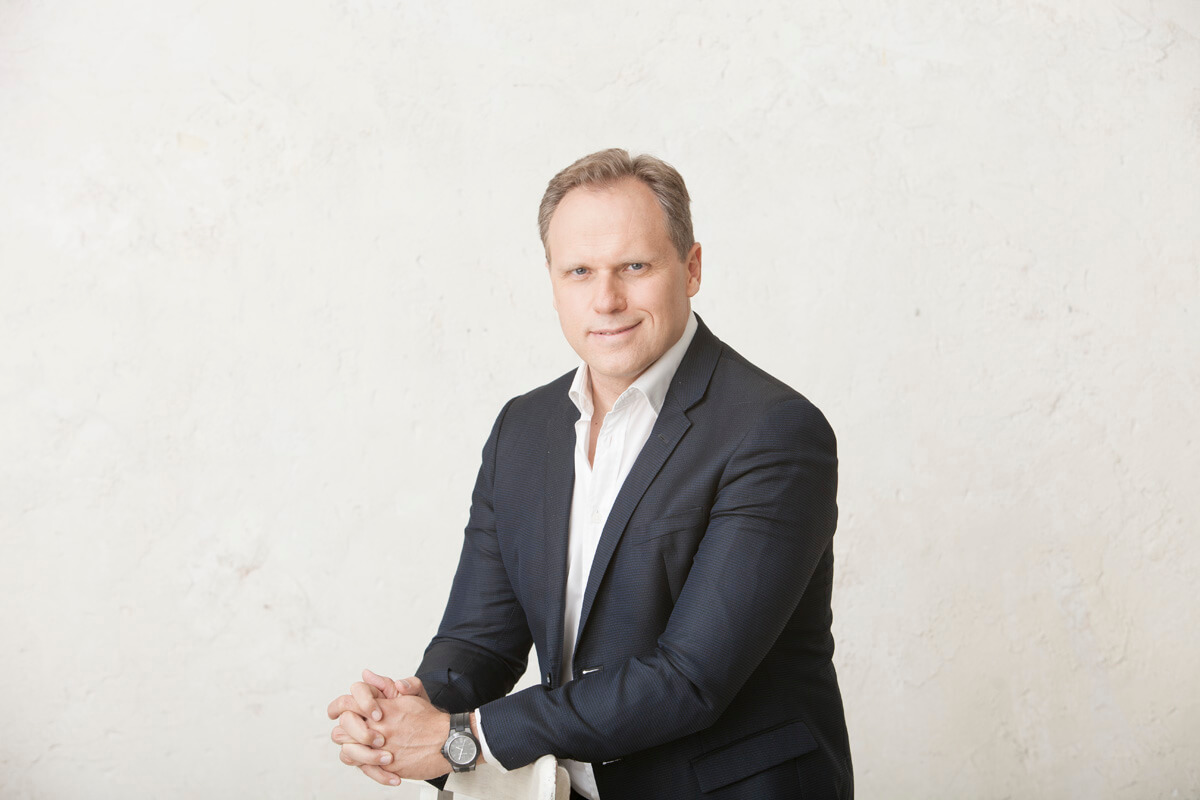 Even if the banking system doesn't crash, tighter credit, falling valuations, and shaken confidence can add up to a few percentage points cut in global GDP - Daniel Lacalle
Technology, healthcare, business services, and some consumer niches have relied heavily on leveraged buyouts, roll-ups, and sponsor-backed expansion. If these companies went out of business, there would be consolidation, failures, and job losses.
All this may imply lower economic growth, weaker productivity, and business zombification, which is when companies stay in business despite being unable to pay interest expenses with operating profits.
Emerging markets that have borrowed significantly from private entities could see a sudden stop, as new money goes to US dollar and safer assets, putting pressure on currency exchange rates and local banks.
Even if the banking system doesn't crash, tighter credit, falling valuations, and shaken confidence can add up to a few percentage points cut in global GDP over the course of several years.
The problem is that governments and central banks will not react, improving competition and reducing perverse incentives.
If this risk becomes a reality, they will react by increasing an already excruciating regulation and cutting rates, increasing liquidity to address market concerns.
All those measures will be the equivalent of another kick to the can, as we have seen since 2008, and one that will – again – benefit very large institutions and companies that can navigate the excess of regulation and be part of the first recipients of new money, while small businesses and families will likely suffer the impact of tighter credit conditions.
