As the pillars of the post-1945 global order—support for human rights, multilateral cooperation, the rule of law, humanitarian aid, and environmental stewardship—crumble, and as country after country reduces or even terminates funding for international organizations, the next United Nations secretary-general faces a staggering task. Global peace and prosperity may depend on his or her success.
The United States has led this most recent “hollowing out” of the world’s multilateral institutions, announcing in January 2026 that it would cease to participate in and fund 31 UN entities, including the UN Human Rights Council, and 35 non-UN bodies.
Under President Donald Trump, the US has withdrawn from the World Health Organization and the UN Educational, Scientific, and Cultural Organization.
And America is not acting alone: Argentina has officially left the WHO, and Nicaragua’s withdrawal from UNESCO will take effect this December.
Of the world’s 195 countries, only 125 are currently states parties to the Rome Statute of the International Criminal Court, with Niger, Burkina Faso, and Mali following Burundi and the Philippines out the door (the major nuclear powers—the US, China, and Russia—are not parties).
No country can leave the International Court of Justice, the UN’s judicial organ, without exiting the UN itself, but four of the Security Council’s five permanent members—the US, Russia, China, and France—have not accepted the optional clause recognizing the ICJ’s jurisdiction as compulsory. Only 75 countries have done so.
Not surprisingly, human-rights abuses and crimes against humanity can be perpetrated with impunity.
Disruption from within
These are not the only ways that the multilateral order has been weakened.
Disruption from within can be as damaging as defection. A refusal to be collegial has always made agreement among the UN Security Council’s permanent members nearly impossible on major issues.
But now, the establishment of rival organizations, such as Trump’s pay-to-play “Board of Peace,” and the lack of full cooperation from many other member countries have severely undermined the UN’s peacemaking powers.
As a result, the international rule of law, gradually built up since the 1868 Declaration of St. Petersburg first sought to regulate the conduct of war, is rapidly losing credibility.
Despite all the treaties designed to protect them, children living in conflict zones are more at risk than ever
In today’s 65 state-based conflicts, including eight international wars, the distinction between combatants and noncombatants has become increasingly blurred.
Schools and hospitals are repeatedly threatened or even targeted, ignoring the more than century-old protections afforded by the 1907 Hague Convention.
Despite all the treaties designed to protect them, children living in conflict zones are more at risk than ever.
Multilateralism remains a viable option
Some believe that the end of US hegemony and the existing institutional impasse mean that multilateralism is necessarily moribund.
But while China’s rise is confirming a shift toward multipolarity, with multiple centers of decision-making, multilateralism remains a viable option.
In fact, given the need to deliver global public goods like climate action and public health on which we all depend, everyone will suffer if countries cannot find better ways of cooperating, whether through regional or other arrangements, to achieve agreed and specific goals.
But a bigger question has been raised by Canadian Prime Minister Mark Carney in his landmark Davos speech last January, and by Finnish President Alexander Stubb in his recent book The Triangle of Power.
Can other powers find a basis within the UN Charter to meet agreed-upon global objectives even as America, Russia, and China resort to unilateral action?
Here, the first step is for countries to demonstrate that they can cooperate on concrete policies absent superpower consent, and override an increasingly hostile international environment.
Fortunately, they are already making progress. Even as America stood aside, 124 countries at the World Health Assembly voted to adopt the WHO Pandemic Agreement (with only 11 countries abstaining), a major achievement for public health.
More than 100 small- and medium-sized countries are backing the proposed UN treaty to prevent and punish crimes against humanity.
Vanuatu, a small island state, recently led a coalition that grew to 132 countries in securing an advisory opinion from the ICJ declaring that inaction on climate change is a breach of international law.
Despite many efforts, not enough progress has been made on regulating cyber technologies and AI, both areas in which America and China are dominant
While no progress has been made on a proposed treaty regulating plastics, consider the success of the UN High Seas Treaty.
Despite enjoying the support of only one superpower (China), the treaty has entered into force, with Sierra Leone and Morocco among the leaders pushing it over the ratification threshold last year (at the time of writing, 93 countries have ratified it).
Similarly, the Ljubljana-The Hague Convention guaranteeing mutual legal assistance on extradition, an initiative led by Argentina, Belgium, Mongolia, the Netherlands, Senegal, and Slovenia, had the support of 80 countries.
It is, of course, true that little progress has been made on the nuclear weapons build-up and on blocking nuclear proliferation.
Several countries have talked about developing or siting such weapons on their soil. And despite many efforts, not enough progress has been made on regulating cyber technologies and AI, both areas in which America and China are dominant.
But there have been other successes. An alternative arbitration system for resolving trade disputes has 34 parties so far.
The EU and the Comprehensive and Progressive Agreement for Trans-Pacific Partnership are considering the possibility of a more structured relationship, which, if India were to join them, could create the biggest trade bloc ever seen.
In direct defiance of Russia, the Council of Europe has led 36 countries and the European Union in expressing their intention to support a special tribunal investigating Russia’s crime of aggression against Ukraine.
Silent majority
Much more can be achieved. Those countries that are neither superpowers nor their satellites control roughly three-quarters of the votes at the International Monetary Fund and the World Bank, represent huge majorities at the World Trade Organization and the WHO, and occupy two of the five permanent seats on the UN Security Council, as well as twelve of the overall fifteen.
Offering even more cause for optimism is a major shift in global public opinion.
The proliferation of wars and conflicts has not pushed citizens into mindless jingoism; rather, an increasing majority recognize the value of cross-border collaboration.
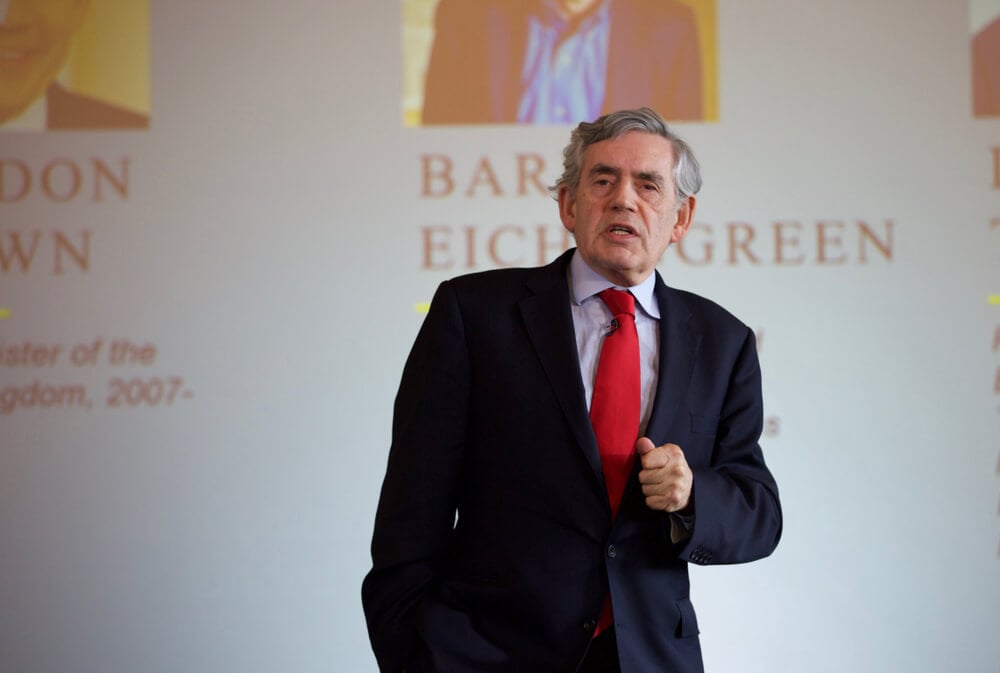 A hitherto silent majority of the world’s population yearns to return to the days of multilateral engagement and international cooperation - Gordon Brown
In a 2025 global survey commissioned by the Rockefeller Foundation, 55% of respondents in 34 countries supported international cooperation on global challenges, “even if it means compromising on some national interests.”
That includes a clear majority of people surveyed in the US, demonstrating that their president’s “America First” agenda is now a minority position.
Despite the current US administration’s coercive approach to diplomacy, Americans can be convinced that acting unilaterally in a multipolar world is short-sighted, and that persuasion and cooperation better serve US interests.
But for the time being, progress will depend upon a coordinated push by the leadership of like-minded powers.
A hitherto silent majority of the world’s population yearns to return to the days of multilateral engagement and international cooperation.
And the evidence suggests that they will not remain silent forever. Our leaders must follow them and recognize that this is the only viable path forward.
Gordon Brown, a former prime minister of the United Kingdom, is World Health Organization Ambassador for Global Health Financing.
