Brazil’s economy is doing well by almost any measure. GDP has grown at around 3% for three consecutive years, unemployment is at historic lows, and inflation has fallen from a post-pandemic peak of over 12% to around 4%.
And yet, with a presidential election coming this October, Brazil—like the United States during Joe Biden’s presidency—appears to be suffering a “vibecession.”
Despite strong macroeconomic data, half of Brazilians believe the economy has gotten worse over the past year, whereas only one in four thinks it has improved.
Such a disconnect is not new. The 2022-24 period was a graveyard for political incumbents in the democratic world.
From the US and the United Kingdom to France and Japan, those in power paid a price for a shock they could not undo through monetary tightening alone.
What made the trend so disorienting was that it persisted even where inflation-adjusted incomes had risen.
This dynamic is now well documented. When wages go up, people attribute it to their own merit; but when prices go up, they experience it as something that was done to them.
Their losses then become anchored in memory, preventing economic stabilization from being fully appreciated.
Memories of the economic pain will remain
Brazil is no exception. In 2024, Brazil’s poorest 40% experienced a higher rate of inflation than other cohorts, because price increases were concentrated in essentials, and President Luiz Inácio Lula da Silva’s approval among low-income voters fell by almost 17 percentage points.
Although inflation for the bottom 40% then fell below the overall rate in 2025, memories of the economic pain will remain.
Moreover, middle- and upper-income groups have also soured on Lula, even as their real income has grown and inflation has been contained.
Lula’s first presidency was followed by one of the worst decades in the Brazilian economy’s modern history
The vibecession has been especially brutal for Lula because voters are not comparing him to his two immediate predecessors, who presided over an economy with average growth barely exceeding 1.4% per year.
Rather, they are judging him against his own first two terms (2003-2011), when GDP growth averaged over 4%, and an entire generation experienced genuine social mobility for the first time.
Moreover, Lula’s first presidency was followed by one of the worst decades in the Brazilian economy’s modern history.
Because the poorest half of Brazilians did not return to their 2014 real income levels until the current term, today’s growth feels like a recovery from past losses, not newfound prosperity.
The aspiration gap
The aspiration gap compounds this feeling. Social media has dissolved the local reference group that once defined what a decent life looked like.
An informal worker in São Paulo’s periphery now scrolls through the same feeds as a middle-class consumer in Seoul or Milan.
When aspirations outpace income, household debt fills the gap
When aspirations outpace income, household debt fills the gap. The share of income devoted to debt service rose from 22% in 2019 to 29.7% by the end of 2025, while more than 80% of households are indebted—an all-time high in Brazil.
Worse, with credit-card revolving rates running above 14% per month, debt service is compressing disposable income, further widening the aspiration gap.
Interest-rate hikes that were supposed to control inflation have ended up deepening the financial distress that feeds economic pessimism. Monetary policy is rubbing salt in the socioeconomic wound.
The quality of jobs
Then there is the quality of jobs. Past investments in education have created the largest cohort of university graduates in Brazil’s history, but the labor market has not caught up.
The share of workers employed below their qualification level has risen from 26% to nearly 38% over the past decade.
With college-educated Brazilians struggling to attain the same prosperity as their parents, many are coming to the dangerous conclusion that macroeconomic policies no longer matter.
When an election is fast approaching, the temptation for any politician would be to abandon the long game and focus on placating voters immediately
When an election is fast approaching, the temptation for any politician would be to abandon the long game and focus on placating voters immediately.
Such an approach often comes in the form of price controls, household credits, fiscal transfers, or any other measure to create the appearance of “doing something.”
But if a government narrows its agenda to focus only on short-term sentiment management, it will eventually find that it has traded away the only policies that could address the underlying causes of the economic anxiety.
In a developing country like Brazil, growth remains the indispensable condition for everything else. When the economy slows, it is the most vulnerable who pay first.
Worryingly, the lesson that many incumbents drew from the Democrats’ 2024 defeat is that industrial policy cannot deliver within an electoral cycle. This attitude must be resisted.
The mismatch between education levels and job creation illustrates precisely where industrial policy is needed. A proactive government would view the green transition as an opportunity rather than a burden.
Reducing inequality
Reducing inequality also matters, and this is one area where Lula’s third term has broken new ground.
After Lula’s first two governments concentrated redistribution at the bottom of the income ladder, he has now begun to address concentration at the top.
Under an income-tax reform this year, the highest earners now face a minimum rate, and the government could still go further.
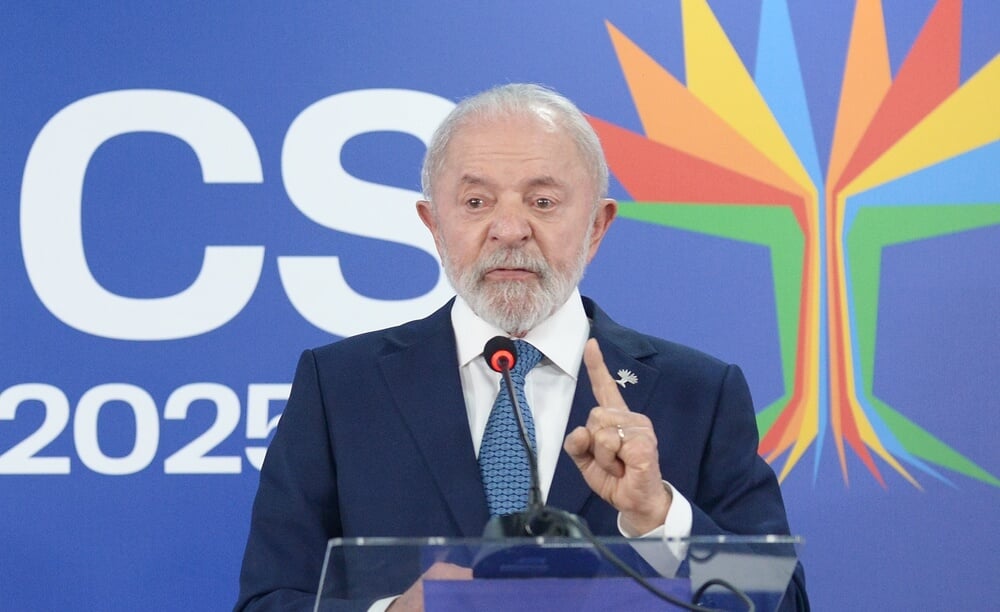 The vibecession is real; but winning the news cycle is not a solution - Lula da Silva
The case for doing so is not only about equity. Progressive taxation is how you create the fiscal space for public investment and services without borrowing at rates that transfer income back to the top through debt service.
Alongside vertical redistribution, Brazil also needs horizontal policies to establish universal floors.
Surveys consistently show that policies with broad and diffuse beneficiaries—like minimum wages or public services—build more resilient coalitions than targeted ones that sort people into givers and receivers.
A workweek reduction, approved recently by the lower house with 71% public approval, fits this logic.
So do public transportation subsidies and expanded health care. The European standard of living that Brazilians see on their phones is built not only on higher wages but on socialization of a significant share of costs.
That cannot happen overnight. A government that abandons structural agendas whenever sentiment turns negative will still be managing sentiments four years later—with nothing to show for it.
The vibecession is real; but winning the news cycle is not a solution. The antidote lies in gradually shaping the economy so that growth reaches people, public services reduce living costs, and the structure of production can absorb the population the education system has trained.
Brazil has all the pieces. It should not lose faith in its capacity to assemble them.
Laura Carvalho is Director of Economic and Climate Prosperity at the Open Society Foundations and Associate Professor of Economics at the University of São Paulo.
Guilherme Klein is Professor of Economics at the Federal University of Rio de Janeiro and Macroeconomic Policy Coordinator at the Research Center on Macroeconomics of Inequalities.
