I do not think US Secretary of State Marco Rubio’s announcement that President Donald Trump will personally attend the NATO Leaders’ Summit in Ankara on 7-8 July should be read as an ordinary protocol news item.
Rubio’s description of the meeting as “probably one of the most important summits in NATO history” clearly shows that Washington does not see this as a routine alliance gathering.
For Türkiye, the issue is not merely hosting the summit. The real question is what kind of place Ankara will carve out for itself in the emerging security order.
There are two important points in Rubio’s remarks before the House Foreign Affairs Committee.
The first is the message that the United States remains a member of NATO, but that the alliance cannot continue in its current form. The second is his statement that there are “some things that need to be clarified and corrected” at the Ankara summit.
This may sound diplomatic, but it is actually quite a strong message. Washington is not leaving NATO, but it is also saying that it is not satisfied with how NATO currently operates.
In other words, the Trump administration does not want to abandon the alliance; it wants to put it back on the negotiating table.
A major arena of reckoning between the US and Europe
Analyses across different media outlets point in the same direction. Some American media interpreted Rubio’s remarks as a sign that the Trump administration expects NATO allies to spend more on defence and provide clearer political support.
In the European press, these comments seem to have been received with more anxiety. European countries can see that Trump’s view of NATO is not what it used to be and that the United States no longer wants to finance European security without limits.
Therefore, the Ankara summit will not only be an important moment between Türkiye and the United States; it will also become a major arena of reckoning between the United States and Europe.
One of the most critical topics of the summit will be defence spending. The Trump administration has long wanted NATO members to assume greater responsibility. This is not merely a budget issue.
Türkiye is no longer merely a country that buys weapons; it is also a country that produces weapons and technology in certain fields
The United States wants Europe to shoulder more of its own defence, increase ammunition production, strengthen air defence systems, and become less dependent on Washington in times of crisis.
Türkiye stands in an interesting position on this issue. It has one of the largest armies in NATO and has also developed serious defence industry capacity in recent years.
This creates an important opportunity for Ankara. If the summit discusses defence production, ammunition capacity, air defence systems, unmanned aerial vehicles, maritime security, and supply chains, Türkiye will not come to the table empty-handed.
Türkiye is no longer merely a country that buys weapons; it is also a country that produces weapons and technology in certain fields.
For this reason, the Ankara Summit may create an important opportunity for Türkiye to make its defence industry capacity more visible within NATO.
A test for NATO’s future
Yet there are risks as well as opportunities. Rubio’s statement that NATO needs “major changes” shows that the United States will demand more burden-sharing within the alliance.
This demand may not only be directed at European countries; it may also be directed at Türkiye. Issues such as Iran, the Strait of Hormuz, Syria, Iraq, the Black Sea, and energy security directly concern Türkiye. If the United States asks for more explicit support in these areas, Ankara will need to strike a very delicate balance.
As a NATO member, Türkiye wants to repair its relations with the United States, ease restrictions on its defence industry, make progress on issues such as the F-16s, and strengthen its alignment with the Western financial system.
On the other hand, Türkiye is a neighbour of Iran, has to maintain a balanced relationship with Russia, and faces direct security risks in Syria and Iraq.
Therefore, the right course for Türkiye is to stand strongly within NATO without becoming a party to a new regional conflict. So far, this policy has proceeded quite well.
Another important dimension of the Ankara Summit appears to be the divergence between the United States and Europe. The Trump administration is telling Europe: “Spend more money on your own security.” Europe, meanwhile, is uncomfortable with America’s unpredictability.
If Türkiye treats the summit merely as a showcase, the diplomatic gains will remain limited
For this reason, the summit will also be a test for NATO’s future. As the host country, Türkiye will not merely organise the meeting; it will likely become an actor trying to keep different expectations around the same table.
This situation may create a diplomatic advantage for Türkiye. Ankara is one of the few NATO members that can talk to the United States, Europe, and regional actors at the same time.
Türkiye has direct influence on the ground in issues such as Black Sea security, migration, energy corridors, Syria, Iraq, and Iran. Therefore, the Ankara Summit may show that Türkiye is not a “peripheral country” but a central security actor.
However, this advantage must be managed carefully. If Türkiye treats the summit merely as a showcase, the diplomatic gains will remain limited.
But if it uses this summit as a strategic bargaining ground, it may achieve more concrete outcomes in defence industry cooperation, energy security, regional stability, and relations with the West.
What matters here is that Türkiye clearly puts on the table what it wants.
Türkiye’s strategic importance
The summit may also have economic implications. Trump’s visit to Ankara would strengthen the message that Türkiye has not broken away from the Western security architecture.
This may create a short-term positive mood in the eyes of foreign investors. Investors do not only look at interest rates and inflation; they also look at a country’s geopolitical position, its relations with the West, and its place in the security equation.
A major NATO Summit in Ankara may once again remind the world of Türkiye’s strategic importance.
Still, this effect should not be exaggerated. The summit alone cannot create lasting confidence in the Turkish economy.
For lasting confidence, Türkiye needs legal security, institutional predictability, price stability, data transparency, and realistic economic policy.
If NATO adopts a tougher security language at the Ankara Summit, this will be closely watched by Moscow and Beijing
The NATO Summit may demonstrate Türkiye’s importance, but the long-term decisions of investors will still be shaped by the economic and legal framework at home.
Iran and the Strait of Hormuz will also be among the most sensitive topics of the summit. If the United States asks NATO to provide more active support to keep the Strait of Hormuz open, Türkiye will need to act carefully.
As an energy-importing country, Türkiye is directly affected by every crisis in Hormuz. Oil prices rise, the current account comes under pressure, inflation moves upward again, and the Central Bank’s room for rate cuts narrows.
For this reason, it is natural for Türkiye to support the security of Hormuz. However, while doing so, it must avoid being dragged into a position of direct confrontation with Iran.
The Russia and China dimension should not be forgotten either. If NATO adopts a tougher security language at the Ankara Summit, this will be closely watched by Moscow and Beijing.
In recent years, Türkiye has tried to pursue a multi-directional foreign policy. It has wanted to maintain relations with the West while also preserving a certain balance with Russia, China, and regional countries. This balance may be tested more sharply after the Ankara Summit.
A serious diplomatic asset in today’s world
That is why Türkiye’s diplomatic language will be very important. Ankara should, in my view, strongly emphasise its place within NATO while keeping regional diplomatic channels open.
Türkiye’s advantage does not come only from its military capacity, but also from the power of its voice. Being able to speak with Washington, Brussels, Moscow, and Tehran at the same time should be regarded as a serious diplomatic asset in today’s world.
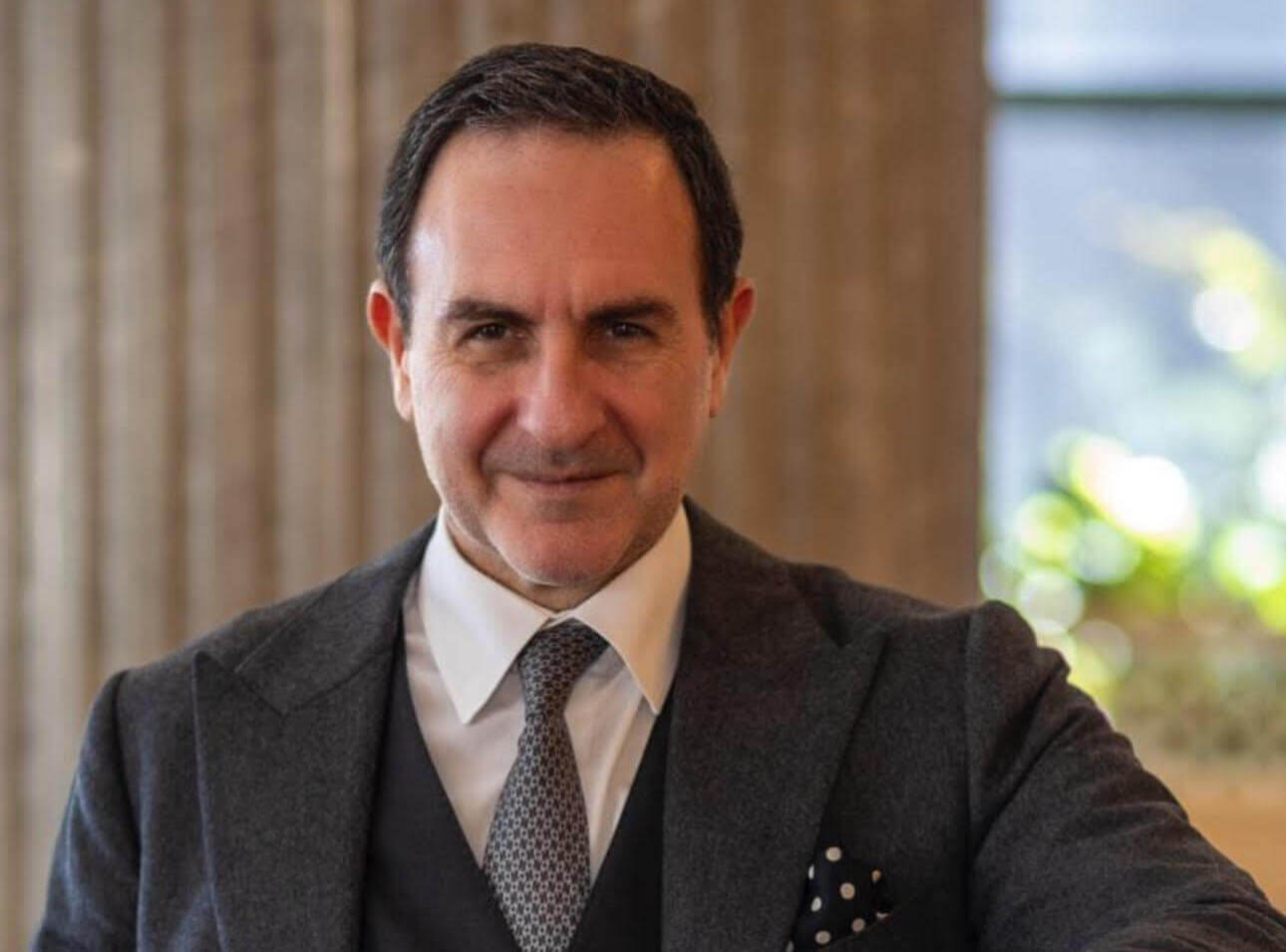 Türkiye should see the Ankara Summit not as a loyalty test, but as a strategic negotiating table - Emre Alkin
In conclusion, Rubio’s statement is not ordinary news for Türkiye. The NATO Summit in Ankara will be an important meeting that simultaneously tests Türkiye’s geopolitical position, its relations with the United States, its place in the European security architecture, its defence industry capacity, and its regional balancing policy.
For Türkiye, this summit is a major opportunity, but also a serious test.
In my view, the best approach is this: Türkiye should see the Ankara Summit not as a loyalty test, but as a strategic negotiating table. It should clearly state what it wants, clarify what it will support, and explain in diplomatic language what it will stay out of.
It should expand defence cooperation, but it should not become an automatic party to new conflicts. It should strengthen its relations with the West, but it should not lose the value of its multi-directional foreign policy.
In short, the Ankara Summit will be a major showcase for Türkiye. But it is not enough to be visible on stage. Türkiye must be the country that knows what it wants at the table, explains its risks correctly, and negotiates its opportunities wisely.
If it succeeds, the summit will not merely be a diplomatic meeting; it will become a turning point that redefines Ankara’s role in the new era.
