The G7 summit, taking place from 15 to 17 June in Évian, was intended to reaffirm France's ambition to restore the group’s core role: coordinating the most developed democracies on the economy, trade, financial stability, and long-term global imbalances.
Instead, just days before the meeting, it became clear that the agenda would once again be shaped by crises.
Iran, Ukraine, energy security, sea routes, the global economy, and artificial intelligence have all converged into a single political package.
This combination demonstrates what the G7 has become: from a forum for economic harmonisation to an informal crisis headquarters for the most developed democracies.
This year, that transformation has an added dimension. Leading figures from the most powerful artificial intelligence companies are joining state leaders at the table.
Representatives from OpenAI, Anthropic, Google, and Mistral AI will take part in discussions on artificial intelligence and online safety.
The G7 is no longer simply debating how countries should regulate technology. The very composition of the participants shows that technology companies have become actors without whom it is difficult to make decisions about artificial intelligence.
From economic forum to crisis mechanism
The G7 was established in the mid-1970s, following the oil shock and the collapse of the previous monetary order. The first summit was held in 1975 in Rambouillet, then in the G6 format, with Canada joining the following year.
The underlying logic was clear: leading industrial democracies needed to coordinate responses to inflation, energy disruptions, slowing growth and financial instability.
Fifty years later, the formal structure remains similar, but the content has changed. The G7 still discusses the economy, but almost no economic issue is now separate from security.
Critical raw materials are no longer just industrial inputs; they are matters of strategic dependence. Energy is not merely a market; it is an instrument of pressure. Digital infrastructure is not simply technology; it is the foundation of political influence, military readiness, and social stability.
Iran and Ukraine are among the most important topics at the summit
The list of topics to be discussed at Évian itself shows how much the nature of global risks has changed. Economy, security, and technology no longer function as separate areas of public policy.
Iran and Ukraine are among the most important topics at the summit because their consequences extend far beyond regional frameworks.
Ukraine remains dependent on military, financial, and political support from the West. The crisis over Iran raises issues of stability in the Middle East, energy flows, security of maritime routes, and relations with Washington.
In both cases, these are crises that directly affect inflation, energy prices, financial markets, and political stability within the G7 members themselves.
In this environment, the old division between economic and security agendas no longer makes sense.
Why AI CEOs have become political actors
The most important signal from Évian is not simply that artificial intelligence will be discussed; this has already happened.
In 2023, the G7 launched the Hiroshima AI Process, which adopted international principles and a voluntary code of conduct for organisations developing advanced AI systems.
The difference now is that the political status of companies developing AI is changing. They are no longer only subject to regulation; they are becoming participants in discussions at the highest levels.
Unlike nuclear programmes or the space race in the latter half of the twentieth century, the development of artificial intelligence today is not primarily in the hands of states.
Governments are no longer the only actors determining the direction of technological development
The most advanced models, infrastructure and research capacity are found within private companies. Therefore, governments are no longer the only actors determining the direction of technological development.
This creates a new kind of dependency. Political leaders want to regulate technology they do not own. Companies seek access to markets, capital, energy, chips and public trust, but do not want regulation to slow them down. Between these interests, a new area of negotiation is emerging.
This shows that artificial intelligence is no longer just a technological issue. Its development and the rules that will accompany it are now discussed not only by engineers, regulators and lawyers. These issues have become part of the highest political agenda.
The problem of democratic responsibility
The involvement of technology companies in such political contexts raises questions of legitimacy and responsibility.
Presidents and prime ministers have a political mandate and are accountable to voters and institutions for their decisions. CEOs of technology companies do not have such a mandate. Their responsibility is primarily to owners, investors and the market.
At the same time, without their participation, it is difficult to have a serious discussion about the development and application of artificial intelligence.
If companies, together with states, shape standards, the problem is much more serious
That is why the limits of their influence in the process of making political decisions should be clearly defined.
If companies are merely advising governments, that is one thing. If, together with states, they shape standards, security protocols, access to data, rules for models and the limits of AI application in the public space, it is much more serious.
Then it is no longer a matter of consultation; it becomes a matter of sharing regulatory influence.
This is the main dilemma for the G7: how to include companies with the necessary knowledge and capacity, without removing political responsibility from states for the rules that will apply to society.
European paradox
The European Union aims to become the global regulator in the field of artificial intelligence.
The EU AI Act is the most ambitious attempt so far to place the development of this technology within a framework of risk assessment, protection of fundamental rights, and transparency obligations.
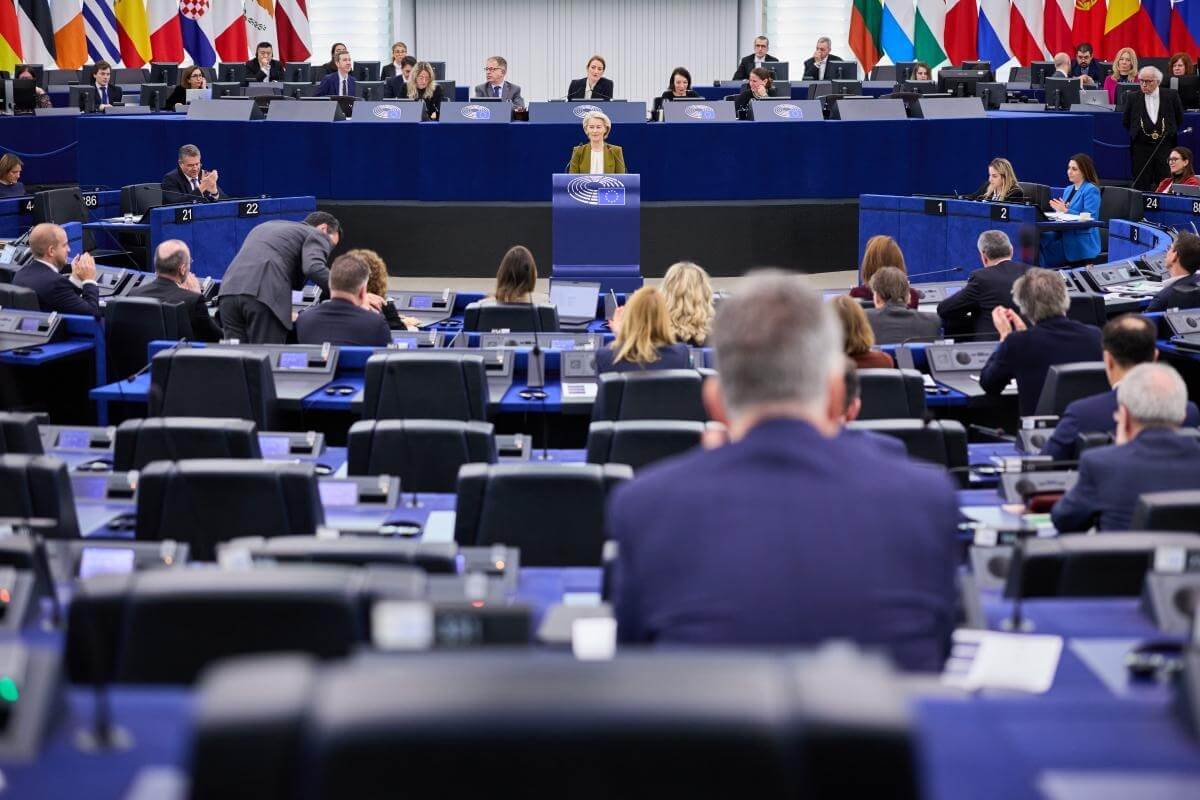 If the EU regulates excessively, it risks further slowing its own companies - European Parliament
However, European influence on the development of AI is much more modest. The largest models, investments, and computing capacities are concentrated mainly in the United States.
France is seeking to strengthen its European presence in the race by supporting companies such as Mistral AI, but the differences in capital, infrastructure, and market size remain significant.
This is why the French approach at Évian is politically understandable. Paris wants AI to remain under democratic governance, but also wants Europe not to be reduced to the role of regulator without industrial strength.
It is a broader European paradox. If the EU regulates excessively, it risks further slowing its own companies. If it yields too much, it loses what it has presented as its greatest asset: the ability to subordinate technological development to the public interest.
The American problem is different
The United States faces the opposite issue. It has companies, capital, a research base, and most of the global AI infrastructure. However, it has a weaker regulatory framework and a much stronger influence of the private sector on public policy.
For Washington, AI is a matter of competition with China, national security, productivity, and military advantage. Therefore, the American approach is unlikely to match the European one.
The US will not accept a framework that would significantly limit the development speed of its companies
The US will support certain security standards but will not accept a framework that would significantly limit the development speed of its companies.
This means a compromise will likely be sought within the G7: sufficient rules to demonstrate accountability, but not so many as to jeopardise the technology race.
Such a compromise may be politically useful, but it does not address the underlying problem. Companies may voluntarily accept certain standards of conduct, but the long-term issue of accountability and oversight cannot remain outside the regulatory framework.
G7 as an informal forum
The G7 is not an institution that makes binding decisions. Its significance arises not from formal powers, but from the political weight of its member states.
When the most developed democracies agree on certain principles or priorities, these positions often serve as a reference point for broader international discussions. This is the value of these conversations.
Agreement within the G7 could serve as a starting point for broader international standards in artificial intelligence.
Évian will not resolve the issue of managing artificial intelligence
Otherwise, regulatory frameworks will develop in several parallel directions, including national approaches, industrial self-regulation, and models based on a stronger role for the state, as seen in China.
Évian will not resolve the issue of managing artificial intelligence. However, it demonstrates that the decision-making process is changing.
States remain key political actors, but they are no longer the sole centres of knowledge, resources, and influence required to address challenges that transcend national borders.
What comes after Évian
Évian should not be expected to produce a historic agreement on artificial intelligence. Its longer-term significance may lie elsewhere.
The inclusion of technology companies in these political formats shows that artificial intelligence is no longer merely a matter of innovation and regulation. It is becoming a topic that will increasingly influence relations between states, economic competition, and the definition of national interests.
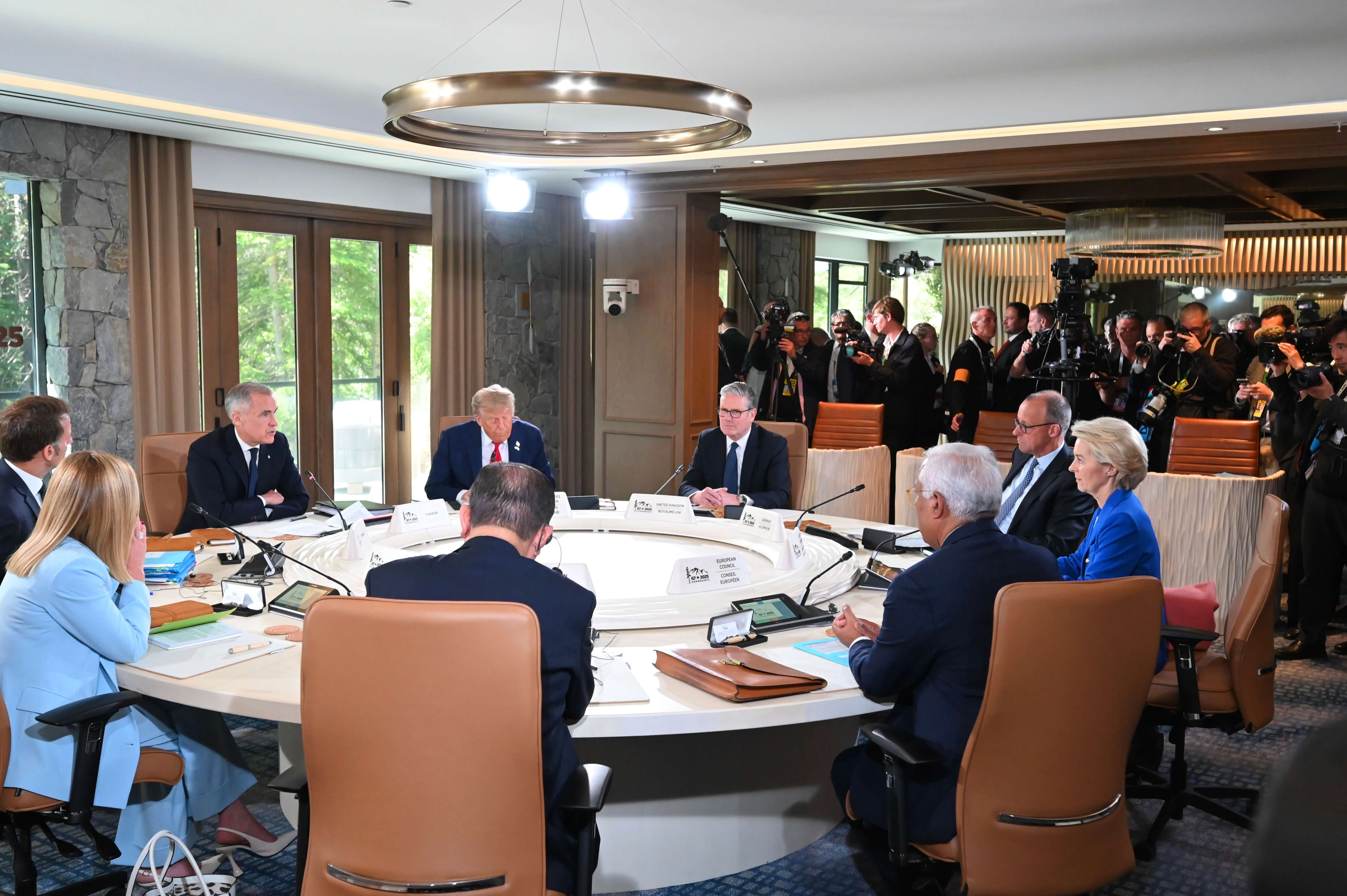 The G7 will attempt to define a common approach that links technological development with political accountability and institutional oversight
The way states approach artificial intelligence increasingly reflects their political priorities and economic interests.
The United States aims to maintain the advantage of its technology companies. The European Union seeks to balance innovation with regulatory control. China regards the development of artificial intelligence as part of a broader state and industrial strategy.
In such an environment, the G7 will attempt to define a common approach that links technological development with political accountability and institutional oversight.
Its credibility will depend not only on the quality of the rules it promotes, but also on the ability of member states to remain relevant actors in the development of these technologies.
The success of the G7 in this endeavour will not be measured by the wording of the final communiqué. More important is whether the discussions initiated in Évian develop into concrete cooperation between countries that share similar political values, but often have different economic interests and regulatory priorities.
The ability to overcome these differences will be the first serious test of the viability of a common approach to artificial intelligence.
