Belarus is becoming increasingly integrated into Russia’s military and political system, while simultaneously seeking to use the limited resumption of contacts with the West to ease sanctions and secure economic concessions.
This poses a dual challenge for European states: Minsk remains part of Russia’s military infrastructure while simultaneously seeking to demonstrate its readiness for selective engagement with the West.
This contradiction is particularly evident in three areas: military infrastructure, domestic repression and sanctions diplomacy.
The military factor
The Grodno region is becoming one of the key areas for the development of Belarusian military infrastructure.
According to media reports, Belarusian opposition representative Vadim Kabanchuk has said that military infrastructure is being expanded with Russian assistance, including the modernisation of an airbase for Russian and Belarusian aircraft and a readiness check of one of the military units.
The development of military infrastructure, in itself, does not mean that an attack on NATO is imminent.
However, geography matters. The Grodno region directly borders Poland and Lithuania and is located near the Suwałki Corridor, a strategically important area between Poland and Lithuania that is critical to the land connection between the Baltic states and the rest of NATO territory.
Of particular concern is the potential use of Belarusian territory, airbases, transport infrastructure, and logistics by Russian military forces
The modernisation of military infrastructure in this area therefore increases the potential operational capabilities of Russia and Belarus on the western flank.
Of particular concern is the potential use of Belarusian territory, airbases, transport infrastructure, and logistics by Russian military forces.
Since 2022, Belarus has already demonstrated that its territory can be used by Russia as a military resource.
Russian forces used Belarusian territory during the initial stage of the full-scale invasion of Ukraine, while military cooperation between Moscow and Minsk has continued to deepen.
The issue, therefore, is not only the possibility that Belarus could be used directly for a future Russian operation against NATO.
More important is the gradual creation of conditions in which Russia’s military capabilities on its western flank can rely on Belarusian territory without requiring all the necessary infrastructure to be deployed directly on Russian soil.
The repressive system remains unchanged
Minsk’s domestic policy continues to develop in parallel with its military integration with Russia.
Belarus has shown no systemic change in its treatment of the political opposition, independent media or civil society.
A report by the UN Independent International Expert Group on Belarus on the role of state institutions in human rights violations in criminal proceedings describes systemic problems at all stages of political persecution, from detention and judicial proceedings to the post-release period.
Experts state that the Ministry of Internal Affairs, the State Security Committee, the Investigative Committee, the Prosecutor General’s Office, and the judicial system play key roles in this system.
Documented practices include arbitrary detention, inadequate detention conditions, pressure on detainees, restrictions on the right to legal defence, persecution of lawyers, and the absence of effective mechanisms to hold perpetrators accountable for violations.
Minsk’s domestic repressive model and its external military policy are not separate processes
Particular attention has focused on the case of former Belarusian special-forces officer Yury Garavsky, concerning the 1999 disappearance of former Interior Minister Yury Zakharenko, former Deputy Prime Minister Viktor Gonchar, and businessman Anatoly Krasovsky.
During an appeal hearing in Switzerland on 22 September, Garavsky stated that the order to eliminate political opponents had allegedly come from Alexander Lukashenko and Viktor Sheiman, then State Secretary of the Security Council, and had been conveyed through other senior representatives of the security apparatus.
These statements must be assessed by the court alongside other evidence. However, the case highlights a broader problem: the lack of an effective mechanism within Belarus for investigating crimes linked to political repression.
In this sense, Minsk’s domestic repressive model and its external military policy are not separate processes.
A system that suppresses political competition at home also offers the Kremlin a predictable partner in military cooperation.
Political prisoners as an element of negotiations
At the same time, Minsk is showing a willingness to reach limited agreements with Washington. According to John Coale, the US President’s Special Envoy for Belarus, Lukashenko has agreed to release 25 people as a “gesture of goodwill”.
In response, the United States lifted sanctions on two Belarusian enterprises: Lakokraska and Bellesbumprom.
It was also reported that sanctions on Belarusian potash producers had been lifted.
President Donald Trump even highlighted US purchases of Belarusian potash, which he said was cheaper than Canadian supplies.
These agreements are significant not only in themselves. They may also point to a potential model for future relations: Minsk can use individual humanitarian measures to secure economic or sanctions-related concessions without changing the fundamental principles of its political system.
Partial sanctions relief without structural changes within Belarus could allow Minsk to gain economic benefits while preserving its repressive model
This creates a difficult dilemma for the West, as the release of political prisoners has an immediate humanitarian impact.
However, partial sanctions relief without structural changes within Belarus could allow Minsk to gain economic benefits while preserving its repressive model.
In such circumstances, sanctions become not only a tool of pressure but also an object of negotiation.
Lukashenko gains the ability to trade limited concessions for specific economic benefits without relinquishing political control.
Why Europe continues to maintain sanctions pressure
European policy towards Belarus remains highly restrictive. Switzerland has joined additional EU sanctions in response to Minsk’s support for Russia’s aggression against Ukraine and its domestic repression.
The measures cover exports of goods and technologies that could contribute to Belarus’s military, technological, or industrial development, as well as imports of certain Belarusian goods, transit, financial transactions, and specific services.
For Europe, the Belarus issue has two interconnected dimensions.
Belarus provides Russia with territory, military infrastructure, and logistical capabilities
The first is security. Belarus provides Russia with territory, military infrastructure, and logistical capabilities.
Its military integration with Russia means that potential threats to NATO’s eastern flank can no longer be assessed solely through the prism of Russian territory.
The second is political. Minsk’s repressive system effectively excludes normal political competition and limits the scope for independent domestic policymaking. This makes Belarus’s foreign policy significantly more dependent on its relationship with Moscow.
The strategic dilemma
The key question for the West is not whether short-term improvements in relations with Minsk are possible. The recent agreements with the United States already show that they are.
The question is whether such agreements can change Belarus’s strategic orientation.
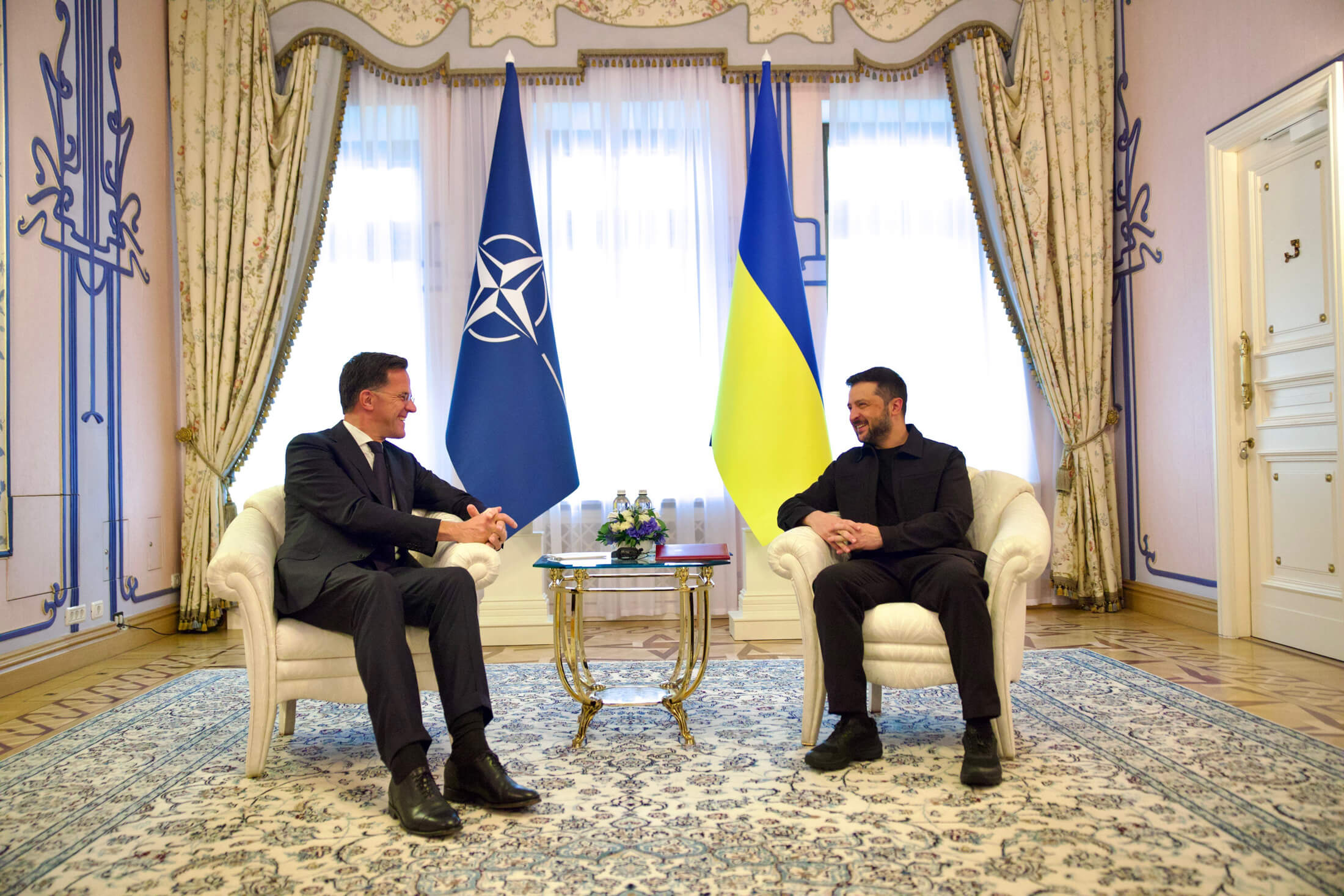 Any assessment of risks on NATO’s eastern flank needs to take Belarusian territory into account as a potential element of Russian military planning - Mark Rutte, Volodymyr Zelenskyy
At present, there are no clear indications that Minsk is fundamentally reassessing its military integration with Moscow.
On the contrary, the development of military infrastructure and continued cooperation with Russia’s defence-industrial sector indicate the persistence of this dependence.
For Europe, Belarus is therefore increasingly not simply a problem of authoritarian governance, but part of Russia’s broader security environment.
Any assessment of risks on NATO’s eastern flank needs to take Belarusian territory into account as a potential element of Russian military planning.
At the same time, selective sanctions relief and the release of political prisoners create an opportunity for limited dialogue.
The extent to which such dialogue can influence Minsk’s behaviour will depend on whether economic and diplomatic engagement is tied to concrete changes in domestic policy and in Belarus’s military cooperation with Russia.
It is this combination – military integration with Moscow, preservation of a repressive system, and parallel selective engagement with the West – that will shape Belarus’s role in European security in the years ahead.
Oleksandr Levchenko, a former Ukrainian diplomat, is a professor at the State University (Kyiv) and a member of the Academy of Geopolitics and Geostrategy (Kyiv).
