Recent military and security measures undertaken by the Belarusian leadership indicate that Minsk is gradually moving beyond its previous role as a logistical rear base for Russian forces towards more active participation in implementing the Kremlin's regional military strategy.
Taken together, the latest decisions of Alexander Lukashenko's regime demonstrate systematic efforts to prepare Belarusian state institutions to operate under the conditions of a potential large-scale military crisis along the western and southern strategic axes.
The large-scale command-and-staff exercises conducted by the Ministry of Internal Affairs and the Internal Troops in Hrodna, Lida, and Vyalikaya Byerastavitsa, close to the borders with Poland and Lithuania, go well beyond a routine assessment of combat readiness.
The nature of the scenarios practised indicates that Belarusian security forces are preparing to operate in the context of a hybrid conflict, in which military operations are accompanied by filtration measures, population control, protection of critical infrastructure, and the maintenance of military logistics.
These are precisely the elements characteristic of the initial phase of a potential escalation against NATO's eastern flank.
For the Kremlin, Belarus is increasingly important not merely as a staging ground for the deployment of troops, but as a territory capable of supporting a second operational axis in the event of a large-scale confrontation with the Alliance.
This allows Russia to broaden the range of possible pressure scenarios against Poland and the Baltic states, forcing NATO to disperse its resources between the Ukrainian theatre of war and its northeastern flank.
Equally significant is the decision to establish a fourth air assault brigade in the Homel region near the Ukrainian border.
This move is less about increasing the numerical strength of the Belarusian Armed Forces than about redefining their operational role.
Offensive operations
The expansion of highly mobile assault units suggests that the structure of the Belarusian military is being adapted for offensive operations in coordination with Russian forces.
Even if Minsk has no immediate intention of entering the war directly, the mere existence of such formations compels Ukraine to maintain substantial forces along its northern border, thereby serving Moscow's broader strategic objectives.
At the same time, the Belarusian authorities have launched a comprehensive campaign to inspect, repair and modernise civil defence infrastructure.
This effort serves a dual purpose. On the one hand, it reflects preparations by the state apparatus for possible crisis scenarios, including the risk of hostilities spreading into Belarusian territory.
Although Minsk formally retains the attributes of state sovereignty, it is steadily losing the ability to formulate an independent security policy
On the other hand, it serves an important political function by reinforcing a persistent perception of external threats within society, thereby justifying tighter domestic control and the continued militarisation of the state.
From a strategic perspective, these developments indicate the completion of another stage in integrating Belarus's military capabilities into Russia's unified military planning system.
Although Minsk formally retains the attributes of state sovereignty, it is steadily losing the ability to formulate an independent security policy.
Belarus's military infrastructure, command-and-control system, logistical capabilities, and security institutions are becoming increasingly integrated into Russia's regional model of deterrence and potential escalation.
Balance between Russia and the West
For European security, this represents the emergence of an additional source of strategic instability.
The Kremlin gains the ability simultaneously to maintain military pressure on Ukraine, threaten NATO's eastern flank, and use Belarusian territory as an instrument of political and military coercion.
As a result, Minsk is evolving from a formal Russian ally into an integral component of Russia's broader military architecture.
Belarus will ultimately lose any remaining capacity to balance between Russia and the West
If this trend continues, Belarus will ultimately lose any remaining capacity to balance between Russia and the West.
This would entail not only a further erosion of its political sovereignty, but also an increasing likelihood that any future military escalation between Russia and NATO would automatically extend to Belarusian territory.
Consequently, the policies of the Lukashenko regime do not enhance the country's security; rather, they significantly increase its strategic vulnerability and the risk of becoming embroiled in a conflict of far greater magnitude.
Ukraine could carry out pre-emptive strikes
Moscow continues to regard Belarus as a key component of its military-strategic architecture on the western axis.
The Kremlin is reportedly examining various scenarios for the potential use of Belarusian armed forces, both in the war against Ukraine and in a possible conflict with the Baltic states.
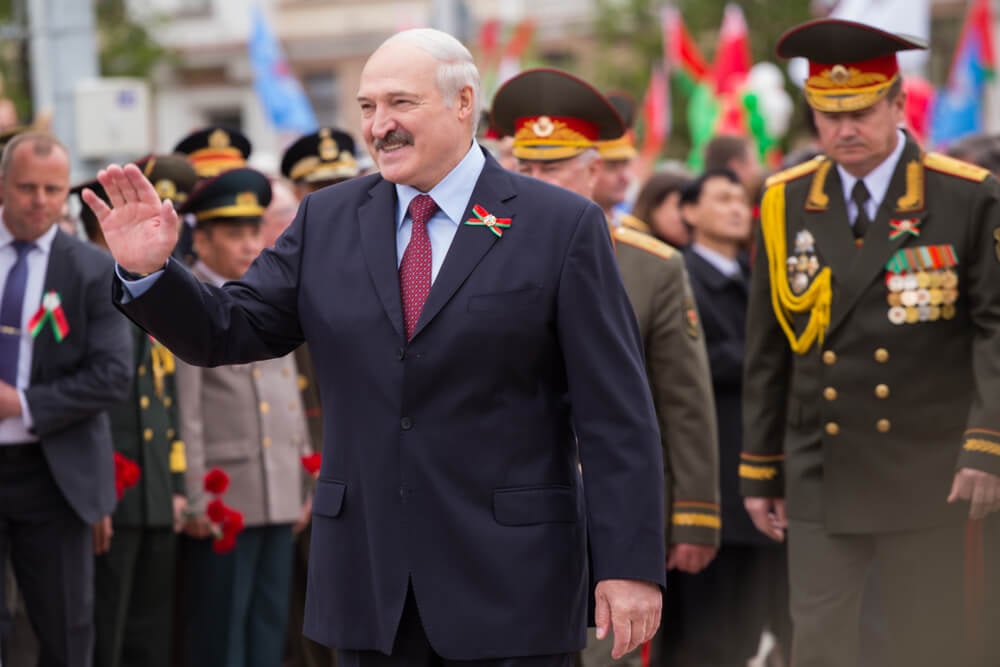 Moscow continues to regard Belarus as a key component of its military-strategic architecture on the western axis - Alexander Lukashenko
Given the extensive Belarusian-Ukrainian border, any direct involvement by Minsk in hostilities would considerably extend the active front and force Ukraine to redeploy substantial military resources to defend its northern frontier.
At the same time, Kyiv has repeatedly signalled that it would not wait for the launch of a direct invasion.
The Ukrainian leadership has effectively warned Minsk that, should credible intelligence emerge indicating preparations by the Belarusian army to participate in aggression, Ukraine may carry out pre-emptive strikes against Belarus's critical fuel and energy facilities, transport infrastructure, and logistical hubs.
Such a scenario could cause multi-billion-dollar damage to the Belarusian economy and severely disrupt its functioning.
Willingness to manufacture incidents
Judging by Alexander Lukashenko's public statements, these signals appear to have been taken seriously. In recent months, the Belarusian leader has repeatedly emphasised that a war with Ukraine would have devastating consequences for Belarus.
However, this does not indicate a reduction in Russian pressure. The Kremlin continues to use both political leverage and its network of loyalists within the Belarusian state apparatus in an effort to alter Minsk's position and encourage more active Belarusian participation in Russia's military plans.
Formally, Alexander Lukashenko continues to maintain that Belarusian forces would enter the war only if Ukraine were to attack Belarus.
However, such statements cannot be regarded as a sufficient guarantee of restraint.
Russia has repeatedly demonstrated its willingness to fabricate incidents as pretexts for military action.
As Belarus's dependence on Russia continues to deepen, the possibility that Minsk may eventually be compelled to make further concessions cannot be entirely dismissed
A historical example is the Soviet-Finnish War of 1939, when Moscow used a staged border incident to justify its invasion of Finland.
Such information and psychological operations remain a characteristic feature of Russian strategy today.
Most recently, reports circulated alleging that a Ukrainian drone had attacked a bus carrying Belarusian children in Russia's Bryansk region.
However, these claims raised serious questions regarding their credibility. Under such circumstances, the possibility of further provocations intended to provide a formal justification for drawing Belarus into the war cannot be ruled out.
Lukashenko himself likely recognises these risks. Nevertheless, it remains an open question how long he will be able to withstand the Kremlin's political and military pressure.
As Belarus's dependence on Russia continues to deepen, the possibility that Minsk may eventually be compelled to make further concessions cannot be entirely dismissed.
Russian military plans against the Baltic states
Although a renewed offensive against Ukraine launched from Belarusian territory remains one possible scenario, increasing attention should also be paid to another possibility: the use of Belarusian territory to facilitate Russian military plans against the Baltic states.
The Russian leadership is seeking a tangible military-political success, while the current situation on the Ukrainian battlefield offers little prospect of a rapid strategic breakthrough.
In this context, the Baltic states may appear to the Kremlin as comparatively more vulnerable targets.
Lithuania holds critical strategic importance because of the so-called Suwałki Corridor
Estonia and Latvia are of particular interest because they have sizeable Russian-speaking minorities that Russian propaganda has traditionally portrayed as requiring Moscow's protection, thereby creating a pretext for political interference.
Lithuania, meanwhile, holds critical strategic importance because of the so-called Suwałki Corridor, a narrow stretch of territory between Poland and Lithuania that separates Russia's Kaliningrad exclave from Belarus.
Establishing control over this corridor would give Russia a land connection to Kaliningrad and significantly alter the strategic balance in the region.
The feasibility of such a scenario would depend largely on the speed and determination of NATO's response.
Moscow systematically tests Poland
Poland occupies a particularly important position in this regard, serving as the Alliance's principal logistical hub on its eastern flank.
From the Kremlin's perspective, it would be strategically advantageous if Warsaw refrained from immediate military intervention during a crisis and instead limited its response to political statements and diplomatic measures.
This is precisely why Moscow systematically tests Poland's willingness to respond to military provocations.
One such episode involved the incursion of a Russian Kh-101 cruise missile into Polish airspace.
Despite the seriousness of the incident, it did not trigger NATO's collective defence mechanisms, and Warsaw's official response remained relatively restrained.
Significantly, the incident occurred shortly after Polish Prime Minister Donald Tusk met Ukrainian President Volodymyr Zelenskyy in Lublin.
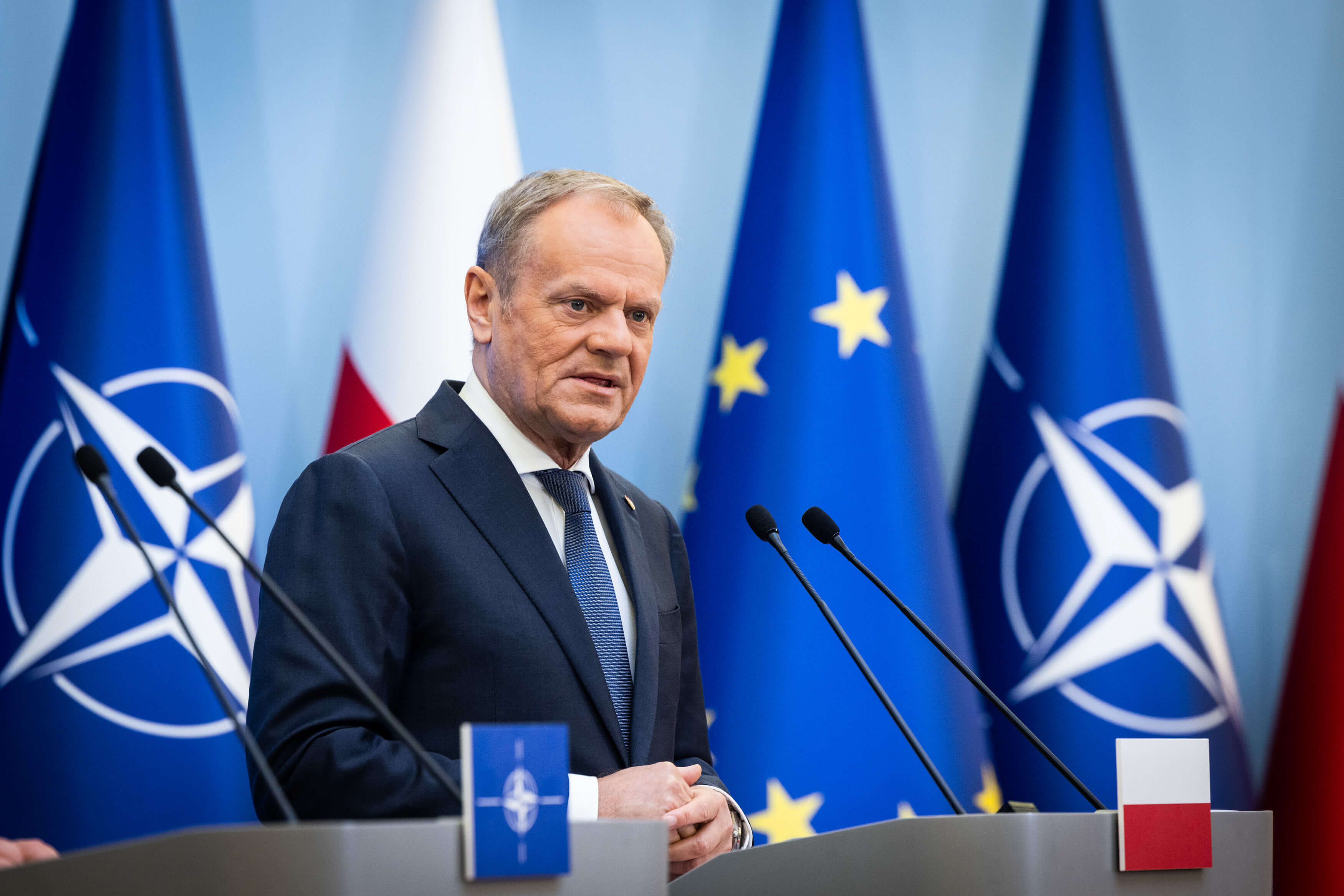 Moscow systematically tests Poland's willingness to respond to military provocations - Donald Tusk
If the Russian missile did indeed remain within Polish airspace for an extended period without being intercepted, this may have exposed existing shortcomings in Poland's early warning and air defence systems.
At the same time, the provocation appears to have been carefully calibrated to avoid mass casualties or extensive damage, thereby minimising the risk of a direct military response from NATO.
A further signal for the Kremlin may have come from events last autumn, when a group of Russian drones entered Polish territory.
Despite hours of activity by Poland's air defence system and NATO assets, the effectiveness of interception proved limited.
The incident intensified debate regarding Poland's actual readiness to repel large-scale, combined attacks involving both missiles and unmanned aerial systems.
From Russia's perspective, such incidents provide an opportunity to assess not only the technical capabilities of NATO's air defence architecture but also the Alliance's political readiness to make rapid decisions under conditions of limited military escalation.
Should the Kremlin conclude that NATO's response would be slow or insufficiently decisive, the likelihood of an attempt to implement a scenario targeting the Baltic region could increase significantly.
For this reason, Belarus's growing military integration into Russia's strategic planning represents a threat not only to Ukraine but also to the entire security architecture of NATO's eastern flank.
The further evolution of the situation will depend on the Alliance's ability to maintain a robust military presence, preserve political unity, and sustain a credible deterrent capable of discouraging any attempt by Moscow to test the effectiveness of NATO's collective defence mechanisms.
Oleksandr Levchenko, a former Ukrainian diplomat, is a professor at the State University (Kyiv) and a member of the Academy of Geopolitics and Geostrategy (Kyiv).
