As it begins its new term next week, the U.S. Supreme Court will again be faced with deciding whether to go along with a president intent on pushing the limits of his power or instead try to serve as a check on his ambitions.
The justices are already being asked – through cases on the court’s formal docket, emergency applications and petitions seeking review – to define the boundaries of executive authority on issues ranging from immigration and deportation to political speech, military policy and federal spending.
And they’re doing so amidst an ongoing – and likely unprecedented – struggle between the administration and its critics playing out in federal courts across the country.
With Congress largely either dysfunctional or cowed by President Donald Trump, judges have emerged as the most robust counter to the president’s agenda.
Setbacks on roughly a dozen fronts
Nearly 1,000 lawsuits have been filed against Trump and his administration in the nearly two years since he regained the White House, according to the site Just Security, which tracks litigation against the government.
While it’s been more than a year since any outlet has posted the president’s win-loss record, one analysis last year found challengers prevailing about 60% of the time in cases that had produced rulings.
But you don’t need to dig out your slide rule or rifle through a thousand docket entries to know that.
Nearly every day now arrives with news of Trump losing in court
Nearly every day now arrives with news of Trump losing in court. Just this month alone, the president has suffered setbacks on roughly a dozen fronts involving birthright citizenship, deportations, federal spending and reductions in the federal workforce.
The losses that gained the most attention, however, were where it seemed obvious Trump and his allies were overstepping their authority: the attempt to affix his name to the Kennedy Center, the arts venue in Washington, and his push to block certain media outlets from the White House.
In the latter case, even Trump admitted on social media he was likely to take it on the chin.
There is a certain amount of irony that the man who was known during his business career for his willingness to sue anyone and everyone (and be sued) has suffered so many defeats in court on such a grand scale. But the Supreme Court is a different animal.
Providing oxygen to Trump’s most aggressive proposals
Before the conservative-dominated high court, the record is much more mixed, with the justices providing oxygen to some of Trump’s most aggressive proposals while dealing death blows to others.
In perhaps its most notable ruling of the last term, the justices held that the president could fire officials at ostensibly independent agencies such as the Federal Trade Commission – a precedent-shattering decision that greatly enhanced presidential control over the government’s executive branch.
The court has also regularly resorted to its emergency docket – also known as its “shadow” docket – bypassing regular procedures to swiftly issue rulings that kept Trump policies alive while they wound their way through the appellate process.
The court allowed the administration to move forward with providing states seeking to verify the citizenship and immigration status of voters with government data
In the first eight months of Trump’s second term, the court acted in 23 cases on an emergency basis, siding with him fully or partially 21 times, a Reuters analysis showed.
Those cases involved matters ranging from his ban on transgender troops to blocking foreign-aid monies to allowing the firing of more than a thousand federal employees.
On Friday, the court, through an emergency unsigned opinion, allowed the administration to move forward with providing states seeking to verify the citizenship and immigration status of voters with government data.
And of course, Trump scored what arguably was his biggest victory when he wasn’t in office when, in 2022, the court overturned the constitutional right to abortion established by Roe v. Wade.
Trump’s contempt for the judiciary
But things haven’t gone as swimmingly for the administration over the last year.
Perhaps the biggest blow came early in the year when the court invalidated Trump’s sweeping tariff regime, holding that the administration had exceeded its powers under federal law. It then prohibited Trump from firing Lisa Cook from the Federal Reserve Board.
In June, it ruled against efforts by the White House to alter the Constitution’s birthright citizenship provision. Trump’s efforts to toughen the rules around mail-in voting ahead of the midterm elections have also been stymied.
And earlier this month, in a case that didn’t involve Trump policies, Republicans in Missouri were thwarted in their attempt to use a congressional map drawn to give them an opportunity to gain an additional House seat.
Trump has always largely held the judiciary in contempt. But now he is leveling up his critique
Trump reacted with fury earlier this month when the justices derailed his plan to have the U.S. Postal Service impose new requirements on mailed ballots, taking particular aim at three justices he nominated: Amy Coney Barrett, Neil Gorsuch and Brett Kavanaugh. Currently, conservatives hold a 6-3 advantage on the court.
“This Supreme Court is bullied and cajoled by the Radical Left into making decisions that have set America back at least a hundred years,” he wrote on social media. “These are not the people I interviewed to serve on the United States Supreme Court, they are merely a shell of their original selves.”
Trump has always largely held the judiciary in contempt. But now he is leveling up his critique.
No president likely has done more to suggest the justices are simple political appointees who should side with the White House that appointed them rather than part of an independent branch of government.
(Republicans would no doubt contend that the court became intensely politicized after the Roe v. Wade abortion ruling in 1973 led to unspoken “litmus tests” for nominees.)
The battle will renew as the new term opens
The battle will renew as the new term opens. In fact, the justices may issue a critical opinion regarding deportations before the term ever starts. The administration went to the high court last week asking for emergency intervention after lower courts struck down its procedures for sending detainees to countries other than their own, including countries in Africa.
Just last week, the administration asked the court to determine whether a Georgetown University scholar detained over his pro-Palestinian advocacy could challenge his detention through habeas corpus proceedings in federal court. He claims his free-speech and due-process rights were violated.
As for cases on the formal docket, the court will hear arguments in yet another case involving immigrants and voting in which Republicans in Arizona are seeking to enforce stricter proof-of-citizenship requirements for voter registration.
The justices will hear a case concerning the government’s ability to detain convicted immigrants at length without granting them a bond hearing to seek release on bail
The justices will also hear a case concerning the government’s ability to detain convicted immigrants at length without granting them a bond hearing to seek release on bail.
In a closely watched gun rights case, the court will consider whether possession of AR-15-style rifles – the kind often used in mass shootings – is protected by the Constitution.
The first case to be argued next week involves attempts by Colorado municipalities to sue fossil-fuel companies for climate-change damages under state law. The court will decide whether federal law supersedes the state tort statutes.
Another case out of Colorado is sure to attract attention in the ongoing American culture wars.
The Archdiocese of Denver and two Catholic parishes are challenging their exclusion from the state’s universal preschool program for refusing to abide by nondiscrimination rules regarding sexual orientation and gender identity.
Other politically charged disputes could bubble up during the term, including challenges to Trump’s restrictions on transgender military service and his administration’s cancellation of federal research grants involving diversity, equity and inclusion programs.
Hot-button matters
One key thing to keep an eye on: Chief Justice John Roberts’ efforts to maintain the court’s credibility by attempting to rule on hot-button matters as narrowly as possible while navigating a conservative majority increasingly willing to revisit decades of precedent surrounding separation-of-powers principles.
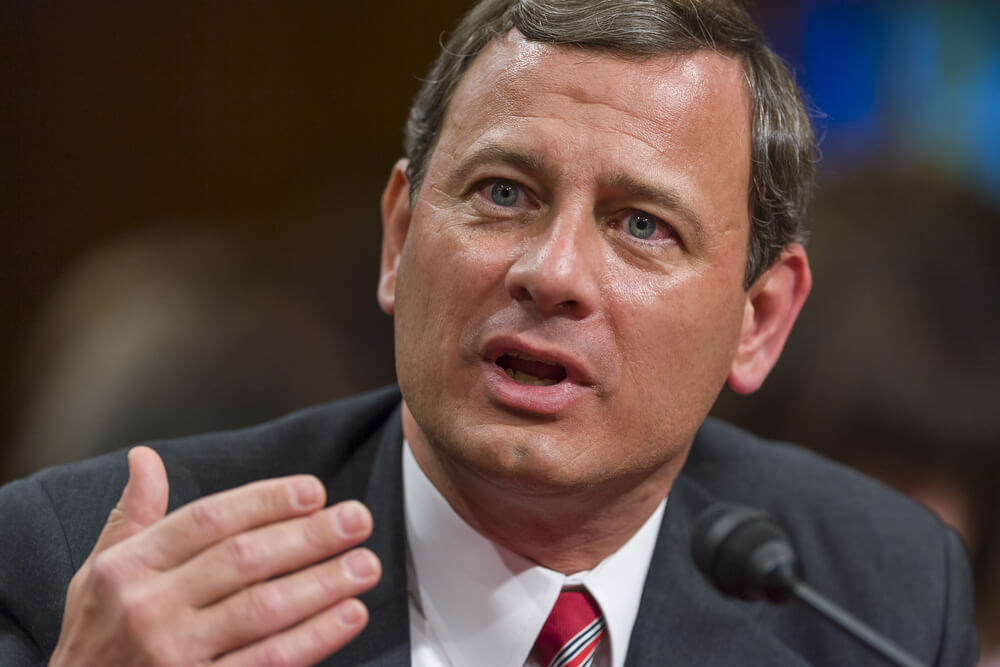 John Roberts lamented that the American public views the justices as “political actors” or policymakers rather than neutral jurists
In a speech in May, Roberts lamented that the American public views the justices as “political actors” or policymakers rather than neutral jurists.
As noted above, Trump doesn’t help matters in that regard. It’s hard for Roberts and his colleagues to mount a counterargument when the president himself is suggesting they’re not to be trusted.
More than any case argued this year, that may be the high court’s most monumental challenge.
